
By ENG. HAMBERSOM AGHBASHIAN
The Fall of the Ottoman Empire and the Fate of Its Leaders
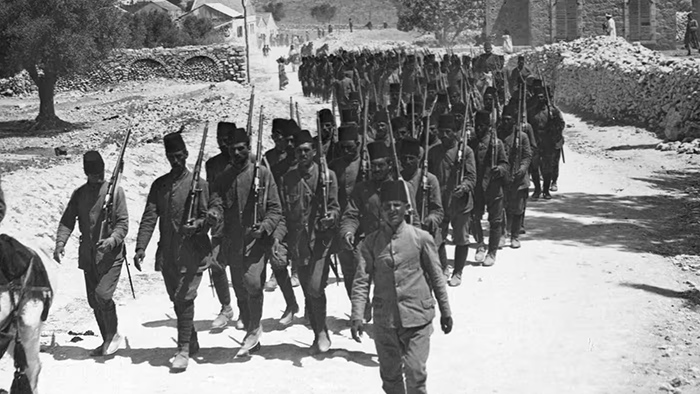
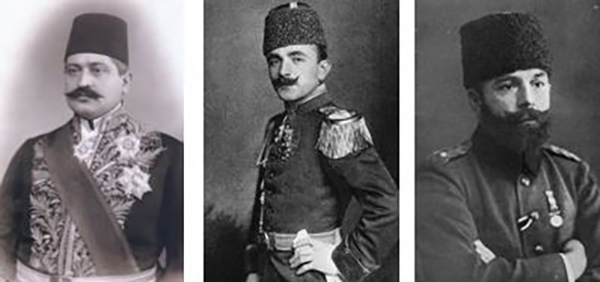
The Ottoman Empire’s defeat in World War I marked the end of its centuries-long reign as a global power. The empire’s collapse brought about massive territorial losses, human suffering, and economic devastation — largely the result of the misguided policies of the three Pashas: Talat, Enver, and Cemal. Among them, Talat Pasha bore much of the responsibility for leading the empire into disaster. As the military front crumbled and internal unrest mounted, the Ottoman authorities faced an inevitable surrender. Ethnic tensions and the advancing Allied forces further hastened the empire’s demise.
On October 30, 1918, the Armistice of Mudros was signed, officially marking the Ottoman government’s defeat. The following day, November 1, 1918, the Committee of Union and Progress (CUP) held its final congress and voted to dissolve the party. That same night, the three Pashas — Talat, Enver, and Cemal — fled the country to avoid prosecution.
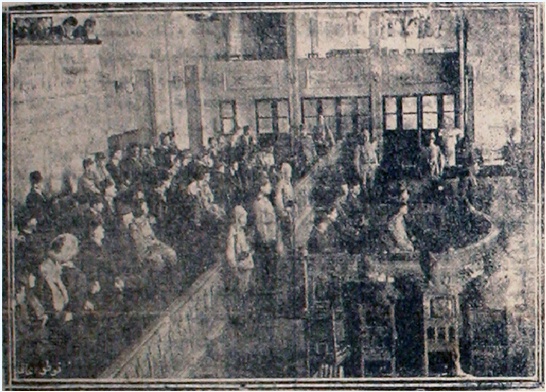
The Ottoman Military Tribunal
After the armistice, a new government was formed in Turkey on November 11, 1918. In cooperation with the Allied powers, it established the Ottoman Military Tribunal in Istanbul to prosecute members of the Union and Progress Party responsible for war crimes, particularly those linked to the Armenian Genocide. Sultan Mehmed VI’s report listed over 130 suspects, most of them high-ranking officials.
Mustafa Kemal Pasha Yamliki (Nimrud), a Kurdish officer born in Sulaymaniyah, Iraq, in 1866, was appointed president of the tribunal. A brigadier general who later collaborated with Sheikh Mahmud in Kurdistan, he defended Sultan Mehmed VI against the nationalist movement led by Mustafa Kemal Pasha (Atatürk), which sought to abolish the sultanate. As a result, Atatürk and his supporters were sentenced to death in absentia.
The tribunal also sentenced Talat Pasha, Enver Pasha, and Cemal Pasha, as well as others who aided in carrying out the massacres of Armenians. Sultan Mehmed VI and Damat Ferid Pasha signed the sentences. Those Unionists who failed to escape were exiled to Malta by the British authorities.
Sa’id Halim Pasha, who served as Grand Vizier (1913–1916) and signed the Ottoman-German alliance, was accused of treason during these trials. On May 29, 1919, he was exiled to Malta, along with Bahaeddin Shakir, Ziya Gökalp, and others. Released in 1921, Sa’id Halim Pasha later relocated to Rome.
Although the tribunals marked an early effort to hold leaders accountable for crimes against humanity, they ultimately failed due to political interference and the growing influence of the Turkish nationalist movement. The British later exchanged the Malta detainees for hostages held by nationalist forces, and many of the released officials went on to serve in Atatürk’s government. Nonetheless, the trials were historically significant for formally documenting the genocide and establishing that the massacres were a deliberate, coordinated policy.
The Fate of the Union and Progress Leaders
Many leaders of the Union and Progress Party, responsible for orchestrating the Armenian Genocide, managed to flee abroad or live in hiding. In response, Armenians formed the organization Operation Nemesis in the autumn of 1919, named after the Greek goddess of retribution. Its mission was to bring justice to those responsible for the genocide through targeted assassinations.
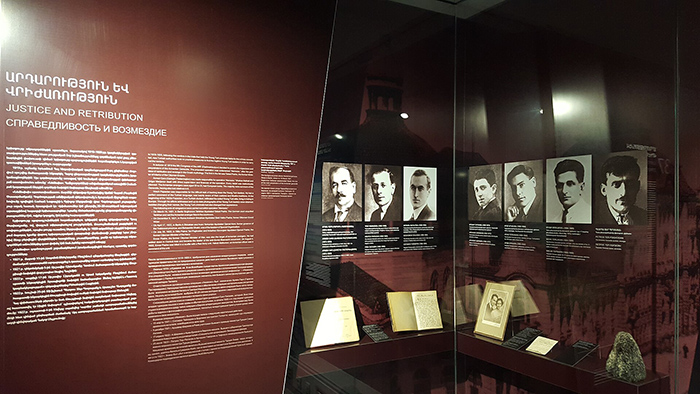
Key Assassinations under Operation Nemesis:
- Talat Pasha — Former Minister of the Interior (1913–1917) and Grand Vizier (1917). Assassinated in Berlin on March 15, 1921, by Soghomon Tehlirian.
- Cemal Pasha — Known as “Cemal the Butcher.” Assassinated in Tiflis (Tbilisi, Georgia) on July 25, 1922, by Stepan Zaghigian and two comrades.
- Enver Pasha — Killed in 1922 in Turkestan (present-day Tajikistan) by an Armenian conscript serving in the Red Army during clashes with Enver’s forces.
- Sa’id Halim Pasha — Former Grand Vizier during the 1915 massacres. Assassinated in Rome on December 5, 1921, by Arshavir Shiragian.
- Dr. Bahaeddin Shakir — Prominent CUP leader and one of the genocide’s chief architects. Assassinated in Berlin on April 17, 1922, by Arshavir Shiragian and Aram Yerganian.
- Cemal Azmi — Former governor of Trabzon, notorious for ordering the drowning of thousands of Armenians. Assassinated in Berlin on April 17, 1922, by Shiragian and Yerganian.
- Fatali Khan Khoyski, Prime Minister of Azerbaijan, was assassinated on June 19, 1920, in Tiflis, for his role in the Baku massacres of Armenians.
Behbud Khan Javanshir, Azerbaijan’s Minister of the Interior, was assassinated on July 18, 1921, in Istanbul.
These assassinations symbolized the pursuit of justice by survivors and underscored the international failure to prosecute the perpetrators through official means. The collapse of the Ottoman Empire thus not only ended a long imperial era but also gave rise to one of the earliest examples of organized efforts to hold state leaders accountable for genocide and war crimes.
Next: Treaty of Sèvres, Ataturk, and Treaty of Lausanne