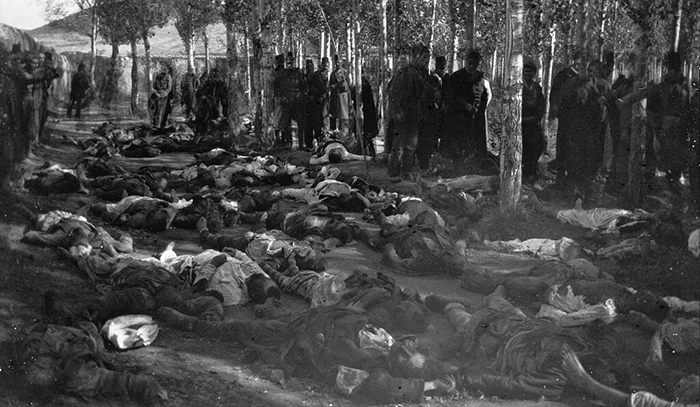

By H AGHBASHIAN
The Beginning of the Disaster
Sultan Abdul Hamid II (1842-1918) assumed power
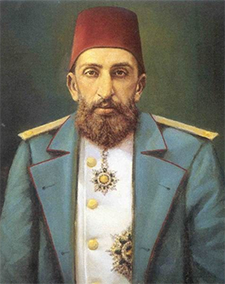
Sultan Abdul Hamid II was the thirty-fourth sultan of the Ottoman Empire, assuming power on August 31, 1876. He came to the throne during a time of great difficulty and crisis, following the deposition of his brother, Murad V, who was removed due to alleged insanity. Additionally, his uncle, Sultan Abdul Aziz, died under mysterious circumstances, with some claiming it was suicide while others suspected murder. This atmosphere of uncertainty instilled in Abdul Hamid a sense of fear and paranoia about potential conspiracies.
Throughout his reign, he continued to live in a state of anxiety and distrust. Ultimately, Sultan Abdul Hamid II was deposed in a coup on April 27, 1909, and he remained under house arrest until his death on February 10, 1918.
From the first day of his ascendancy to the throne, Sultan Abdul Hamid faced a challenging situation. Crises threatened the very existence of the state, often referred to as the “sick man” of Europe, and separatist ideas spread rapidly throughout the Ottoman provinces. The Russo-Ottoman War occurred just a year after he assumed power (1877-1878), further complicating his reign.
During his reign, much of the territory under Ottoman control was liberated. The Treaty of San Stefano, which concluded the Russo-Turkish War (1877-1878), stipulated the independence of Serbia, Montenegro, Romania, and Bulgaria, among others. Articles 16 and 61 specifically addressed the Armenian Question, with the Sublime Porte promising to protect Armenians from Kurds, Circassians, and other groups.
On July 13, 1878, the Congress of Berlin confirmed the provisions of the Treaty of San Stefano, along with the annexation of Kars, Ardahan, and Batumi to Russia. Article 64 of the Congress addressed the state’s responsibility to protect Armenians.
The Hamidi Cavalry
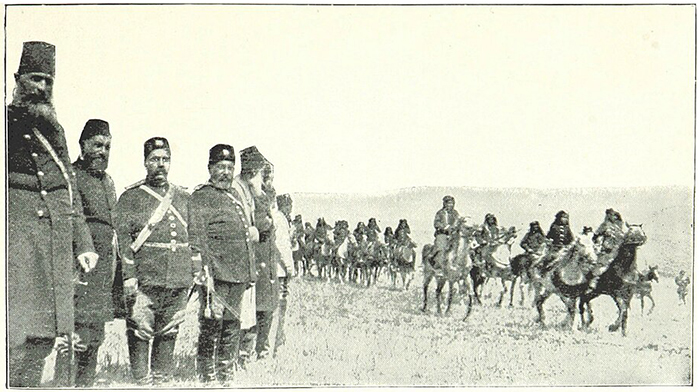
Establishment of the Hamidi Cavalry after the Russo-Ottoman War of 1877-1878
The Russo-Ottoman War ended in 1878 with the Ottoman Empire’s defeat and Russia’s and the Balkan states’ victory. This conflict marked the decline of Ottoman influence in the Balkans and resulted in significant territorial losses in the Caucasus region as well. During the war, the Ottomans faced both Russian and Romanian forces, with Romania contributing 100,000 fighters to support the Russians.
Following these defeats, Sultan Abdul Hamid’s confidence in his army diminished. In response, he established the Hamidi Cavalry, which primarily comprised Kurdish soldiers. By 1891, the Hamidi Cavalry was estimated to have around 40 regiments, and this number eventually grew to include 30 brigades. Each regiment consisted of 180 to 720 horsemen, while each brigade included a maximum of 800 to 1,200 horsemen, totaling between 24,000 and 36,000 soldiers.
The Role of the Kurds in the Armenian massacres
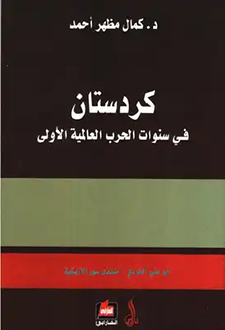
The late Iraqi Kurdish historian Dr. Kamal Mazhar Ahmad’s book, “Kurdistan in the Years of the First World War,” specifically Chapter Five titled “The Kurds and the Spilled Armenian Blood,” is one of the most valuable sources regarding the role of the Kurds in the Armenian massacres.
In this chapter Ahmad states that “The Hamidi regiments and brigades, known as the Hamidi Cavalry, carried out massacres against the Armenians with the arrangement, approval, and planning of Sultan Abdul Hamid II. To avoid drawing attention to the role of the army in oppressing the Armenians, which had led to condemnation from the European and international community, it was decided to rely on the Hamidi battalions to carry out these acts of violence. This decision resulted in the infamous Hamidi massacres.”
Armenians of Sivas
In the city of Sivas, Armenians made up 35% of the population before the massacres. Among the 166 large importing merchants, 125 were Armenian, which means Armenian merchants accounted for 75% of this group. Additionally, of the 9,800 small merchants, 6,800 were Armenian. Out of 153 craft shops, 130 were owned by Armenian craftsmen. The situation was even more pronounced in the city of Van.
All this led to jealousy and a desire to attack the Armenians and plunder what they owned.
In the city of Sivas, Armenians made up 35% of the population before the massacres. Among the 166 large importing merchants, 125 were Armenian, which means Armenian merchants accounted for 75% of this group. Additionally, of the 9,800 small merchants, 6,800 were Armenian. Out of 153 craft shops, 130 were owned by Armenian craftsmen. The situation was even more pronounced in the city of Van.
The Systematic Armenian Genocide During and After the Reign of Sultan Abdul Hamid II
The Armenians were a significant part of the Ottoman Empire. By the end of the nineteenth century, the Armenian population within the empire numbered approximately 2 million, accounting for around 5% of the total population. The Turks carried out three major systematic massacres targeting Armenians. The first two massacres occurred during the reign of Sultan Abdul Hamid II, while the Committee of Union and Progress conducted the third and largest massacre.
The First Massacre
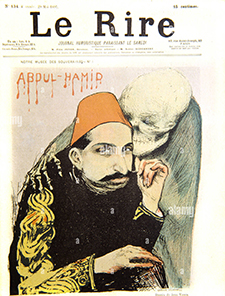
The first phase of the genocide began in 1894, as racist nationalist sentiments advocating for the establishment of a Turkish nation were gaining traction. The forces of Ottoman Sultan Abdul Hamid II, along with the Hamidi cavalry, launched a campaign of genocide against the Armenians in Western Armenia, particularly in regions like Mush and Sasun. They justified their actions by claiming that the Armenian demand for secession from the Ottoman Empire necessitated the complete elimination of the Armenian population.
The Second Massacre
The events occurred a year after the first massacre, this time in the capital, Istanbul. In September 1895, the Ottoman Sultan’s forces, with the support of mobs, began slaughtering Armenians for the same reasons as before.
According to documents from European consulates in the Ottoman Empire, the total number of victims of the Hamidi massacres reached approximately 300,000 over a period of less than two years. Additionally, hundreds of thousands of Armenians were forcibly deported to the southern regions of the Ottoman Empire.
Sultan Abdul Hamid was called the Red Sultan.
Next: The beginning of the fall of Sultan Abdul Hamid II