WASHINGTON — Russian-Armenian cosmonaut Arutyun Kiviryan will travel to the International Space Station (ISS) as part of NASA’s SpaceX Crew-14 mission aboard a Crew Dragon spacecraft, NASA announced.
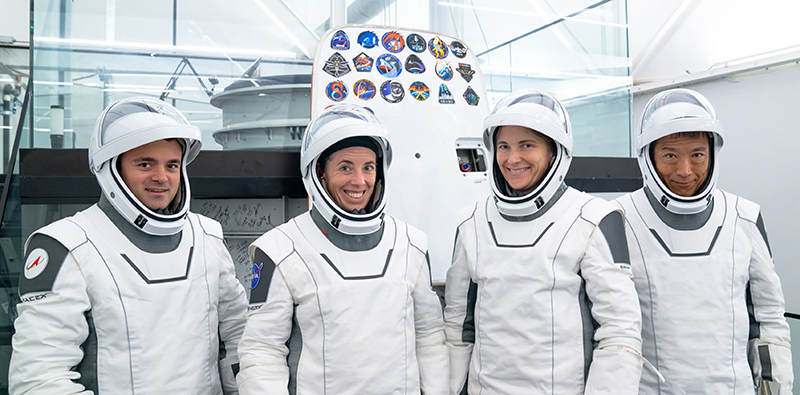
Four crew members representing three space agencies are scheduled to launch to the International Space Station no earlier than spring 2027 for a long-duration scientific expedition.
NASA astronauts Kayla Barron and Christina Birch will serve as spacecraft commander and pilot, respectively. They will be joined by Japan Aerospace Exploration Agency (JAXA) astronaut Makoto Suwa and Roscosmos cosmonaut Arutyun Kiviryan, who will serve as mission specialists.
Following docking, the Crew-14 astronauts will join the space station’s Expedition 75/76 crews.
Crew-14 will be the 14th commercial crew rotation mission conducted with SpaceX under NASA’s Low Earth Orbit Program. During their stay aboard the ISS, the crew will carry out scientific investigations and technology demonstrations designed to help prepare humans for future exploration missions to the Moon and Mars while also supporting research with potential benefits for people on Earth.
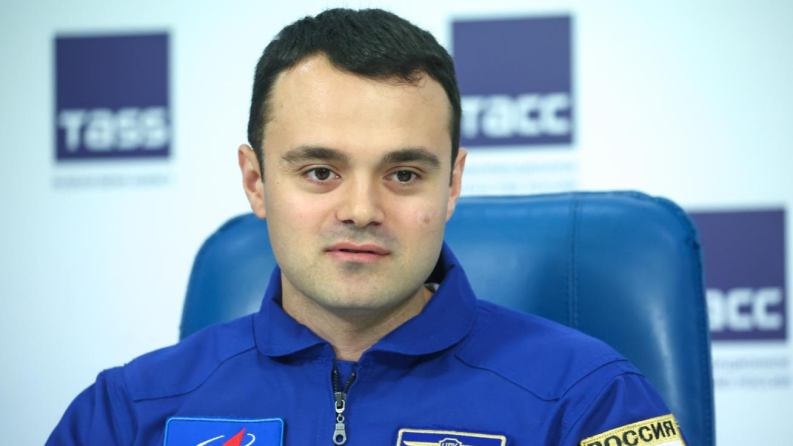
Kiviryan was born into a family of Armenian descent. He graduated from the Suvorov Military School in St. Petersburg and earned a degree in rocket engineering from Baltic State Technical University in 2015.
In 2021, Kiviryan successfully completed the selection process for the cosmonaut corps at the Yuri Gagarin Cosmonaut Training Center. Crew-14 will mark his first spaceflight and his first mission to the International Space Station.
For more than 25 years, humans have continuously lived and worked aboard the International Space Station, advancing scientific knowledge and conducting research that cannot be replicated on Earth. The orbiting laboratory also helps NASA study and address the challenges of human spaceflight, expand commercial opportunities in low Earth orbit, and lay the groundwork for long-duration missions to the Moon under the Artemis program and, ultimately, to Mars.