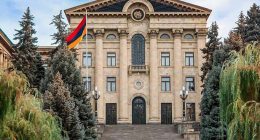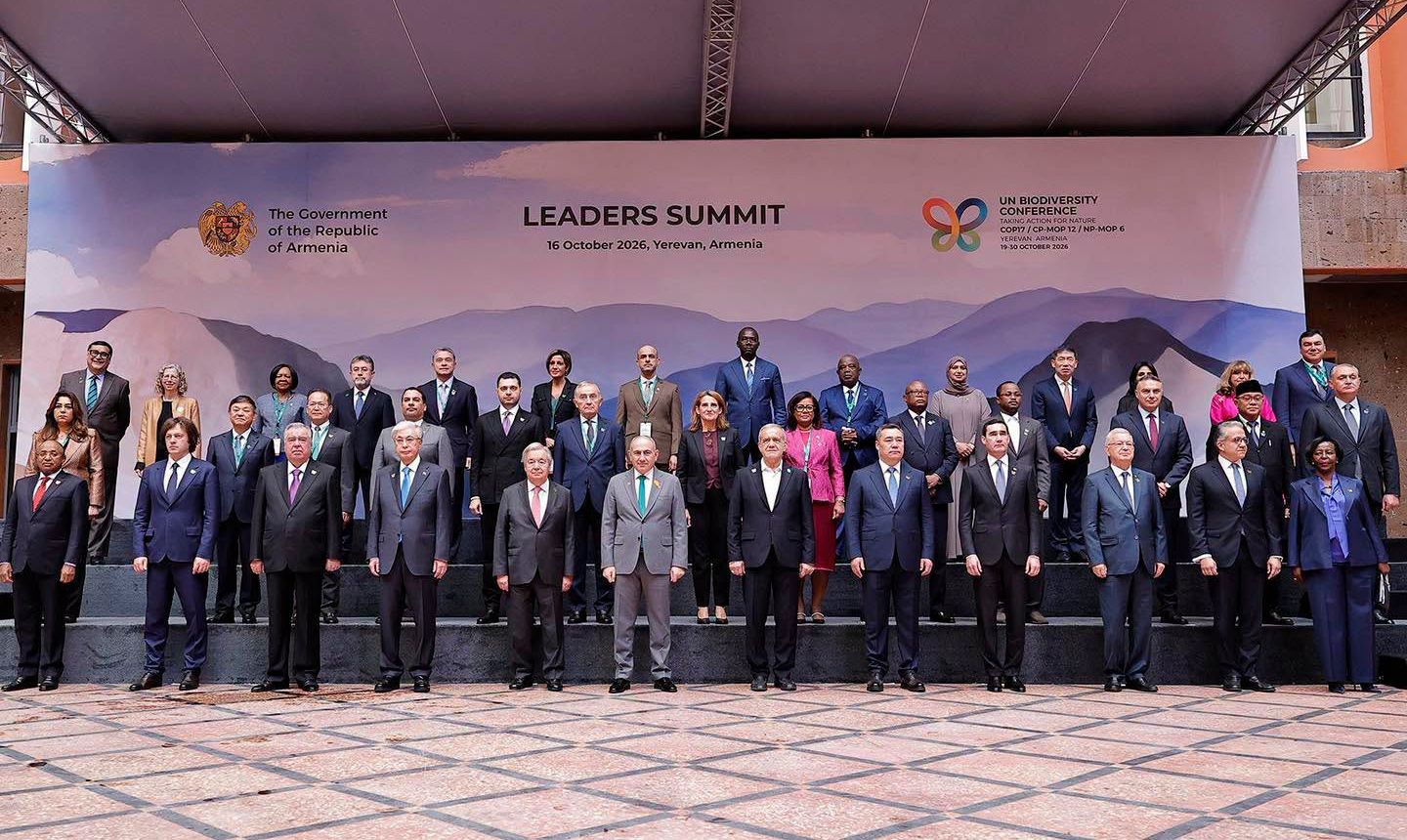

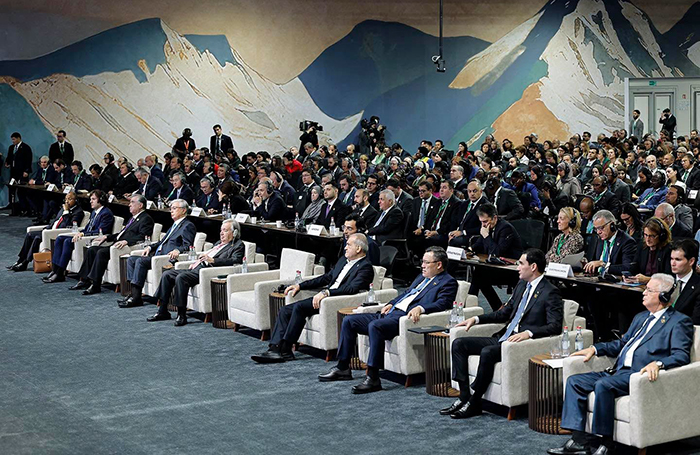
YEREVAN — Heads of state, senior government officials, and representatives of international organizations have gathered in Armenia for the Leaders for Nature Summit, organized ahead of the 17th Conference of the Parties to the Convention on Biological Diversity (COP17).
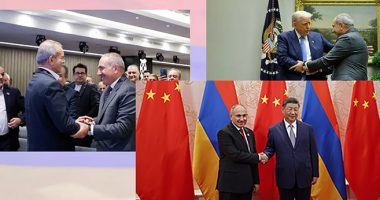
The summit has brought together leaders from more than a dozen countries, including Iranian President Masoud Pezeshkian, Kazakh President Kassym-Jomart Tokayev, Georgian Prime Minister Irakli Kobakhidze, and leaders from several Central Asian and African nations.
United Nations Secretary-General António Guterres is also participating in the gathering.
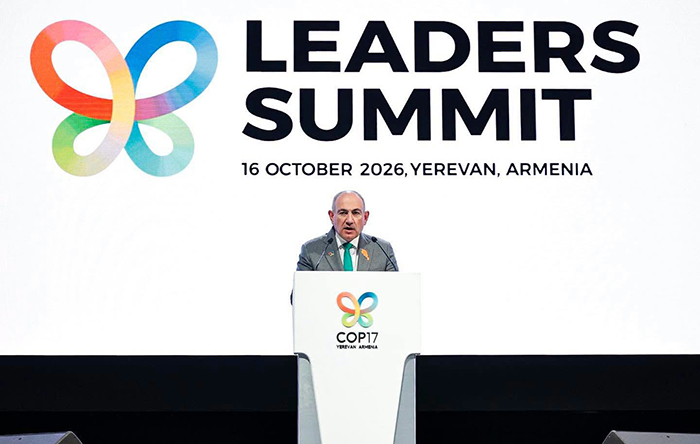
Armenian Deputy Foreign Minister Robert Abisoghomonyan confirmed that Turkey is represented by its Minister of Agriculture and Forestry, who is expected to hold meetings with leaders attending the summit. Iranian Foreign Minister Abbas Araghchi also accompanied President Pezeshkian to Yerevan.
In his opening remarks at the summit’s plenary session, Armenian Prime Minister Nikol Pashinyan emphasized the importance of biodiversity to Armenia, recalling how the country’s natural resources helped sustain its population during the severe economic hardships of the early 1990s.
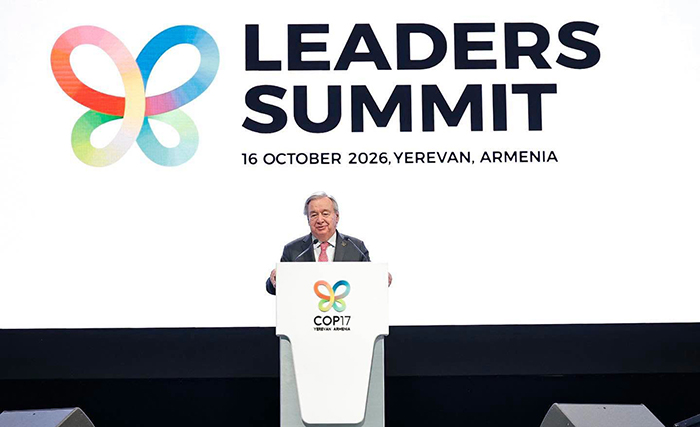
“In the early 1990s, when import and production chains had collapsed and Armenia faced daily food shortages, the fish resources of Lake Sevan came to our rescue,” Pashinyan said.
“Without exaggeration, for several years, Lake Sevan’s whitefish was one of the main sources of food for Armenia’s population. However, this also brought the lake’s fish stocks to the brink of depletion,” he added.
Iranian President Masoud Pezeshkian addressed the environmental consequences of military conflicts in the region.
He stated that the war initiated by the United States and what he called the “Zionist regime” posed serious threats to ecosystems through the destruction of energy facilities, fires, and the release of pollutants.
“This is not merely a domestic issue confined within the borders of a single country. Nature does not recognize political boundaries,” Pezeshkian said.