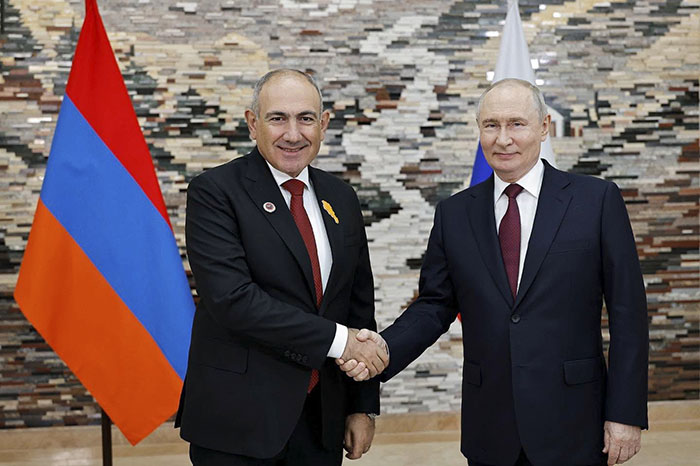
BISHKEK — Armenian Prime Minister Nikol Pashinyan and Russian President Vladimir Putin met in Bishkek, where they discussed bilateral relations, Armenia’s ties with the Eurasian Economic Union (EAEU), and Yerevan’s stated goal of moving closer to the European Union.
Putin said Russia remains committed to developing its strategic partnership and allied relations with Armenia. He noted that Russia is Armenia’s largest trade and economic partner, accounting for about 30 percent of trade, with bilateral trade reaching $2.5 billion in the first half of the year.
Addressing Armenia’s EU ambitions, Putin said Armenia has the sovereign right to determine its future, but warned that EU membership would create serious difficulties for Armenia’s continued participation in the EAEU. He argued that the regulatory systems of the EU and EAEU are incompatible and urged Yerevan to provide greater clarity about its future economic direction.
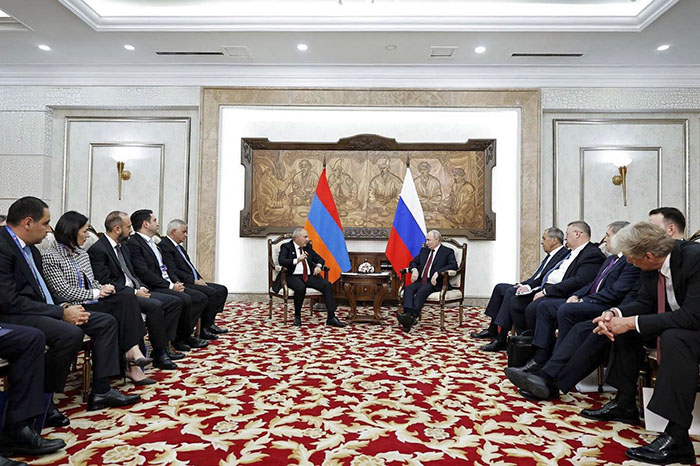
Pashinyan reaffirmed Armenia’s interest in developing and deepening relations with Russia, while noting that the regional environment has changed following the establishment of peace and that Armenian-Russian relations should be viewed in that new context.
On Armenia’s European integration process, Pashinyan said the government had reviewed its obligations toward Russia and the EAEU and had found no violations resulting from the law launching Armenia’s EU accession process. He stressed that Armenia has not notified its partners of any intention to leave the EAEU.
“This process is not directed against Russia and is not directed against the Eurasian Economic Union,” Pashinyan said, adding that Armenia highly values its relations with Russia and wants to preserve alternative options for its future development.
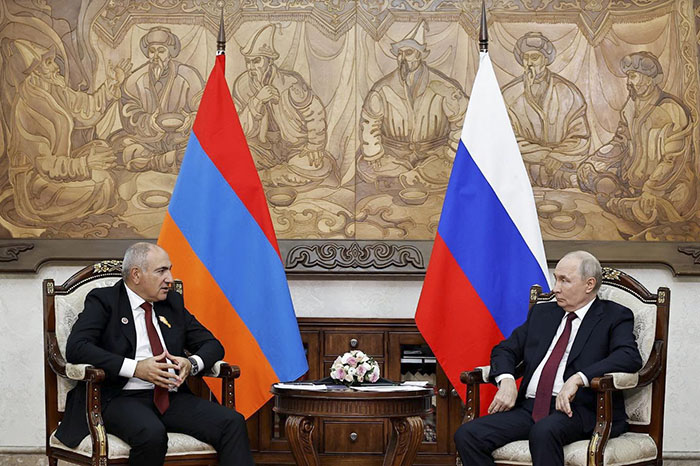
Putin disagreed, arguing that adopting a law to begin the process of joining another economic union effectively amounts to announcing an intention to leave the EAEU because membership in both organizations is incompatible. Pashinyan responded that Armenia understands a clear choice may eventually be necessary, but said that moment has not yet arrived.