
By BERGE JOLOLIAN
A protector should not threaten the country it claims to protect.
Yet when Armenia seeks greater freedom to choose its partners, Russian officials warn it of catastrophe. In October, Dmitry Medvedev, deputy chairman of Russia’s Security Council, declared: “The worst thing that could happen to Armenia is its transformation into a new Ukraine.” Coming from a senior official of the country waging war against Ukraine, those words carry an unmistakable menace.
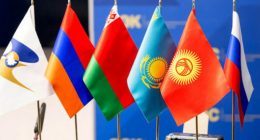
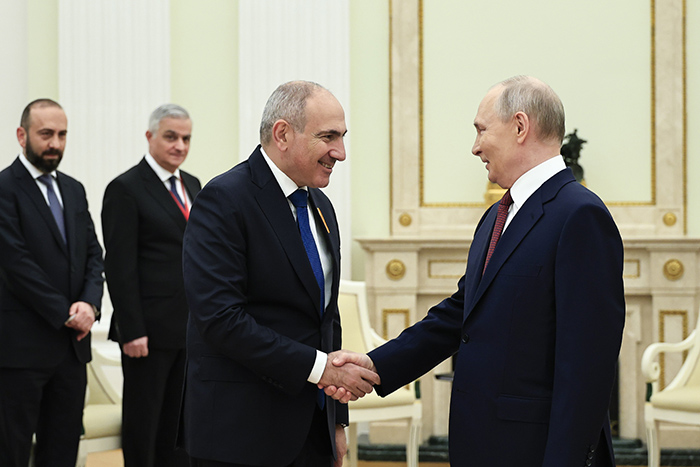
Asked in Brussels on November 3 about Medvedev’s warning, Prime Minister Nikol Pashinyan said Armenia’s aim was to strengthen its independence. He described 2027 or 2028 as a realistic time for Armenia to apply for European Union membership. The eventual choice between joining the EU and remaining in the Russian-led Eurasian Economic Union, he said, belongs to Armenia’s citizens.
Medvedev’s warning rests on a familiar proposition: Armenia can count on Russia’s protection only as long as it remains obedient.
That proposition deserves examination against the history invoked to justify it. Across imperial, Soviet and post-Soviet rule, Armenian hopes for protection have repeatedly collided with decisions made elsewhere, for interests that were not Armenia’s.
Armenia need not seek confrontation with Russia. But its sovereignty cannot remain conditional on Russian approval.
1828–1918: Protection on Imperial Terms
When much of Eastern Armenia passed from Persian to Russian rule in 1828, many Armenians hoped for greater security and national revival. For a people living under foreign rule, protection was an urgent need.
But Russia expanded its empire. It did not restore an independent Armenian state.
In 1903, the tsarist government ordered the confiscation of Armenian Church property, threatening the foundations of religious and educational life. Armenian resistance helped secure its reversal in 1905. Protection came with an expectation of submission.
Russian advances into Ottoman Armenian territories during the First World War raised hopes again. Yet the Russian retreat from Van in summer 1915 forced Armenian inhabitants to flee toward the Caucasus to escape renewed violence.
The revolutions of 1917 then shattered the Russian army holding the Caucasus front. Armenian forces and civilians faced the advancing Ottoman army with drastically reduced protection.
Under the Treaty of Brest-Litovsk in March 1918, Soviet Russia accepted the loss of Kars, Ardahan and Batum. Armenian communities bore consequences they had no power to prevent.
The Ottoman authorities remained responsible for the genocide they perpetrated. Russia’s collapse exposed the danger of making Armenian survival depend on a great power’s ability and willingness to stay.
1920–1921: A Bargain at Armenia’s Expense
Armenia’s first republic was barely two years old when forces of the Turkish nationalist government led by Mustafa Kemal, later known as Atatürk, invaded in September 1920. Their advance brought further massacres and territorial losses to a people already shattered by genocide.
Soviet rule arrived later that year with promises of salvation. In December, Stalin announced in Pravda that Soviet Azerbaijan had ceded Zangezur, Nakhichevan and Nagorno-Karabakh to Soviet Armenia. That announcement did not determine the settlement.
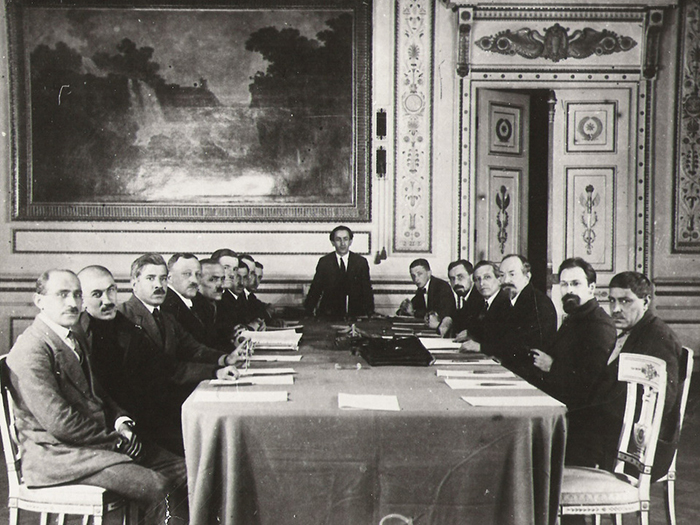
In March 1921, Soviet Russia concluded the Treaty of Moscow with Kemal’s government. Armenia had no seat at the negotiations. The agreement recognized Turkish control over Kars, Ardahan and Surmalu, including Mount Ararat. The medieval Armenian capital of Ani also remained on the Turkish side.
Nakhichevan was placed under Azerbaijan’s protection as an autonomous territory. Turkish insistence on this arrangement is documented in the negotiations. Soviet leaders accepted it as part of securing their agreement with Ankara.
Nagorno-Karabakh’s fate was decided separately. On July 4, the Bolshevik Party’s Caucasus Bureau voted to include it in Armenia. The next day, it reversed course and decided that Nagorno-Karabakh would remain within Soviet Azerbaijan, with broad regional autonomy. Its predominantly Armenian population would live under Azerbaijani administration.
The Treaty of Kars followed in October. Signed by the Turkish nationalist government and the Soviet governments of Armenia, Azerbaijan and Georgia, with Soviet Russia participating, it reaffirmed the principal territorial terms agreed in Moscow. Soviet Armenia was represented, but the foundations had already been negotiated without it.
The power presenting itself as Armenia’s protector had made terms with the government whose forces had just ravaged it.
This was imperial domination presented as protection.
1930s–1940s: Soviet Terror Directed from Moscow
Soviet rule brought another assault on Armenian national life. Writers, intellectuals, clergy and political figures were arrested by the state that claimed to have secured their future.
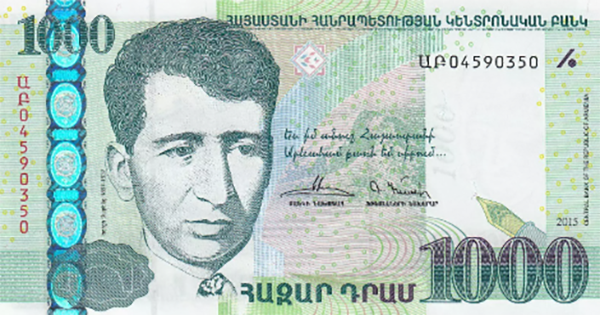
Yeghishe Charents, one of Armenia’s greatest modern poets, died in a Yerevan prison in 1937. Writer Aksel Bakunts was tortured and shot that year. Vahan Totovents, whose work preserved Armenian life before the genocide, was executed in 1938.
Zabel Yesayan’s fate makes the historical wound especially painful. A writer and witness to Ottoman atrocities, she escaped the roundup of Armenian intellectuals in 1915. She later settled in Soviet Armenia, hoping to contribute to its cultural life. Arrested during Stalin’s purges, she died in Soviet imprisonment under circumstances that remain unknown. A woman who survived Ottoman persecution did not survive the Soviet system she had embraced.
Hovhannes Kajaznuni, independent Armenia’s first prime minister, was sentenced to death and died in a prison hospital in 1938. Literary scholar and former education commissar Poghos Makintsyan was executed. Writer Gurgen Mahari survived imprisonment and exile.
Even service to the regime offered no reliable protection. Soviet Armenia’s communist leader Aghasi Khanjyan died in 1936, officially by suicide. Historian Eduard Melkonian attributes his killing to Lavrentiy Beria, Stalin’s regional party chief in the South Caucasus, or one of Beria’s subordinates.
The Armenian Church suffered extensive persecution. Melkonian records more than 160 clergy arrested during the 1930s and 1940s, of whom 91 were shot. Catholicos Khoren I, head of the Church, died in 1938 in disputed circumstances.
Citing archival research, Melkonian records 8,837 victims of repression in Soviet Armenia during 1937–1938, including 4,530 executions. Behind each number stood a family and a contribution that could never be recovered.
This was a massacre of people—and a devastating assault on Armenia’s intellectual and spiritual life.
The terror was directed by a dictatorship centered in Moscow and enforced by Soviet security organs and local officials, including Armenians. A nation already deprived of so many leaders during the genocide suffered another destruction of talent, memory and leadership.
1941–1991: Sacrifice and Coercion
Armenians paid an immense price in the defeat of Nazi Germany.
Armenian historical and commemorative accounts estimate that roughly 300,000 Armenians from Soviet Armenia and 200,000 from other Soviet republics served in the Soviet armed forces. Communities in Georgia, Azerbaijan and elsewhere shared that sacrifice. The Central Bank of Armenia’s commemorative account places Armenian war deaths at approximately 200,000.
For a people rebuilding after genocide, the loss was enormous. Their service belongs to the shared struggle against Nazism. It cannot become a permanent debt of obedience to present-day Russia.
Victory did not end repression. An archive-based project working with Armenia’s National Archives identifies 12,433 people deported from Armenia to Siberia in 1949. Families that had survived earlier upheavals could again lose their homes and freedom by state decree.
Soviet Armenia also industrialized, expanded education and produced major scientific and cultural achievements. Armenians built those achievements through their own work and talent. Recognizing them does not require forgetting the coercion.
In spring and summer 1991, Soviet army and Interior Ministry forces joined Azerbaijani special police in Operation Ring against Armenian villages in and around Nagorno-Karabakh, including Getashen, Martunashen and villages in the Shahumyan area of Soviet Azerbaijan.
Presented as passport checks and disarmament, the operation involved shelling, beatings, detention and forced expulsions. Helsinki Watch documented more than 10,000 Armenians driven from their homes.
For those families, the distinction between a protector and a threat had disappeared.
1991–2026: Security Promises Tested
After independence, Armenia again relied heavily on Russia for weapons, military cooperation and deterrence. Geography, closed borders and conflict made that reliance understandable. It also left Armenia exposed when Russian priorities changed.
The territorial settlements of 1921 continued to cast a shadow. Nakhichevan’s Armenian community dwindled and disappeared. Caucasus Heritage Watch documented the destruction of 108 Armenian monasteries, churches and cemeteries there between 1997 and 2011—98 percent of the sites it could locate and assess. The physical evidence of Armenian life was being erased.
Meanwhile, Russia armed both sides. According to the Stockholm International Peace Research Institute, it supplied 60 percent of Azerbaijan’s major-arms imports during 2011–2020 and 94 percent of Armenia’s. Armenian dependence coexisted with extensive Russian arming of its adversary.
The 2020 war demonstrated Azerbaijan’s growing military advantage. The Russian-brokered ceasefire placed Russian peacekeepers along the line of contact and the Lachin corridor connecting Nagorno-Karabakh with Armenia. Azerbaijan undertook to guarantee safe passage.
Armenia’s internationally recognized territory faced a separate security test. Azerbaijani attacks in 2021 and 2022 failed to produce the protection Armenia expected from the Russian-led Collective Security Treaty Organization. Armenia subsequently froze its participation.
On November 4, the alliance’s secretary general said Russia had proposed suspending Armenia’s voting rights over unpaid dues. Asked about the proposal the following day, Pashinyan said Armenia’s interest in the alliance had been exhausted.
In Nagorno-Karabakh, the blockade beginning in December 2022 caused severe shortages of food and medicine. Russian peacekeepers did not restore dependable access. Azerbaijan’s September 2023 offensive was followed by the flight of more than 100,000 Armenians. In 2024, the Russian contingent withdrew.
Russia has too often demanded the obedience of an ally while failing to provide the protection of one.
Economic pressure has accompanied those failures. In May 2026, Armenia received a Russian letter raising the possibility of ending a preferential supply agreement covering gas and other products as it pursued closer European integration. In October, Armenia appealed to the Eurasian Economic Union over Russian trade restrictions it said violated the bloc’s rules.
On November 1, Russia’s military cooperation chief announced that a program had been signed to build and modernize facilities for repairing Azerbaijan’s armored vehicles. Maintaining an arsenal matters as well as supplying it.
Armenia has every reason to judge promises of protection against the capabilities Russia helps its neighbor sustain.
Making Independence Work
Reducing dependence requires patient, practical work: a capable military, reliable institutions, diversified energy supplies, competitive businesses, additional export markets and partnerships that leave trained people and lasting knowledge inside Armenia.
At Yerevan’s Zvartnots Airport and at Agarak, where travelers cross into Iran, Armenian border guards now perform duties once entrusted to Russian personnel. On November 2, Pashinyan told Parliament that Armenia intends to extend that responsibility, step by step, to its entire frontier. Armenian and Russian guards still serve together along stretches of the Turkish and Iranian borders.
No country becomes secure by exchanging one exclusive dependency for another. Armenia needs relationships that expand its choices and capabilities. It must manage existing connections while making alternatives dependable.
This requires competent government, public scrutiny and a clearer contribution from the diaspora.
Affection for Russian culture, memories of Soviet life and family ties deserve respect. They are not a foreign-policy strategy. Armenians abroad must judge policies by their consequences for the people who live in Armenia and bear the risks.
Criticism of Armenian governments remains legitimate and necessary. But measuring Armenian decisions by whether they satisfy Moscow confuses another state’s preferences with Armenia’s interests.
Yeghishe Charents, whose life ended in Stalin’s prison system, left a message that still speaks to this task: “O Armenian people, your only salvation lies in your collective strength.”
That strength requires a shared commitment to Armenian statehood, alongside freedom to disagree about leaders and policies.
The objective is not to keep any particular government in control of Armenia.
It is to keep Armenia in control of Armenia.
Armenia does not owe Russia its sovereignty. It owes its citizens a future they can choose.
Berge Jololian is an Armenian-American IT and cybersecurity professional based in Yerevan, Armenia, and Watertown, Massachusetts. His writing examines Armenian statehood and sovereignty, relations between the Republic and the Diaspora, regional security, and the strategic choices facing small states.