
By KRIKOR KHODANIAN
In recent days, global attention has been focused on the parliamentary elections in Hungary. Prime Minister Viktor Orbán was fighting for his political life in a contest that would bring an end to his 16-year rule. The pre-election polls proved accurate: Orbán’s party suffered a major defeat at the hands of the force led by his former ally, Péter Magyar.
Orbán’s defeat was also a setback for Russia and for President Trump’s administration. Moscow lost its main ally within the European Union, while Trump lost an ideological partner, despite the Vice President J.D. Vance personally attending Orbán’s final campaign rally.
For quite some time, Viktor Orbán had become a thorn in the side of the European Union, gradually drifting away from democratic values and repeatedly blocking decisions requiring unanimity. Following the outbreak of the Russia–Ukraine war, Orbán aligned himself with the Kremlin and refused all forms of military and financial assistance from Europe to Kyiv, causing significant delays in the process.
Orbán had effectively become an autocratic ruler, bringing the judiciary and the media under his control. Corruption had begun to erode the economy, making the country one of the poorest in Europe. Economic decline ultimately led to the fall of his government, and Brussels welcomed with great satisfaction the rise to power of pro-European forces.
Orbán’s defeat is also welcomed by Armenians and Armenia. It was he who extradited Ramil Safarov—who had murdered Armenian officer Gurgen Margaryan with an axe during a NATO training exercise—to Azerbaijan, where he was supposed to serve a life sentence. Upon his return, however, he was pardoned by President Ilham Aliyev and celebrated as a hero.
The close relationship between Orbán and Aliyev continued thereafter. Hungary consistently sought to block European aid to Armenia, insisting that similar assistance be provided equally to Azerbaijan. In this way, Yerevan has been freed from the “Orbán headache.”
Armenia’s opposition circles have also expressed satisfaction at Orbán’s defeat, believing that a similar outcome could occur in the parliamentary elections scheduled for June. However, drawing parallels between Orbán and Prime Minister Nikol Pashinyan is misplaced. Orbán’s system more closely resembled their own period in power, when Armenia was plagued by systemic corruption and widespread bribery, the economy was concentrated in the hands of those close to the government, and freedoms were restricted for all. Today, Armenia’s economy is steadily developing, and the media is free and diverse.
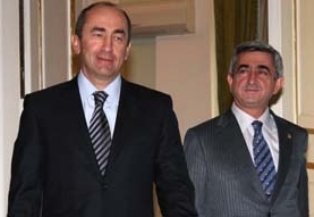
Despite his many shortcomings, Orbán ultimately demonstrated a degree of political will by allowing his people to participate in free and fair elections—something that Robert Kocharyan and Serzh Sargsyan denied to Armenia’s citizens. In desperation, the people took to the streets in 2018 and, through the Velvet Revolution, overthrew their twenty-year, ill-fated rule.
“MASSIS”
Note: Translated with the assistance of ChatGPT