
JERUSALEM — The Israeli government’s recent decision to withdraw a bill recognizing the Armenian Genocide was prompted by pressure from Azerbaijan, according to the prominent Israeli newspaper Haaretz.
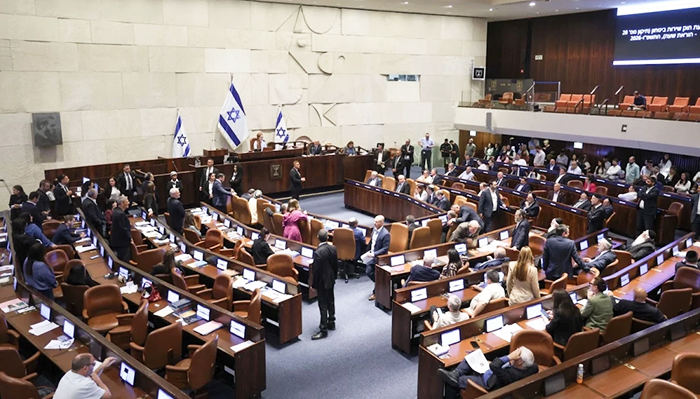
The bill recognizing the Armenian Genocide was unanimously approved by the Israeli government in late June at the initiative of Foreign Minister Gideon Sa’ar. To become law, however, the legislation still required approval by Israel’s parliament, the Knesset.
The sudden move toward recognition was widely viewed as a diplomatic blow against Turkey, which has described Israel’s actions in Gaza since 2023 as genocide.
According to the Israeli newspaper, however, the bill was removed from the Knesset’s agenda after Hikmet Hajiyev, foreign policy adviser to Azerbaijani President Ilham Aliyev, contacted Israeli Prime Minister Benjamin Netanyahu. Haaretz reported that Netanyahu’s personal intervention subsequently halted the process.
The bill was withdrawn shortly before the Knesset began its parliamentary recess last Friday, ahead of Israel’s national elections. As a result, the recognition issue has been pushed aside indefinitely.
Baku, a close partner of both Israel and Turkey and a longtime opponent of recognizing the Armenian Genocide, expressed dissatisfaction when the Israeli government initially voted in favor of recognition. Although Israeli-Turkish relations have deteriorated in recent years, Azerbaijan has maintained strong relations with the Jewish state.
Israeli Foreign Minister Sa’ar rejected the allegations presented in the Haaretz report.
“There is a government decision [on recognizing the Genocide], and it was adopted unanimously. It will not change, and that is the important and historic fact,” Sa’ar told the newspaper.
The Haaretz report appears to confirm previous speculation regarding Azerbaijan’s role in Israel’s decision to halt the recognition process. Azerbaijan’s state-run APA news agency had reported similar claims published in the Greek press but did not provide details about Baku’s alleged intervention.
Azerbaijan is not only a close partner of Israel but also maintains deep cultural and political ties with Turkey. Baku’s alliance with Ankara is centered on political, military and economic cooperation.
At the same time, much of Israel’s oil comes from Azerbaijan through an Azerbaijani-Georgian-Turkish pipeline before being transported across the Mediterranean Sea. Azerbaijan also imports Israeli military technology, which it used extensively during the 2020 Nagorno-Karabakh war.
CNN reported in June that Israeli forces had also operated from Azerbaijani territory during U.S. and Israeli attacks against Iran that began in February.
Although both Turkey and Azerbaijan publicly opposed Israel’s recognition of the Armenian Genocide, Azerbaijan’s statement on the matter was noticeably more diplomatic in tone.
“The distortion of historical facts concerning the events of 1915 and the reduction of a complex historical issue to a political decision without a solid legal or academic basis are unacceptable. We call on the Israeli government to reconsider this decision,” the statement said.