
By BERGE JOLOLIAN
Ilham Aliyev has an unusual way of explaining his commitment to peace.
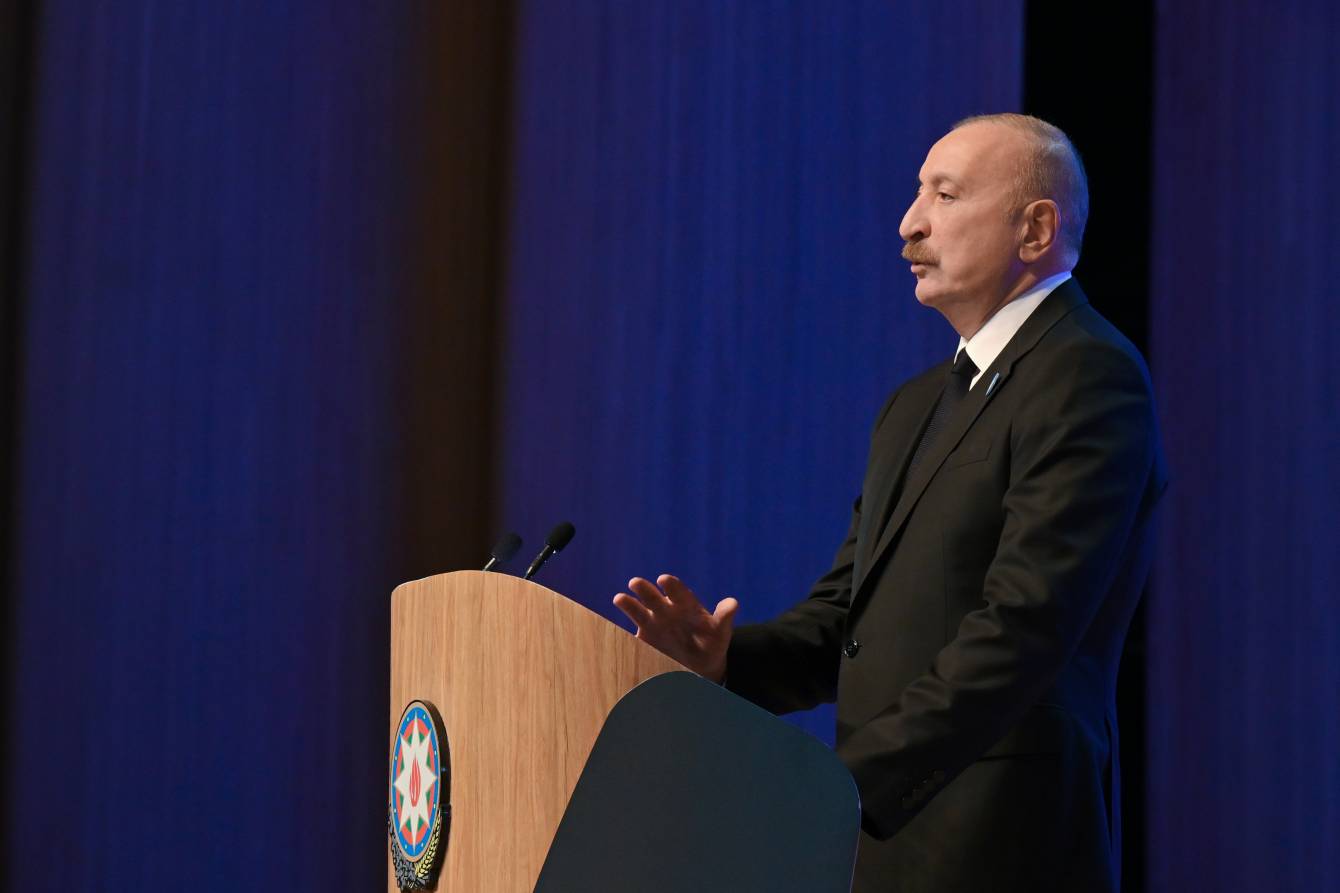
On October 2, Azerbaijan’s president told his ruling party’s congress: “If we had surrendered to emotions, today, a third Victory Arch would likely have been erected in the center of Yerevan.” He presented this imagined conquest as evidence of his restraint.
For those of us living in Yerevan, the city in that sentence is home. People here want what people elsewhere want: to raise their families, build their careers and make plans without wondering whether another war will interrupt them.
European and American leaders have good reasons to support a settlement. Open routes could bring trade, investment and opportunities to a region that has spent too long preparing for its next confrontation. Armenia needs that opening. So does Azerbaijan.
But a peace process becomes vulnerable when the desire to celebrate progress makes its sponsors reluctant to confront the behavior that threatens it.
The question is whether Aliyev’s partners will make cooperation more rewarding than coercion.
A peace worth making real
There is progress to build on. At their September 24 meeting in New York, Armenian Foreign Minister Ararat Mirzoyan and Azerbaijani Foreign Minister Jeyhun Bayramov highlighted trade and transit as practical benefits of peace and agreed to continue direct dialogue. Those exchanges deserve encouragement.
The agreement initialed in Washington in August 2025 provides a standard against which to judge what follows. Its text recognizes sovereignty and territorial integrity, rejects territorial claims and the threat or use of force, and commits both countries to combating racial hatred. Initialing established an agreed text; it did not complete the process of bringing a peace treaty into force.
The U.S.–Armenia TRIPP framework offers another opportunity. Published in May 2026, it sets out plans for regional transport and other infrastructure while expressly preserving Armenia’s sovereignty and jurisdiction, including responsibility for borders and customs. That is a basis for useful cooperation. A framework, however, still has to become functioning infrastructure, dependable procedures and benefits people can see.
An Armenian business reaching a new market, a driver crossing a border without fear, a family able to invest its savings with greater confidence: these are reasons to pursue peace seriously.
They also explain why scrutiny matters. We should distinguish what has been achieved, what is underway and what remains a promise. The useful question is whether each step makes the relationship more secure—and what evidence would show that it has.
The neighbor Armenia is being asked to trust
Aliyev’s language makes that question unavoidable.
In January 2025, he called Armenia a “fascist state.” Referring to what he portrayed as Armenian fascism, he declared: “Either the Armenian leadership will destroy it, or we will.” In the same interview, he demanded that Armenia stop arming, that France and other suppliers cancel their contracts, and that weapons already delivered be returned.
Those statements preceded the Washington meeting. A successful peace process should change such positions. Yet the October 2 speech, delivered more than a year after the agreement was initialed, offered little reassurance. Aliyev branded all former Armenian leaders war criminals deserving punishment, described Armenians collectively as historically treacherous, and insisted that Azerbaijan maintain overwhelming military superiority.
The speech does not establish that an invasion is imminent. It does show a president still presenting Armenia as a country to be kept subordinate. That is a serious obstacle to the confidence a settlement requires.
Nor did the underlying territorial narrative begin with Nikol Pashinyan.
Heydar Aliyev, Azerbaijan’s president from 1993 to 2003, was the father of its current president, Ilham Aliyev. Ilham succeeded him in 2003 and, in 2017, appointed his own wife, Mehriban Aliyeva, First Vice-President. Political continuity in Baku has become a family affair.
In January 1998, Heydar Aliyev declared: “The historical territories of Azerbaijan must be returned.” He presented lands in Armenia as territories wrongfully ceded. His speech records a political claim, not proof of historical ownership. It does show that this narrative long predates Armenia’s recent defense partnerships.
Specific border disputes need maps, records and reciprocal negotiation. They cannot justify treating the neighboring republic as unfinished territory. The same applies to transport: access through Armenia must rest on agreed rules and Armenian consent.
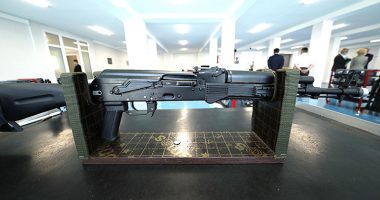
Armenia’s defense choices deserve scrutiny, including their cost and effectiveness. But its ability to defend itself cannot depend on Azerbaijan’s permission. A government asked to make difficult compromises must also protect its citizens if those compromises fail to deliver security.
Diplomacy and defense therefore belong together. Negotiations can reduce danger and create time; Armenia must use that time to build capable institutions, strengthen its economy and improve its defenses. No partnership can relieve the Republic of that responsibility.
Peace must reach the prisoners
For families waiting for Armenians held in Azerbaijan, peace has a more immediate meaning: someone coming home.
Their release should be a central objective of international diplomacy. Better prison conditions are an urgent obligation while they remain detained; they are not an adequate substitute for resolving their captivity.
The conduct of the trials makes that demand more pressing. In February, Amnesty International described the convictions of sixteen Armenian defendants as a travesty, citing military trials of civilians, proceedings effectively closed to scrutiny and evidence that defendants could not adequately understand. These findings require answers, not another ceremonial assurance that justice has been served.
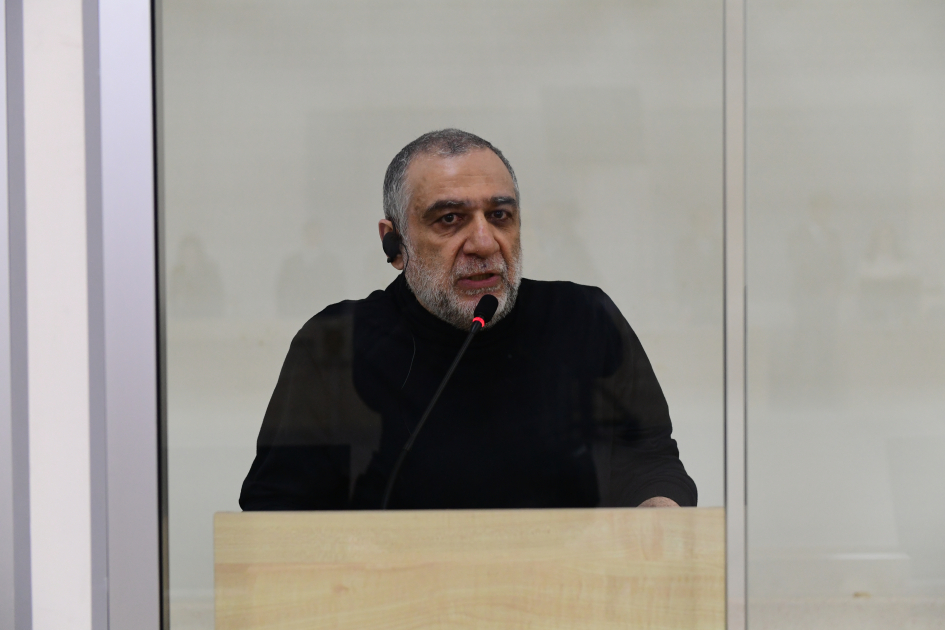
On September 21, Human Rights Watch reported Ruben Vardanyan’s allegations that Armenian prisoners were being denied regular family contact, adequate exercise and medical tests. HRW explicitly said it had not independently verified the allegations; Azerbaijan’s human rights commissioner rejected them. Regular independent access is precisely what could help establish the facts.
Although Azerbaijan closed the International Committee of the Red Cross’s delegation in September 2025, Geneva-based representatives visited prisoners that December. HRW says visits have become less regular. Families need dependable contact and independent scrutiny, alongside sustained efforts to secure release.
Aliyev’s government has shown that it can act swiftly when it wants a prisoner freed. In 2004, Azerbaijani officer Ramil Safarov murdered Armenian officer Gurgen Margaryan with an axe while he slept during a NATO-sponsored course in Hungary. After Hungary transferred Safarov to Azerbaijan in 2012, he was pardoned, promoted and awarded benefits. In 2020, the European Court of Human Rights found that Azerbaijan’s failure to enforce his sentence, and its discriminatory treatment of the case, violated the European Convention.
That history matters because governments teach through the conduct they reward. A state seeking reconciliation should confront the glorification of ethnic violence, not leave it as a lesson for the next generation.
Azerbaijan also has citizens who have tried to offer a different lesson. Researcher Bahruz Samadov advocated dialogue with Armenians. He is serving fifteen years on treason charges that Amnesty describes as fabricated and tied to his peaceful work. On September 25, the organization again demanded his immediate, unconditional release.
People such as Samadov demonstrate that another relationship is possible. Their imprisonment makes it harder to build. A government cannot convincingly prepare its people for reconciliation while punishing citizens who practice it.
History that can be examined
At Gandzasar in September, visiting diplomats were shown another example of how hostility is sustained.
Presidential aide Hikmet Hajiyev displayed blank pages in exhibition manuscripts and used them to question Armenian history. The Matenadaran, Armenia’s manuscript institute, answered with something more useful than an insult: the originals.
Its explanation was straightforward. The objects at Gandzasar were replicas made for exhibition. Selected pages had been reproduced; the remaining pages were blank. Director Ara Khzmalyan showed an original corresponding to a replica and invited diplomats and scholars to examine the collection in Yerevan. One identified manuscript was written in 1232 and illuminated in Karabakh in the fourteenth century.
The historical record was available for inspection. Anyone seriously interested in the truth had somewhere to begin.
The concern extends beyond one presentation. Using satellite imagery and historical documentation, Caucasus Heritage Watch recorded the destruction of 108 Armenian monasteries, churches and cemeteries in Nakhchivan between 1997 and 2011—98 percent of the sites it located and assessed. The researchers identified a pattern of systematic cultural erasure.
This is why independent monitoring matters. Preservation includes inscriptions, cemeteries and an honest account of the communities that created and used them. An official tour cannot replace access for qualified researchers.
Azerbaijan’s sovereignty does not require Armenian history to disappear. Acknowledging that history does not, by itself, determine a modern border. Diplomacy should be capable of respecting both territorial integrity and historical truth.
Why Europe should pay attention
Europe has its own reasons to examine how Aliyev uses power.
In September, Reuters reported diplomats’ allegations that Azerbaijan had pressured France over detained French citizens in connection with sanctions against Russian billionaire Alisher Usmanov. Baku denied the pressure campaign. The EU removed Usmanov from its sanctions list on September 22; Aliyev pardoned French citizen Martin Ryan the following day.
France subsequently confirmed Ryan’s release and return home. That was welcome news for him and his family. The sequence does not establish a bargain, but the reported pressure deserves investigation. If detention becomes an effective way to influence another government’s decisions, its success could encourage repetition.
Aliyev’s contempt for European scrutiny is less ambiguous. On September 15, the official English transcript of his remarks described the European Parliament as a “nest of corrupt figures.”
There is an uncomfortable history behind that accusation. A 2018 independent investigation into the Parliamentary Assembly of the Council of Europe—a separate institution—found ethical breaches and strong suspicions of corruption involving activities favorable to Azerbaijan. Europe’s own institutions have already documented the dangers of compromised scrutiny.
The answer is stronger oversight of lobbying, gifts and political relationships. Strategic cooperation should not purchase exemption from scrutiny.
Energy supplies and transport routes are legitimate European interests. Their value, however, depends on predictable rules and a stable region. Investment becomes more vulnerable when a powerful participant assumes that its usefulness makes misconduct tolerable.
Washington faces the same problem. Its plans for regional connectivity will be safer if Armenia’s sovereignty is respected when disagreements arise. Commercial opportunity cannot substitute for that commitment.
Give commitments consequences
The response should strengthen the peace process by making its standards matter.
Washington and European capitals should press for the release of Armenian prisoners, require answers to the documented failures of their trials, and insist on regular independent access, medical care and family contact while they remain held. They should also demand the release of people imprisoned for peaceful advocacy, including Samadov.
Heritage protection needs qualified monitors with access to sites and inscriptions. Border incidents need credible investigation. Transport agreements need rules that preserve sovereignty and provide a practical way to settle disputes before they become confrontations.
Expanded assistance and privileged cooperation should depend on progress in these areas. Governments should explain what they expect, set review dates and identify what will happen if commitments are ignored. Quiet diplomacy has a place, but indefinite promises without consequences make pressure easier to sustain.
The United States already has a relevant instrument. Section 907 restricts assistance to Azerbaijan’s government, subject to exceptions and presidential waiver provisions. President Trump extended a waiver in August 2025, certifying, among other conditions, that assistance would neither hamper peace negotiations nor be used offensively against Armenia. Congress should closely examine the evidence supporting any renewal. Where the legal conditions cannot be met, the restrictions should apply.
The United States and EU should also pursue targeted sanctions where evidence establishes responsibility for serious abuses or corruption. Such measures should identify the responsible officials, follow due process and specify the changes needed for relief. Their purpose is to change decisions and protect people.
Armenia has work to do as well. Its government should present precise evidence and achievable requests, explain difficult choices honestly, and turn its partnerships into lasting capacity: trained personnel, equipment that can be maintained, stronger institutions and trade that creates opportunity. The test remains: does this strengthen Armenia, and what evidence shows that it has?
Public debate should recognize useful progress and demand correction of failures. Anger at an Armenian government does not answer the threats facing the Armenian state. Citizens and organizations abroad can scrutinize policy while supporting the Republic’s security and freedom to choose its future.
Europe and the United States need not abandon engagement with Aliyev. They should stop treating engagement itself as evidence that he has changed. Released prisoners, protected heritage, freedom for peaceful critics and respect for Armenia’s defenses and borders would provide more convincing evidence.
For people in Yerevan, the most meaningful monument to peace would be an ordinary future: children growing up, businesses opening and families planning beyond the next crisis.
Armenia’s security must rest on more than Aliyev’s account of his self-restraint. It must rest on commitments that are honored—and consequences when they are not.
Berge Jololian is an Armenian-American IT and cybersecurity professional based in Yerevan, Armenia, and Watertown, Massachusetts. His writing examines Armenian statehood and sovereignty, relations between the Republic and the Diaspora, regional security, and the strategic choices facing small states.