By KRIKOR KHODANIAN
The disagreements that have persisted for some time between the clergy of the Armenian Apostolic Church and the state are taking on new forms, threatening to disrupt Armenia’s overall domestic climate. The consequences of this could deeply affect the public’s expectations and perceptions regarding our national and spiritual values. Whispered rumors within narrow circles about certain clergymen’s unseemly behavior in their private lives—conduct unbecoming of the Church—have now become public knowledge, spreading not only through social media but even through the press and news outlets.
We find ourselves facing this unpleasant reality as a result of statements that began to be voiced by the Catholicos of All Armenians. Immediately after the war, Catholicos Karekin II joined the opposition in calling for the Prime Minister’s resignation. From that point onward, relations between the two sides began to deteriorate sharply, leading to the unfortunate situation of recent days.
In order to end the discontent that had arisen over his leadership, Prime Minister Pashinyan submitted his resignation in the spring of 2021, and snap elections were held. Despite the country’s heavy defeat during the war, the public re-elected the ruling force, and Pashinyan remained in office. Nevertheless, Karekin II continued to insist that the Church’s position remained unchanged. Not content with that, high-ranking clerics began to take an active part in successive protest movements organized by the opposition. When the political opposition failed to achieve its goals, members of the clergy took matters into their own hands, and Bishop Bagrat led what was called the “Holy Struggle” movement, which was later accused of preparing terrorist acts. Karekin II could have halted that movement at the time but did not, and as a result, Bishop Bagrat was arrested. Today, three senior clergymen of the Armenian Church are in prison because the Church, having strayed from its primary spiritual mission, became entangled in the mire of politics.
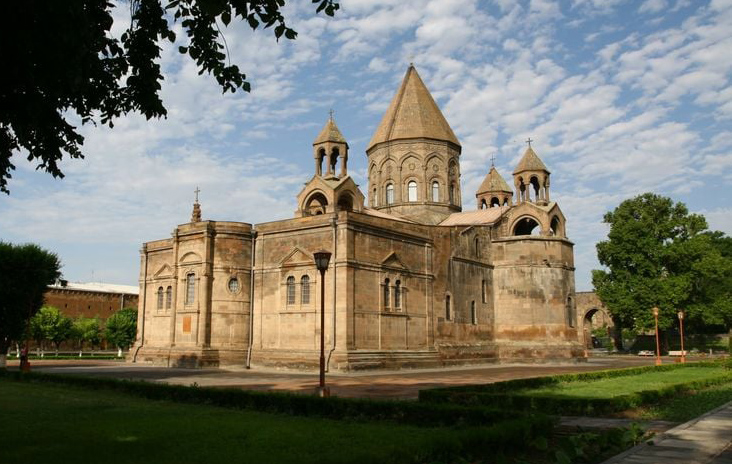
At one point, there appeared to be an opportunity to close the chapter of disagreement between the Church and the state. At the invitation of the Mother See, Armenia’s leadership attended the official re-consecration ceremony of the renovated Mother Cathedral last September. There was hope that calm would prevail from that day onward, but that did not happen. New accusations were voiced by the Mother See, to which the Prime Minister responded harshly—demanding, for the first time, the resignation of Karekin II, accusing him of violating his monastic vows.
Armenian society is now divided into two camps: some agree with the Prime Minister, while others see what is happening as the beginning of a campaign to trample on spiritual values.
When these events first began to unfold, many—including the Social Democrat Hunchakian Party—warned that the Mother See’s involvement in political matters could lead to grave and unpredictable consequences. Time has proven that those concerns were justified and well-founded.
There are now two possible ways out of this situation: the first is that Karekin II steps down from his position in one way or another; the second is that Pashinyan’s party loses the next elections—something that seems unlikely. Until then, the Armenian Church will continue to remain in a state of genuine crisis.
“MASSIS”
Note: Translated with the assistance of ChatGPT