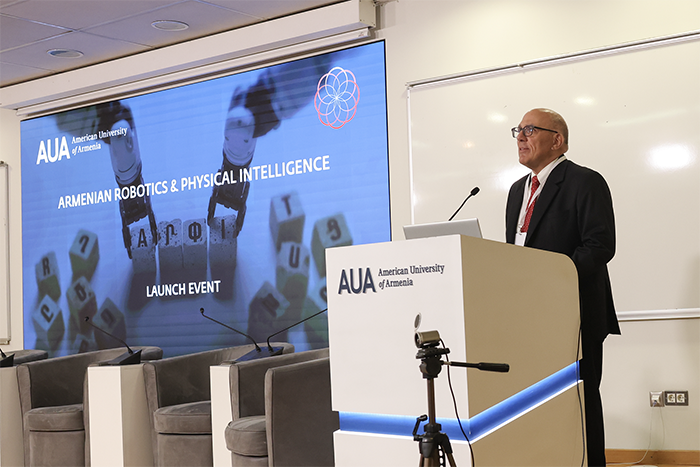
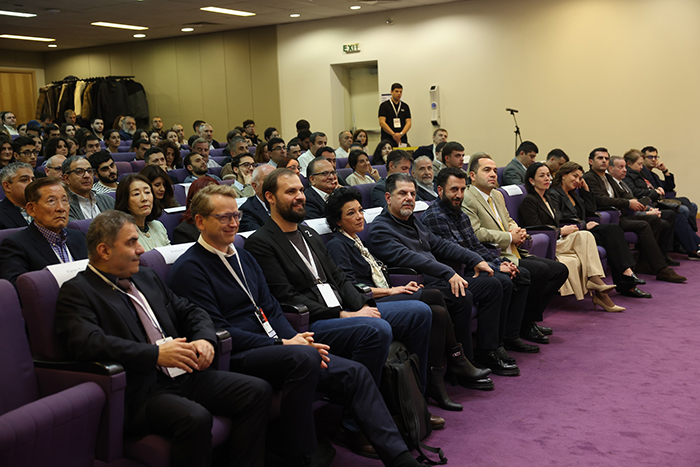
YEREVAN — On November 22, the American University of Armenia (AUA) hosted the kickoff event of the Physical AI in Armenia program and the launch of the Armenian Robotics and Physical Intelligence (ARPI) program. The event brought together government officials, university representatives, international technology experts, and industry leaders, including Armenia’s Minister of Education, Science, Culture, and Sport Zhanna Andreasyan; Minister of High-Tech Industry and Artificial Intelligence Davit Tadevosyan; NVIDIA’s Vice President of Physical AI Simulation and AUA Trustee Rev Lebaredian; and ARCS-ai Chair Nora Ayanian, associate professor at Brown University, among others.
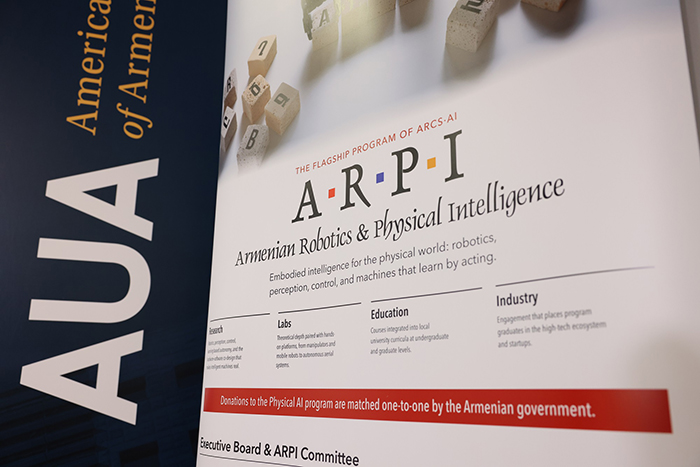
An initiative of Advanced Research in Computational Sciences and Artificial Intelligence (ARCS-ai), ARPI aims to advance robotics and Physical AI in Armenia by establishing a collaborative platform connecting universities, scientists, students, engineers, and industry partners. The initiative brings together faculty, students, and equipment from AUA, Yerevan State University (YSU), and the National Polytechnic University of Armenia under a single program, with a goal of graduating 50 engineers a year specialized in Physical AI.
ARPI was officially announced at Digitec in Yerevan on November 20, with Rev Lebaredian of NVIDIA and representatives of the participating universities.
The initiative connects three key areas: education, research, and innovation, as part of a broader national effort to establish Armenia as a contributor to the rapidly developing field of Physical AI.
AUA’s participation in this initiative builds on its established academic environment, the strengths of the Zaven P. and Sonia Akian College of Science and Engineering, its experience in applied research, and its international academic connections. As one of the three principal academic partners in the government-supported program, AUA will contribute to strengthening research and educational capacities and preparing the next generation of specialists in these fields.
The November 22 event opened with welcome remarks by AUA President Dr. Bruce Boghosian, who reaffirmed the University’s commitment to the program and its role in advancing Physical AI education and research in Armenia. While highlighting the broader challenges accompanying the rapid development of AI, particularly the growing demands that increasingly sophisticated computational technologies place on the physical systems that sustain them, he noted that this challenge also presents an extraordinary opportunity for Armenia, which is particularly well positioned to benefit from it. He added that AUA’s research strategy in the age of AI takes shape from this very challenge.
“Seven years from now, we will certainly want to count the laboratories established, the specialists trained, the research papers published, and the technologies developed. But I hope we will also be able to point to something more enduring, and that is a generation of Armenian scientists and engineers who have learned to work together, who are connected to the international scientific community, and who have the confidence to tackle problems of genuine importance not only to their country but also to the world,” Dr. Boghosian said.
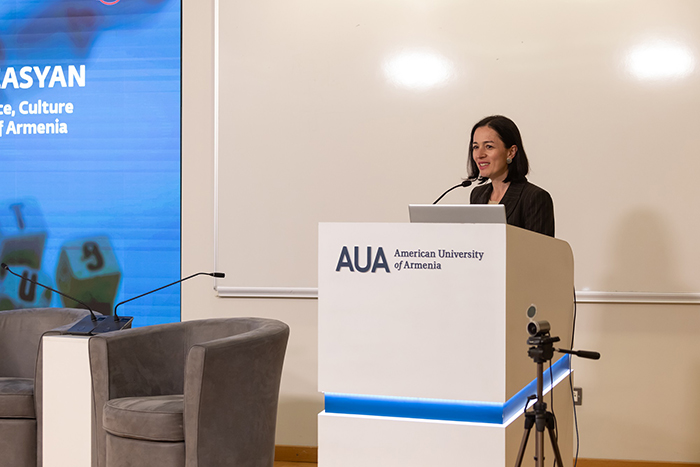
Minister Andreasyan emphasized the program’s role in advancing science, higher education, and advanced technologies in Armenia. She outlined the program’s expected outcomes, including approximately 330 graduates over seven years, international research publications, innovative developments and patents, and opportunities to establish new technology companies. “More important than these figures, however, is the long-term outcome we are striving to achieve: to create a scientific and educational environment in Armenia where talented young people can receive an education that meets international standards, pursue cutting-edge research, and build professional futures in Armenia,” she said.
In his turn, Minister Tadevosyan congratulated the three participating universities, emphasizing the importance of conviction and forward-looking vision in launching initiatives of this kind.
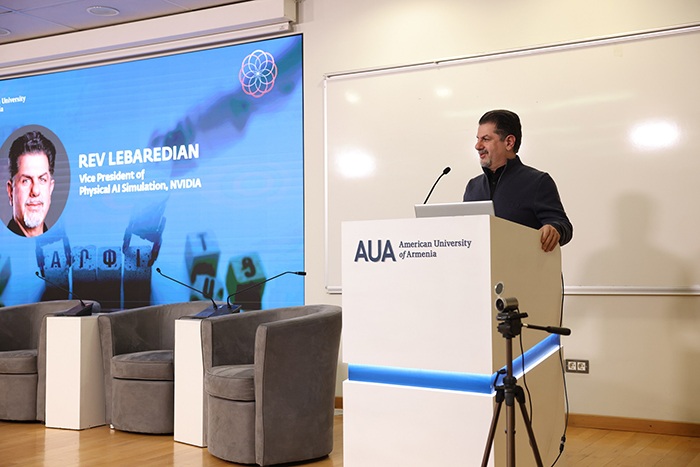
Rev Lebaredian delivered the keynote address, discussing the future of Physical AI and the opportunities for Armenia to take a leading role in the development of the field. Noting that the field is still at an early stage globally, he highlighted Armenia’s computing resources, skilled human capital, craftsmanship, and industrial base as important advantages.
“We believe in ourselves, we believe that we will be part of this future, and we are willing to put our resources and our might behind that, and with that, we could invite all of our international partners to come, do this work here, to come, enjoy the resources we have here, most precious of which are human brains, but also our newly developed computing resources — which is a scarce one — that very few countries in the world have,” he highlighted.
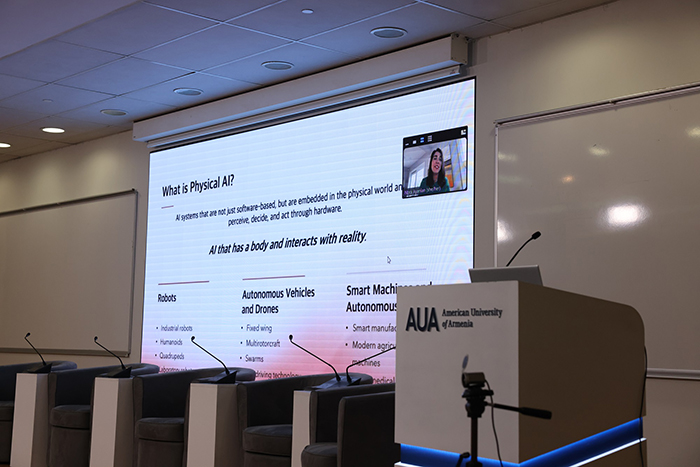
Lebaredian’s remarks were followed by an address from ARCS∙ai Board Chair Nora Ayanian, who outlined the ARPI’s educational and research plans, including opportunities for international academic collaboration, the launch of undergraduate robotics courses, plans for graduate-level specializations, and initial research priorities.
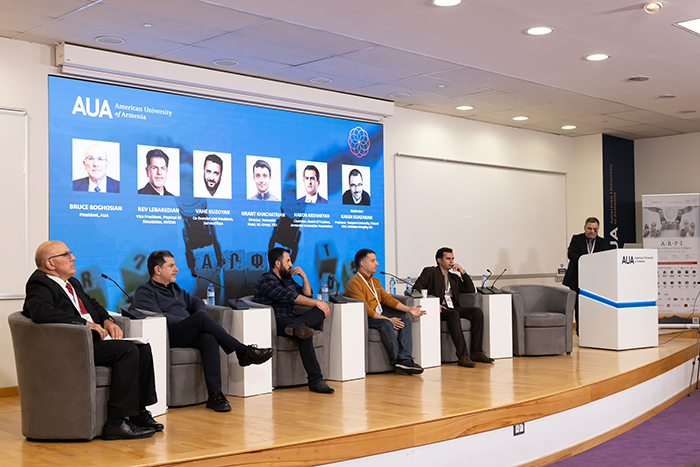
The program continued with a panel discussion moderated by Karen Egiazaryan, senior fellow at ARCS∙a. Panelists included Dr. Bruce Boghosian; Rev Lebaredian; Hrant Khachatryan, director of YerevaNN and head of YSU’s Machine Learning group; Hakob Arshakyan, chair of the Board of Trustees of the Armenian Innovation Foundation; and Vahe Kuzoyan, co-founder and president of ServiceTitan, and AUA trustee.
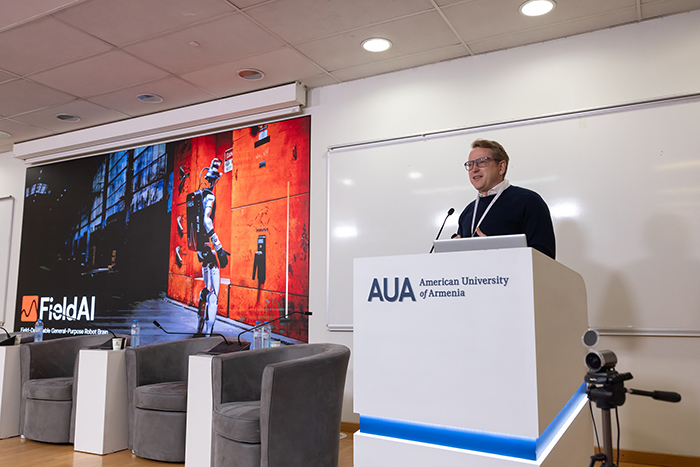
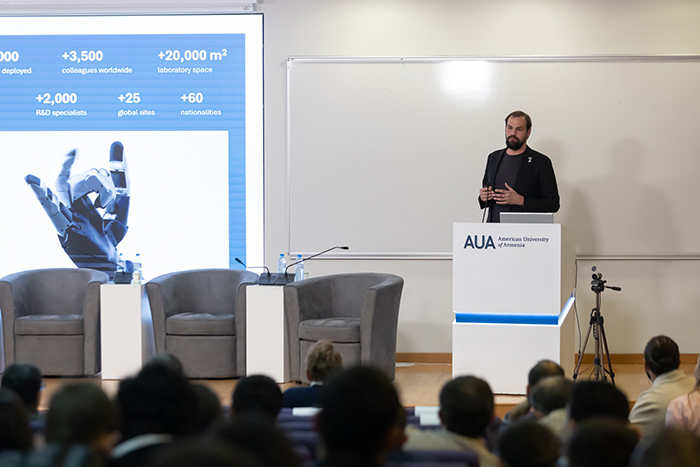
The second part of the event featured a Q&A session on Physical AI in industry, moderated by Astghik Hakobyan. Keynote speeches followed, featuring Sven Parusel, head of Research Partnerships at Agile Robots, and Andrey Konchenko, head of product at FieldAI.