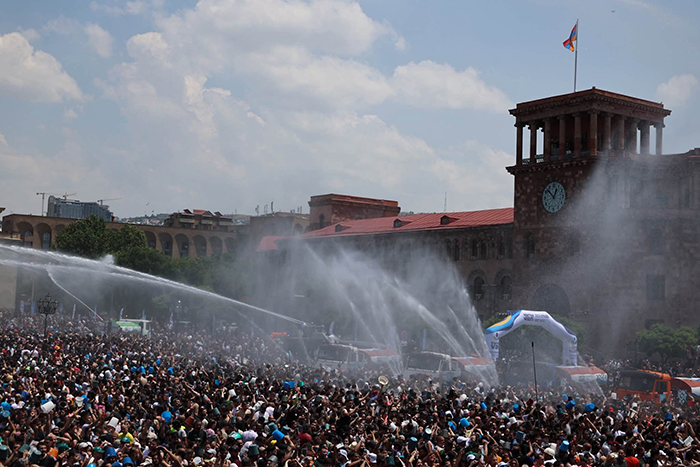

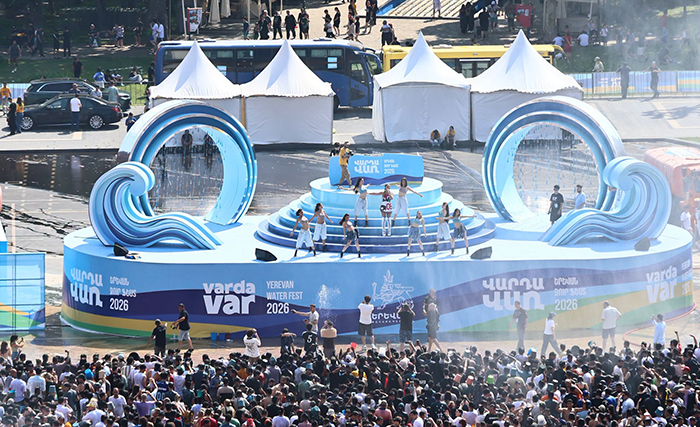
YEREVAN — Vardavar celebrations began early Sunday morning in Yerevan. In Republic Square, around Swan Lake, and along numerous streets throughout the capital, people sprayed one another with water guns, buckets, and bottles, continuing the holiday’s most beloved tradition.
The festive atmosphere brought together both Yerevan residents and visitors to Armenia. Foreign tourists also joined the water fights, taking part in the celebration with music, dancing, high spirits, and plenty of friendly splashing.
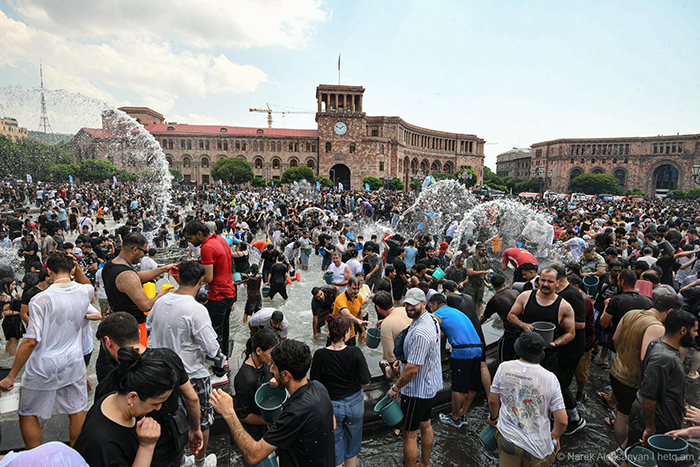
Republic Square once again became one of the main centers of the festivities, attracting large crowds throughout the day for water-based games and entertainment.
Vardavar is one of the five major feast days of the Armenian Apostolic Church and commemorates the Transfiguration of Jesus Christ. In Armenia, however, the holiday has also preserved its popular traditions, becoming one of the country’s most beloved and joyful celebrations of the year.
******
Vardavar: Armenia’s Joyful Festival of Water
Vardavar (Armenian: Վարդավառ) is one of Armenia’s most popular, joyful, and refreshing traditions. Celebrated every summer, usually in July and 14 weeks after Easter, the festival’s main feature is a nationwide water fight in which people douse one another throughout the day.
Here is the history and deeper meaning behind this unique tradition.
Pagan Origins Connected to Love and Water
Long before the adoption of Christianity, Vardavar was a pagan festival dedicated to Astghik, the Armenian goddess of love, beauty, and water.
The name Vardavar is traditionally associated with the Armenian word vard, meaning “rose.” According to legend, Astghik spread love throughout Armenia by offering roses and sprinkling rose water.
Pouring water was considered a symbol of purification and fertility. It was also part of a ritual intended to bring rain to crops during the intense summer heat.
Armenian Apostolic Church: The Transfiguration
When Armenia adopted Christianity as its state religion in A.D. 301, the deeply rooted festival was preserved and associated with the biblical Feast of the Transfiguration of Christ, which commemorates the revelation of Jesus Christ’s divine nature to his disciples on Mount Tabor.
The symbolism of water remained but was reinterpreted as a sign of spiritual purification, renewal, and healing.
How Is Vardavar Celebrated Today?
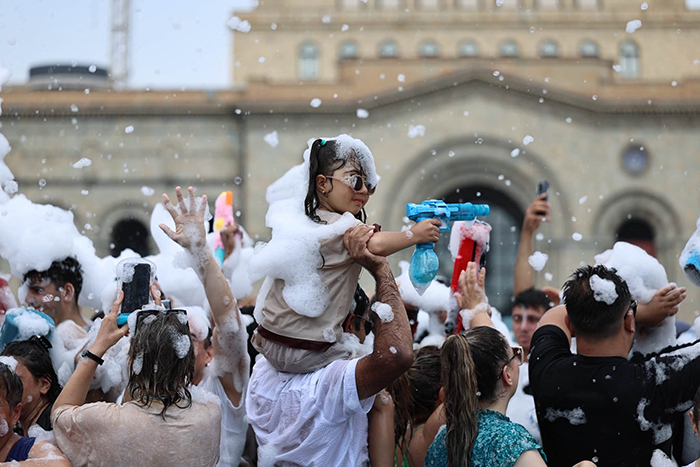
Today, the religious observance coincides with a large and lively outdoor celebration. On Vardavar, social barriers largely disappear as people of all ages take part in the festivities.
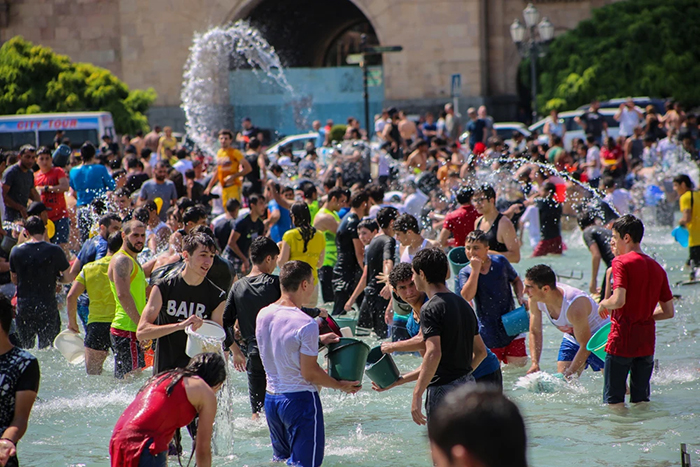
A nationwide water fight: Beginning in the morning, children, young people, and adults take to the streets armed with buckets, watering cans, hoses, and water guns. Others wait on balconies to surprise unsuspecting passersby.
No one is exempt: Whether you are dressed for work, visiting as a tourist, or serving as a police officer on duty, you may end up completely soaked. Most people accept it with a smile, as the water is believed to bring good fortune, purification, and renewal for the year ahead.
Vardavar is a unique celebration that brings communities together, transforming the intense heat of the Armenian summer into a day of refreshment, laughter, and shared joy.