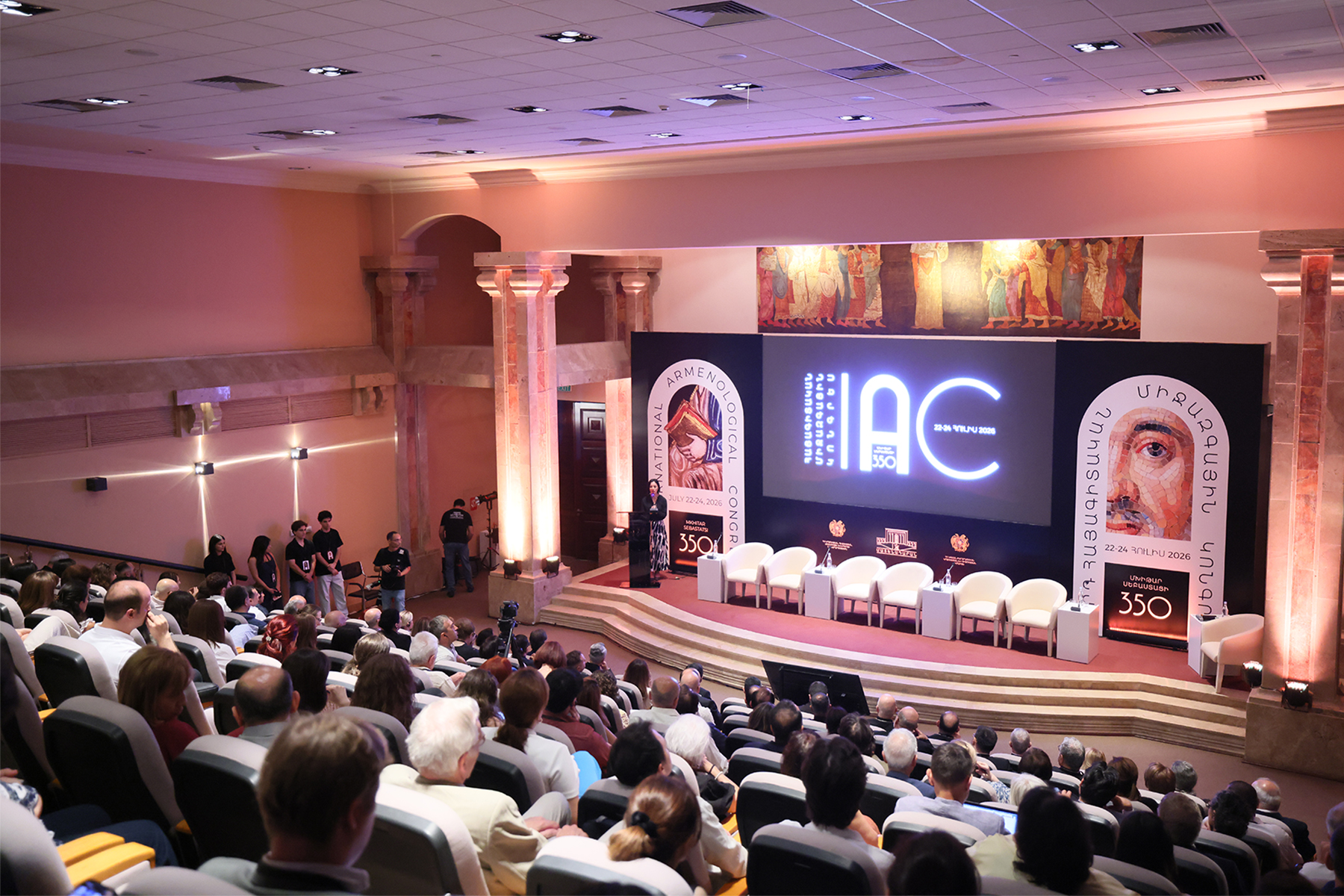

YEREVAN — With the support of Armenia’s Ministry of Education, Science, Culture and Sports, the Third International Congress of Armenian Studies is being held at the Matenadaran from July 22 to 24. The congress is dedicated to the 350th anniversary of the birth of Mkhitar Sebastatsi, the distinguished clergyman, scholar and founder of the Mekhitarist Congregation.
Armenian studies scholars from leading universities and research institutions in 16 countries are participating in the congress.
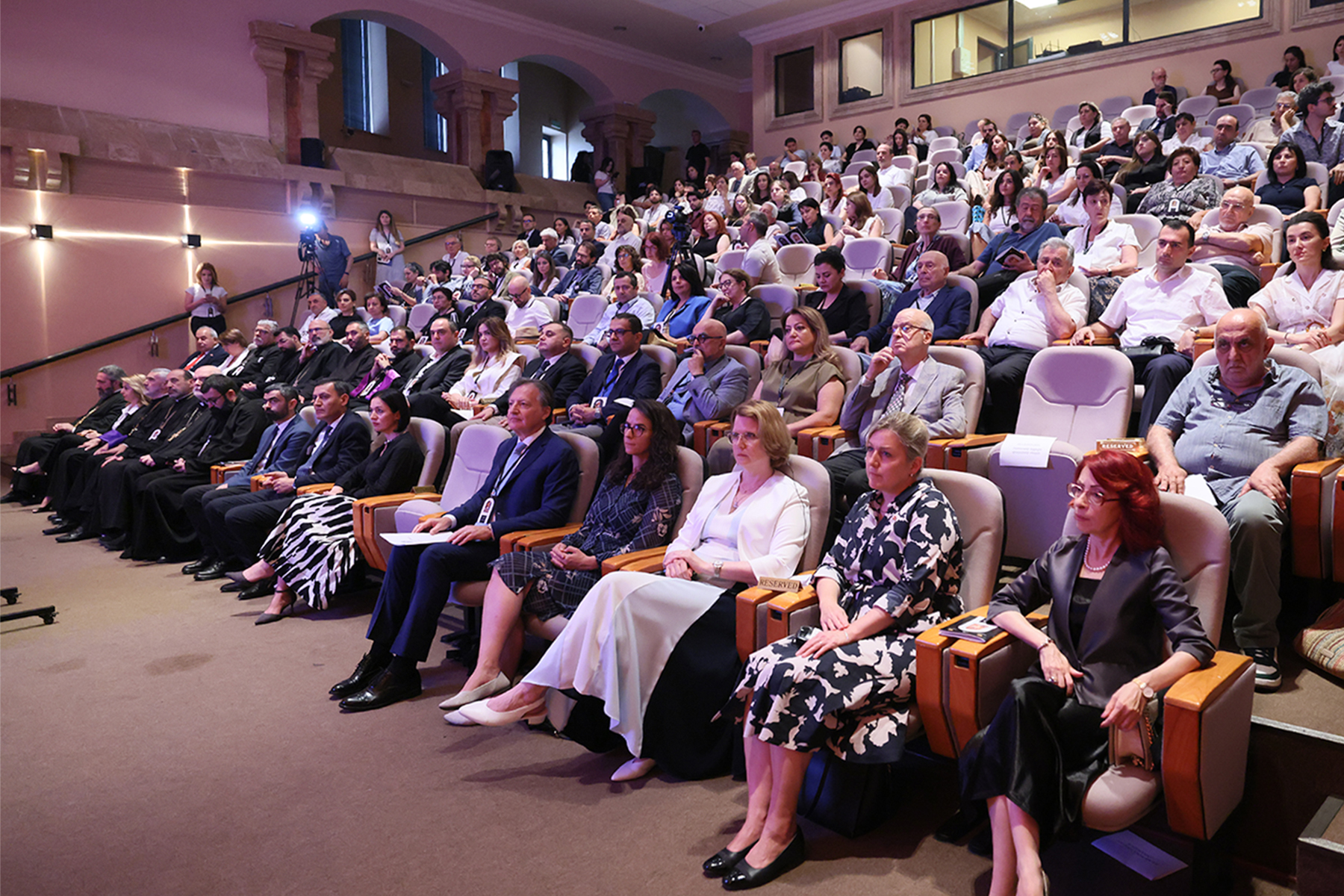
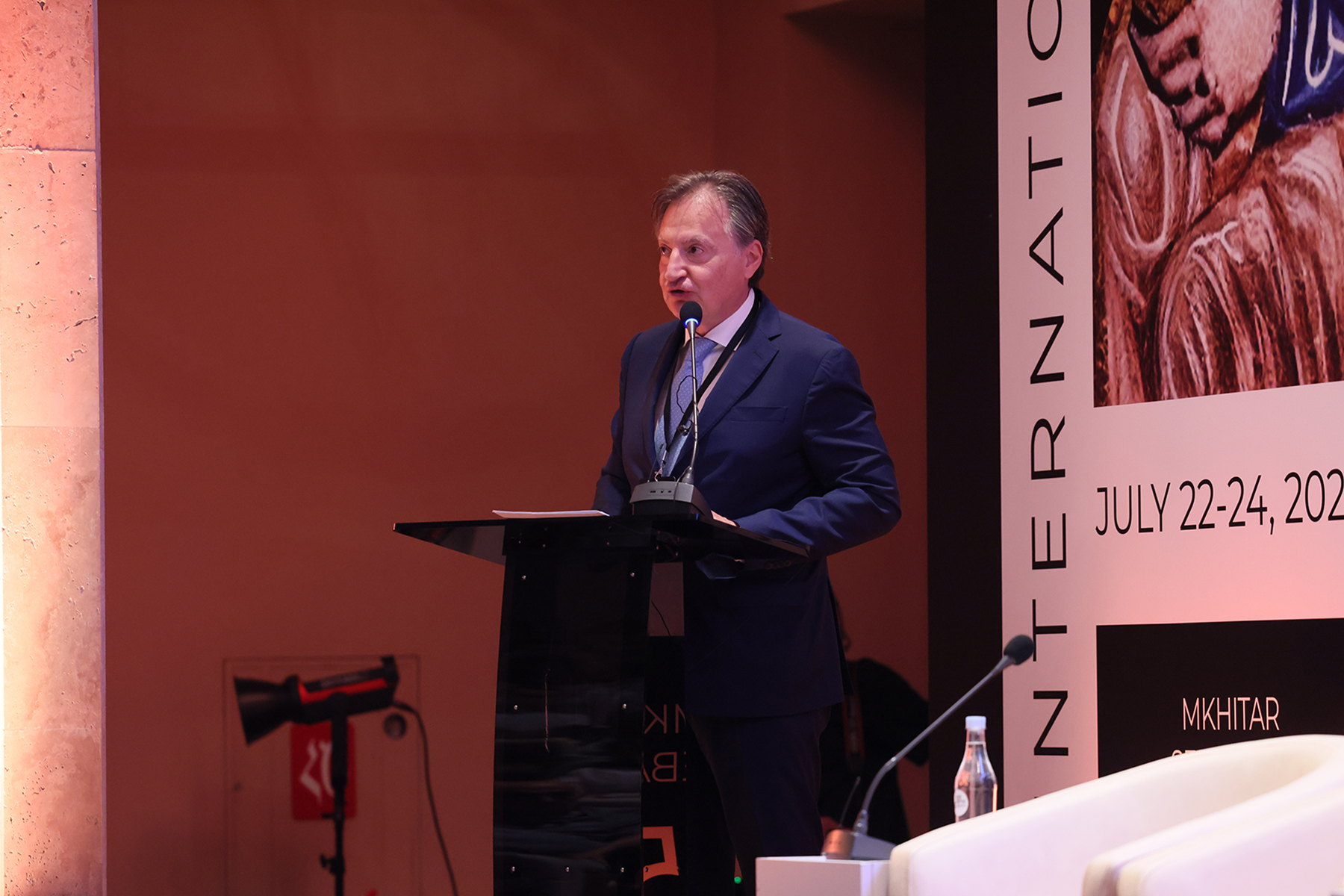
The opening ceremony was attended by Minister of Education, Science, Culture and Sports Zhanna Andreasyan; Deputy Minister Artur Martirosyan; Chairman of the Higher Education and Science Committee Sargis Hayotsyan; Matenadaran Director Ara Khzmalyan; and Alessandro Ferranti, Ambassador Extraordinary and Plenipotentiary of the Italian Republic to Armenia.
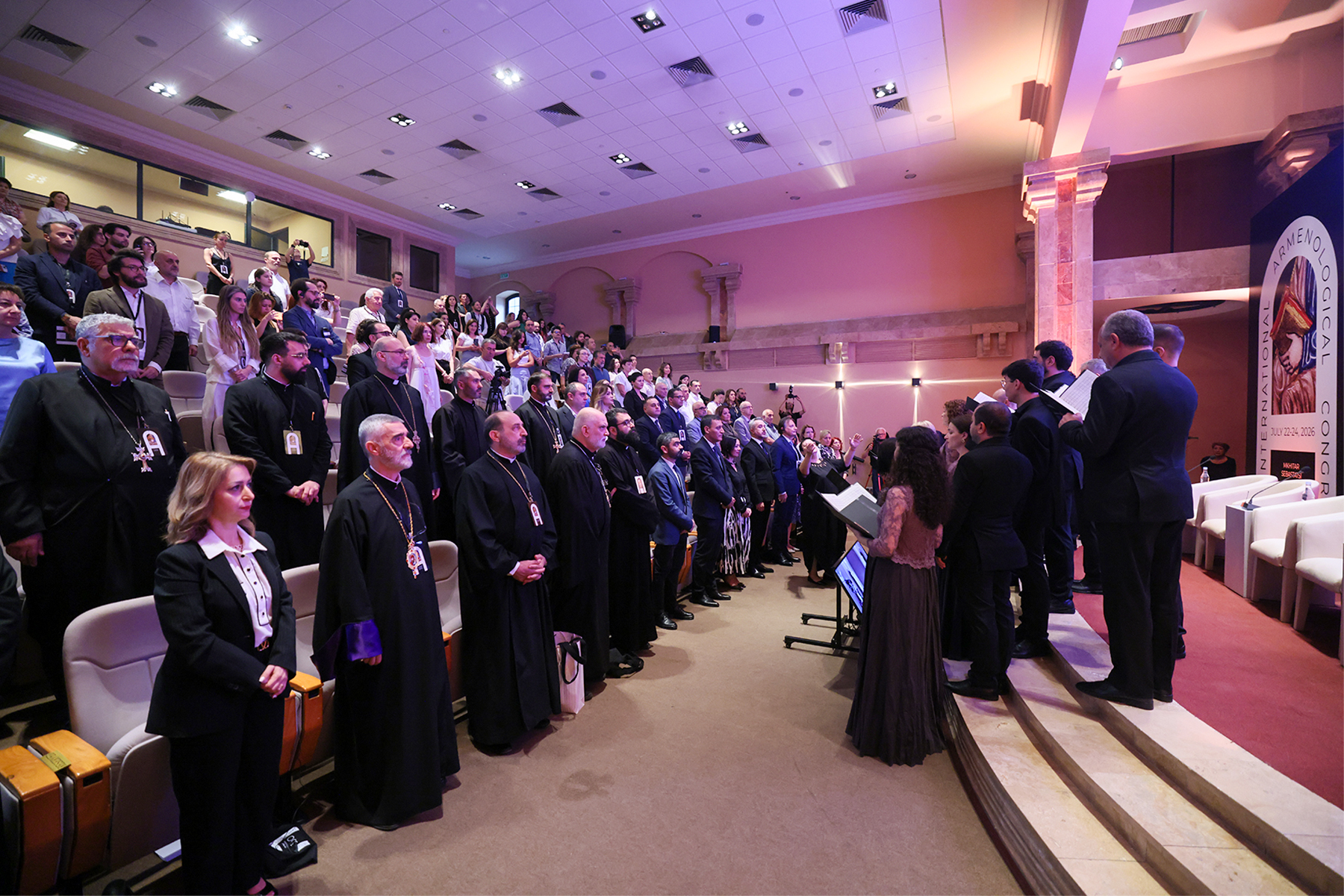
The ceremony opened with “Armenia,” a composition by Vache Sharafyan performed by the Hover State Chamber Choir. The song, which will henceforth accompany Matenadaran’s official ceremonies, was presented to the institution as part of the Third International Congress of Armenian Studies.
In her welcoming remarks, Minister Andreasyan emphasized the importance of discussions and institutional initiatives addressing key issues in Armenian studies, including the organization of the international congress.
She recalled that concerns related to the preservation of spiritual heritage at the Mekhitarist Congregation in Venice were raised during the first congress. Subsequently, the challenges facing manuscript centers were catalogued and possible solutions were discussed. The minister noted that the congress has since become an effective platform for advancing Armenian studies.
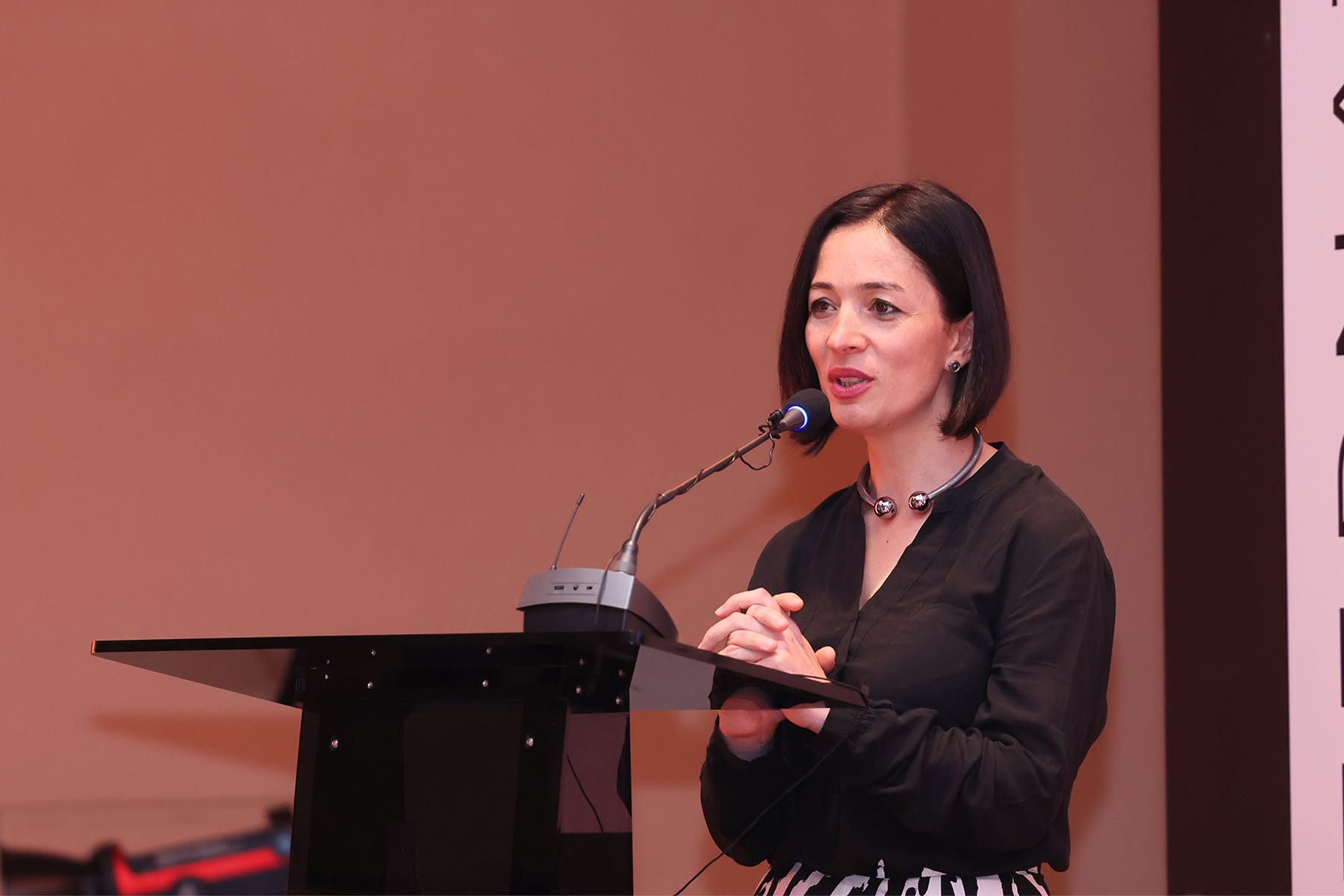
“The experience gained over the past three years provides a sufficient foundation for strengthening more institutional approaches and carrying out consistent work in the field of Armenian studies,” Andreasyan said.
“Last year, the new Law on Higher Education and Science was adopted, one of the key objectives of which is to promote the development of Armenian studies. Armenian studies were also highlighted as a government priority in the strategy for the development of science approved this January.
“For us, Armenian studies also have emotional and historical significance. However, within this platform, we must emphasize scholarly approaches by making research conducted according to the highest international academic standards the foundation for the development of the field,” the minister said, expressing confidence that the congress participants were approaching their work with a strong sense of responsibility and commitment.
According to Andreasyan, the issues identified during the congress must be pursued further at universities and brought into classrooms, where they can become subjects of study for young researchers. She added that this process should also involve Armenian studies centers operating outside Armenia, bringing everyone together around a shared objective that the state is committed to supporting.
The minister thanked the professional team of the Mesrop Mashtots Matenadaran Research Institute of Ancient Manuscripts for organizing the congress. She also expressed gratitude to the Delegation of the European Union, the Embassy of Italy and representatives of Armenian spiritual and manuscript centers for their support and participation.
“The Armenian studies community is expanding and developing, which is another achievement of the congress. I am pleased that we are working together to advance Armenian studies,” Andreasyan said.
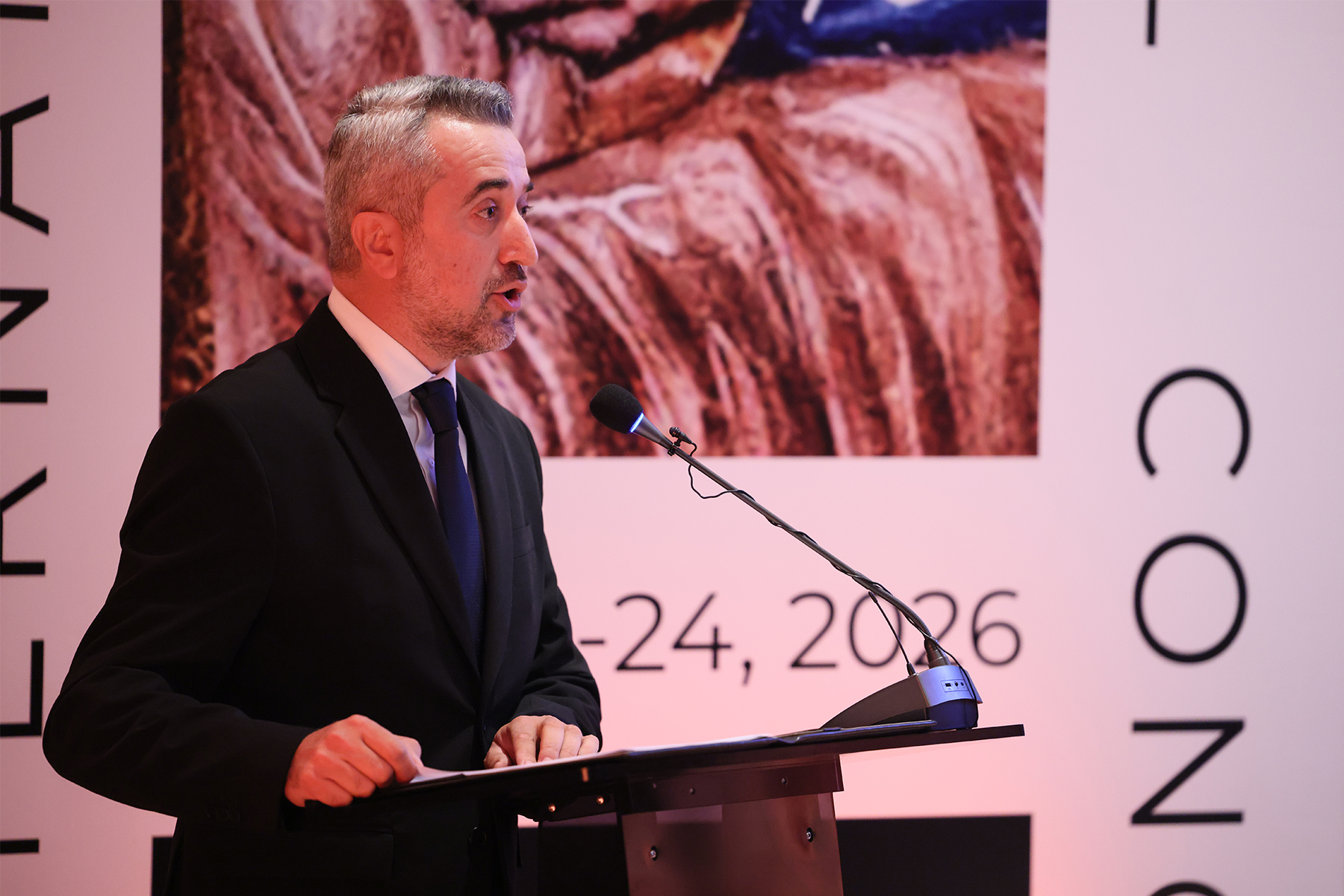
Matenadaran Director Ara Khzmalyan placed particular emphasis on the dedication of the Third International Congress of Armenian Studies to the 350th anniversary of Mkhitar Sebastatsi, describing it as an additional opportunity to reassess the legacy of the great thinker.
“An anniversary, in its truest sense, is not merely an occasion to remember and honor the past. It is also a form of self-examination,” Khzmalyan said.
“Have we succeeded in providing a comprehensive scholarly interpretation of our written treasures, making them an integral part of global academic discourse, ensuring their broad accessibility to humanity, and preserving and restoring them at a level worthy of this exceptional heritage?
“It is our profound conviction that we owe a debt to our great ancestors. I believe this anniversary is an opportunity to once again underscore the imperative of developing a strategy for the preservation and promotion of Armenian manuscript collections, as well as the need for coordinated action and shared commitment among state institutions, the private sector, spiritual leaders and scholars.”
Khzmalyan also expressed gratitude to the Ministry of Education, Science, Culture and Sports for entrusting the Matenadaran with the state mission of coordinating the congress and for supporting efforts to grant the important initiative a special status.
As part of the International Congress of Armenian Studies, a special exhibition dedicated to the 350th anniversary of Mkhitar Sebastatsi’s birth has opened in the Matenadaran’s research building.
Another exhibition, titled “The Eternity of One Year: New Manuscript Acquisitions at the Matenadaran,” is also planned at the Matenadaran Museum. A book festival will be held as well, featuring new publications in Armenian studies and the latest works released by the Matenadaran’s publishing house.
The 350th anniversary of Mkhitar Sebastatsi—the prominent Armenian clergyman, scholar, poet, composer and founder of the Mekhitarist Congregation—is included in the Ministry of Education, Science, Culture and Sports’ list of commemorative programs for 2026.