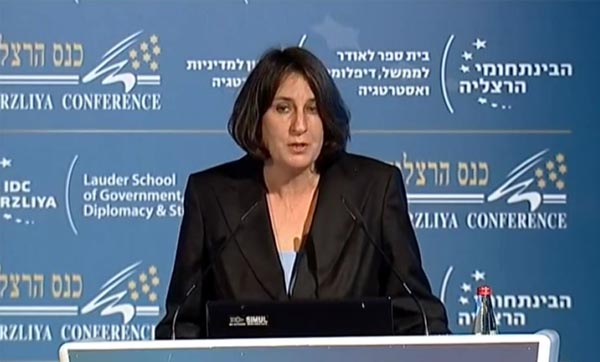
YEREVAN — The “Trump Route” initiative will open a new era of connectivity and economic opportunity for Armenia and the broader region, U.S. Ambassador to Armenia Kristina Kvien said during an address at the American Chamber of Commerce in Armenia.
According to the U.S. Embassy, the Ambassador’s remarks focused on Washington’s policy priorities, expanding cooperation with Armenia’s business community, and the transformative potential of recent bilateral agreements.
Kvien highlighted the key outcomes of the August 8 Peace Summit at the White House, emphasizing both progress toward regional stability and the launch of the Trump Route project—designed to strengthen trade, transportation, and economic links across the region.
Reaffirming U.S. Commitment to the Peace Process
The Ambassador reiterated the United States’ strong support for the signing and ratification of the August 8 agreement.
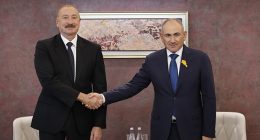
She drew particular attention to the joint declaration signed by Armenian Prime Minister Nikol Pashinyan and Azerbaijani President Ilham Aliyev, witnessed by President Donald Trump. The declaration reaffirms the inviolability of international borders under the 1991 Alma-Ata framework and rejects the acquisition of territory by force.
“This commitment not only eases the burden of fear for Armenian citizens,” Kvien said, “but also reassures international investors about Armenia’s stable and expanding business environment.”
The declaration also established the “Trump Route for International Prosperity and Peace”—a framework that will reconnect Armenia to global markets, open new trade routes, and expand regional interoperability. The initiative will also give Armenia greater flexibility in choosing export, import, and investment partners, allowing it to negotiate more favorable commercial terms.
Three New Memoranda of Understanding
On August 8, President Trump signed three Memoranda of Understanding (MoUs) with Armenia, outlining bilateral cooperation and positioning Armenia as a regional leader. These agreements center on two strategic pillars: economic development and security cooperation.
Kvien noted that “significant progress is already under way.”
Energy Security: Toward a Modern Nuclear Future
The first MoU focuses on strengthening Armenia’s energy security by modernizing and expanding domestic energy production.
A key component is cooperation in civil nuclear energy. Armenia and the United States are negotiating a “123 Agreement,” which would allow the export of U.S. civil nuclear technologies as Armenia considers transitioning from the aging Metsamor nuclear plant to next-generation, flexible systems.
As a global leader in nuclear energy technology, the United States can help Armenia develop a safer, more resilient, and more independent energy sector, Kvien said. The partnership also aims to diversify energy sources, modernize the electric grid, and enhance reliability for households and businesses.
Semiconductors and AI: Building a Tech Powerhouse
The second MoU targets the development of semiconductor supply chains and artificial intelligence technologies. These initiatives are designed to create high-skilled jobs and strengthen Armenia’s growing innovation ecosystem.
A major development occurred recently when the U.S. Department of Commerce approved export licenses for American technologies to Firebird, a U.S. artificial intelligence company that has announced a $500 million investment in Armenia. Firebird will collaborate with Dell and NVIDIA on advanced computing infrastructure.
According to Kvien, this project will position Armenia as a regional hub for cutting-edge computing and accelerate the integration of AI and automation across many sectors—including manufacturing, logistics, and public services.
Border Security and Infrastructure: Supporting the ‘Crossroads of Peace’
The third MoU focuses on border security and transportation infrastructure, supporting Armenia’s “Crossroads of Peace” initiative.
A U.S. Customs and Border Protection team recently visited Armenia to conduct an initial assessment of customs and border-control systems—a first step toward modernization. Improved border procedures and upgraded infrastructure, the Ambassador noted, will reduce costs and delays for businesses.
The United States is also working closely with Armenia to enhance cybersecurity, with several expert delegations already visiting the country.
While transportation cooperation begins under the Trump Route framework, Kvien stressed that the United States is prepared to support Armenia’s deeper integration into East–West commercial corridors as relations with Turkey and Azerbaijan evolve.
The Ambassador also welcomed the U.S. announcement of $145 million in new funding, most of which will support Trump Route infrastructure and border security improvements.
Two intergovernmental working groups have already been formed to oversee implementation of the MoUs and the Trump Route. A joint Armenian-American structure will also be established to guide planning and construction for the initiative.
A Call to the Business Community
Kvien encouraged members of the American Chamber of Commerce and Armenia’s broader business community to explore the new opportunities emerging from U.S.-Armenia cooperation.
“As members of the business community, you play a crucial role in realizing our shared vision and helping Armenia emerge as a commercial bridge between East and West,” she said.
She emphasized that the Embassy is ready to work closely with the private sector to fully unlock the potential created by the “transformational progress” of 2025.
“The time to seize these opportunities is now,” the Ambassador concluded. “I look forward to working with each of you to ensure that 2026 is even more impactful.”