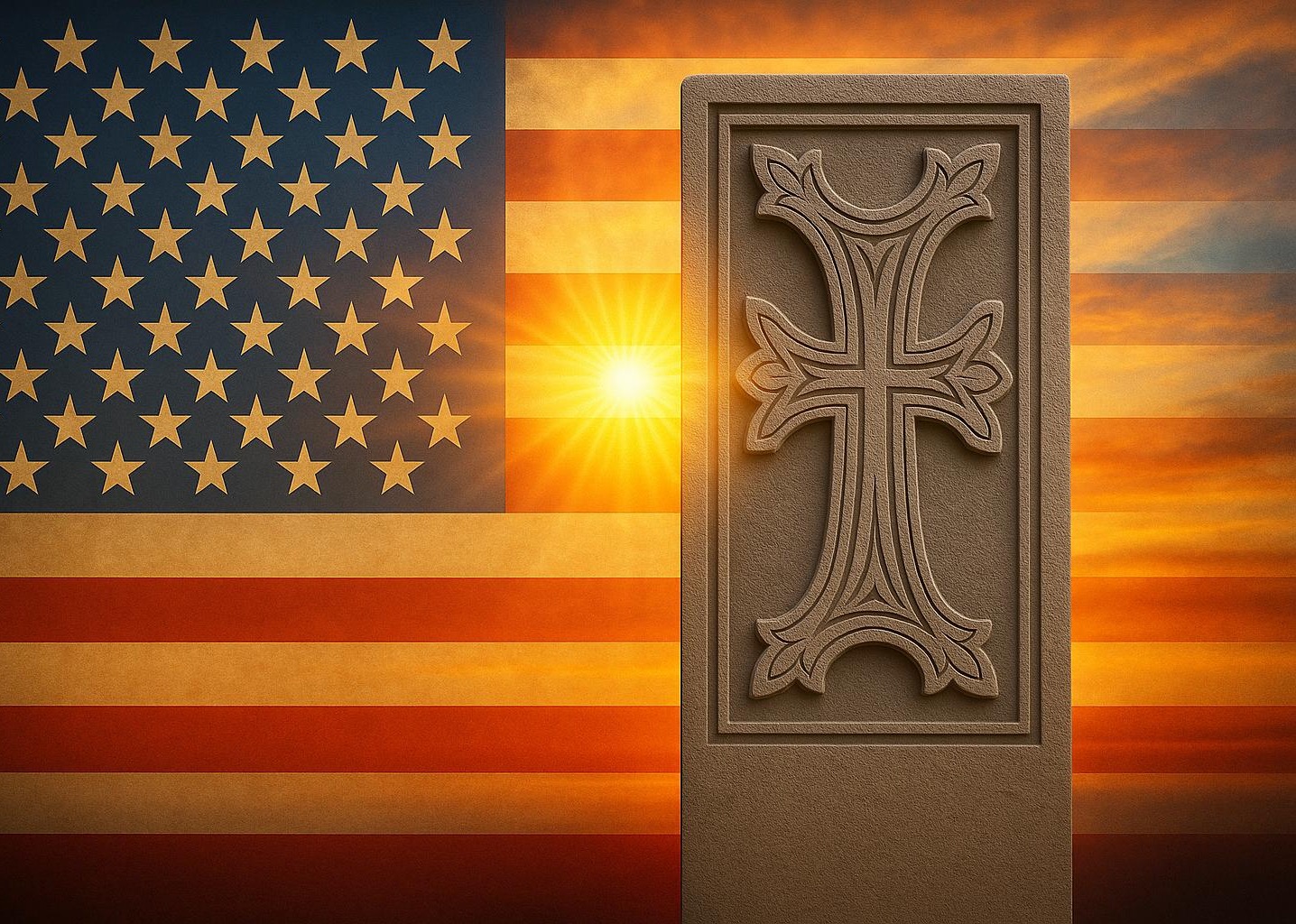

Across the United States, the Armenian Church has stood as a pillar of identity and memory—but increasingly not of participation. Generations who once filled pews have watched their children drift away, and their grandchildren disappear altogether from the spiritual life of the community. This is not an abstract worry. It’s a quantifiable crisis. And now, with the launch of a comprehensive, $100 million revival plan, Khachkar Studios is making the strongest push yet to reverse the trend.
The plan’s structure is as notable as its ambition. At its core is the “U.S. Armenian Christian Ecosystem 12 Body Parts,” a systems-thinking model that evaluates 12 vital areas of church life: philanthropic support, religious content across the spectrum of media, regular Sunday attendance, Sunday school students, bible studies, management, and leadership training. Developed with the aid of 69 years of historical data, the model provides a rigorous diagnostic view of the Church’s performance.
The diagnosis? Troubling. 11 of the 12 Body Parts are underperforming and barriers to change. Armenian churches in the U.S. fall behind most peer Christian institutions in engaging lost generations, building leadership pipelines, supporting lay ministries, and expanding Bible knowledge. Without change, the system is projected to decline even further.
In response, Khachkar is rolling out a five-year pilot program for up to 37 churches or ministries, each of which will receive $300,000 to $400,000 in funding. But the funding is only one side of the equation. Churches must also adopt reforms selected from an eight-activity Pilot Menu, including high value-add role model discipleship labs, new lay training modules, sermon renewal tracks, and digital outreach strategies.
To guide this effort, churches will also be paired with 5,000 hours of senior management pro bono support with world-class benchmarking and management excellence over the life of the pilot, offering hands-on help with diagnostics, implementation, and tracking—ensuring reforms actually deliver results.
Three primary metrics define the project’s success. First, to double the number of “Faithful” weekly churchgoers, increasing from 12,894 to 27,847. Second, to raise daily Bible readers from 1,000 to 41,423, reflecting a spiritual renewal at the personal level, not just institutional. Third, achieving a 6.1x SROI (social return on investment).
The plan’s media component is equally bold. Under the “Good News” banner, Khachkar Studios will produce short-form Christian content— including seven “Good News” workstreams: 1. Short-clips, 2. Podcasts, 3. Analyses, 4. Written Content, 5. Events, 6. News, and 7. Music, at 25 times the scale of all other U.S.-based Armenian Christian institutions combined.
This $100 million plan isn’t merely an investment. It’s a line in the sand. Armenian churches now face a clear choice: partner in building the future, or stand aside as the past fades further into memory.