
By KRIKOR KHODANIAN
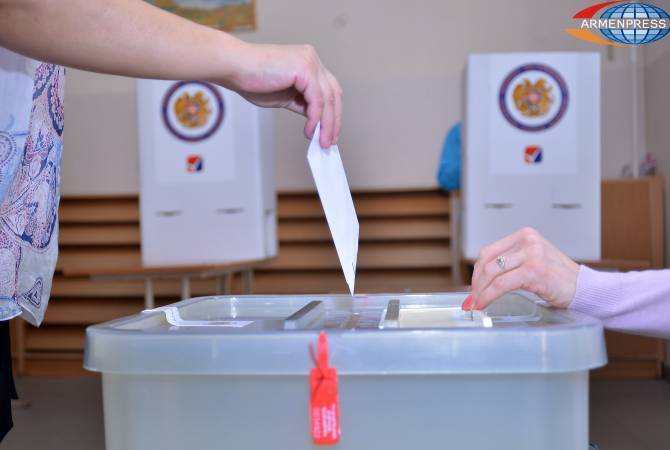
In the coming months, public attention in Armenia’s domestic politics will remain focused on the parliamentary elections scheduled for next June. The local self-government elections held in the Vagharshapat community—which includes the city of Etchmiadzin—were the last before the nationwide elections, and for that reason, they carried greater importance for both the ruling side and the radical opposition.
The ruling Civil Contract party wanted to demonstrate that it continues to be the strongest political force in the country and that the narrative being spread about its weakening does not correspond to reality. In light of the latest developments toward establishing peace with Azerbaijan, the ruling party currently appears more confident in its electoral capabilities and views its victory in Vagharshapat as a prelude to the upcoming parliamentary elections.
The opposition, meanwhile, attempted to replicate in Vagharshapat what happened in Gyumri, where several groups—appearing under different names and seemingly opposing one another—were able to unite after the elections and remove Civil Contract from municipal power. They tried to do the same this time as well, but failed to achieve the expected result.
In recent years, during local elections in Yerevan, Gyumri, and, more recently Vagharshapat, the two main opposition forces—supporters of Kocharyan and of Serzh Sargsyan—preferred to appear under different names, understanding that these two figures remain “toxic” and create negative attitudes among the electorate. The Kocharyan-aligned camp ran under the name Victory Alliance and, using local issues as well as family and clan connections, managed to secure more than 10,000 votes. They also had the support of the Mother See (the Holy See of Etchmiadzin), but despite all this, they were unable to defeat the ruling party.
The stakes in the parliamentary elections will be entirely different. There, the struggle will revolve around political views and positions. The people will be choosing between peace and war, between Russian and European orientations, between democracy and restrictions on freedoms, and between economic free enterprise and monopolies. In the absence of a third force, citizens of Armenia will be forced to choose between the former authorities and the current ones. In this respect, the advantage lies with the force led by Prime Minister Pashinyan.
The ranks of the opposition will likely be supplemented by the Our Way movement created by Russia-based billionaire Samvel Karapetyan. Together, commanding enormous financial means, they will try to use the votes of the discontented and draw them into the electoral process. The opposition also has at its disposal machinery for spreading disinformation, directed by both internal and external actors seeking to influence public opinion.
How the ruling party will withstand this multifaceted assault remains an open question. Being encouraged by the results in Vagharshapat and possessing an exaggerated self-confidence cannot guarantee victory in the parliamentary elections. To succeed, the authorities need to expand their network of supporters by including all layers and groups of society concerned about Armenia’s future.
“MASSIS”
Note: Translated with the assistance of ChatGPT