

Translated from Turkish with the assistance of Chatgpt
By ÖNDERCAN MUTI
https://www.evrensel.net/
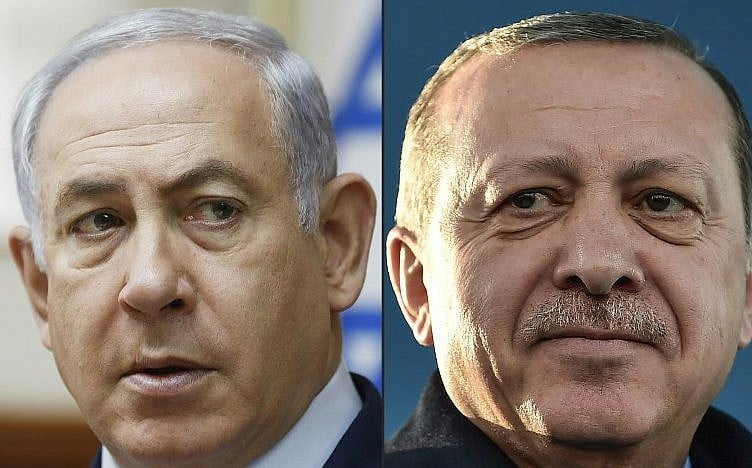
Netanyahu is not addressing the victims of 1915 or their descendants. His words are aimed at his former ally, with whom he long shared denial, and at those who hold a mirror to his own crimes—once again instrumentalizing others’ suffering for political ends.
“Fine, I did it.” A cold, calculated phrase devoid of sincerity or weight. This is how Israeli Prime Minister Benjamin Netanyahu, wanted by the International Criminal Court for war crimes, declared recognition of the crimes committed by the Ottoman Empire against its Christian subjects during World War I as genocide.
He gave no explanation for why, despite decades of calls from researchers, jurists, artists, and human rights defenders in Israel and worldwide, he had consistently denied the genocide. Nor did he explain why Israel supported Turkish lobbying efforts to prevent recognition of the Armenian Genocide in the United States. He did not apologize to Armenians and Assyrians who grew up with the living memory of 1915, nor seek reconciliation. His brief statement was not meant for them.
The Real Audience: Another Denialist Leader and Country
Why has Israel, itself a state founded in the aftermath of catastrophe—the Holocaust—not only refused to recognize the Armenian Genocide for decades, but actively supported Turkey’s denial?
In the 1980s, denial was a cornerstone of cooperation between the two countries. Following Turkey’s 1980 military coup and the rise of a Turkish-Islamic nationalist regime hostile to socialism, Israel’s Likud Party under Netanyahu first came to power. With NATO-member Turkey and NATO-aligned Israel facing Soviet-backed Syria, Iraq, and Lebanon (where ASALA operated), the two deepened military and intelligence ties. Israel targeted not only Palestinian camps in Lebanon’s Beqaa Valley but also Kurdish and leftist Turkish groups, while intelligence exchanges expanded during the Iran-Iraq War and against Hezbollah. Turkey became valuable as a Muslim-majority ally; Israel, in turn, as a non-Arab partner close to NATO.
At the same time, Holocaust remembrance was becoming a central pillar of global human rights discourse. Beyond commemoration, scholarship examined perpetrators, societal structures, and ideologies. Museums, memorials, and education spread public awareness. International networks were created to combat antisemitism and racism, with Turkey as a participant. Holocaust remembrance became the reference point in confronting racism, state violence, and genocide. This broader reckoning also opened the way for confronting past imperial crimes such as the Armenian Genocide.
By the 1990s, in what scholars call the “memory boom,” confronting state crimes against minorities became a norm in international relations. Politicians, activists, and academics addressed not only their own national histories but a global public. Memory became reciprocal: everyone held a mirror to everyone else.
For Israel and Turkey, however, this shift was threatening. Israeli officials feared recognizing the Armenian Genocide would undermine the Holocaust’s uniqueness, rendering it comparable and weakening its moral and political singularity. Turkish diplomats and academics supported this line, while Ankara poured financial and symbolic resources into networks that bolstered denial.
Ideological motives alone did not sustain Israel’s denial. Diplomatic pragmatism played its part. In the early 1980s, Turkey pressured Israel to block an academic session on the Armenian Genocide at a Holocaust conference in Tel Aviv. Israeli diplomats, valuing military ties, complied. Later, Israel used its influence in Congress and academia to stifle discussion. American Jewish organizations were pressed to support Turkey’s line. Still, when disputes arose with Turkey, Israel sometimes dangled recognition in its own parliament or refrained from blocking U.S. resolutions—using genocide recognition as leverage in geopolitics.
Yet, despite these efforts, recognition movements grew in U.S. and Israeli academia and public life. In 2021, the Biden administration officially recognized the Armenian Genocide, albeit with careful diplomatic language to avoid sanctions against Turkey.
The October 7 Hamas attacks, Israel’s ensuing assault on Gaza, and Turkey’s shifting stance signaled the collapse of the long denialist alliance. Turkey condemned Hamas’s massacre of Israeli civilians but contextualized it as a product of longstanding conflict. After Israel’s war crimes in Gaza, Erdoğan openly praised Hamas as a liberation movement. Turkish media and officials began accusing Israel of genocide.
Most tellingly, Turkey applied to intervene in South Africa’s genocide case against Israel at the International Court of Justice, citing the UN Genocide Convention—ironically, a treaty shaped by the memory of the Armenian Genocide. Raphael Lemkin, who coined “genocide,” often explained that the Ottoman extermination of Armenians inspired his legal vision. Even Turkey’s own arguments against Israel echoed defenses long used against Armenian claims: that deaths were collateral in wartime, not systematic extermination.
Until October 7, calls for recognition of the Armenian Genocide in Israel came mostly from human rights activists, genocide scholars, and left-leaning intellectuals. But Turkey’s accusations of genocide in Gaza may have pushed Netanyahu’s right-wing government to weaponize recognition as retaliation. His words also appear aimed at American Christian nationalist supporters of Trump, some of whom take a special interest in Middle Eastern Christian communities. The program host where Netanyahu spoke was himself of Assyrian and Armenian descent.
One thing is clear: Netanyahu’s audience was not the victims of 1915. It was his former ally in denial, Turkey, and those who reflect his own crimes back to him. And he did it once again by instrumentalizing others’ suffering.





1 comment
There were Armenians 90 years ago who adored Adolph Hitler. (Look it up.) The dwindling number of Armenian Friends of Israel today are just as perverted. The “Miracle on the Mediterranean” is an appendage of the U.S. empire. Fools believe that the U.S. empire will last forever. But it won’t. The question for Israeli people today is: Will there be room in a Free Palestine for them, or will they follow the Pieds Noirs of Algeria into oblivion? The answer to that question is up to them, but with every passing day of ethnic cleansing and genocide, it is looking less and less likely.