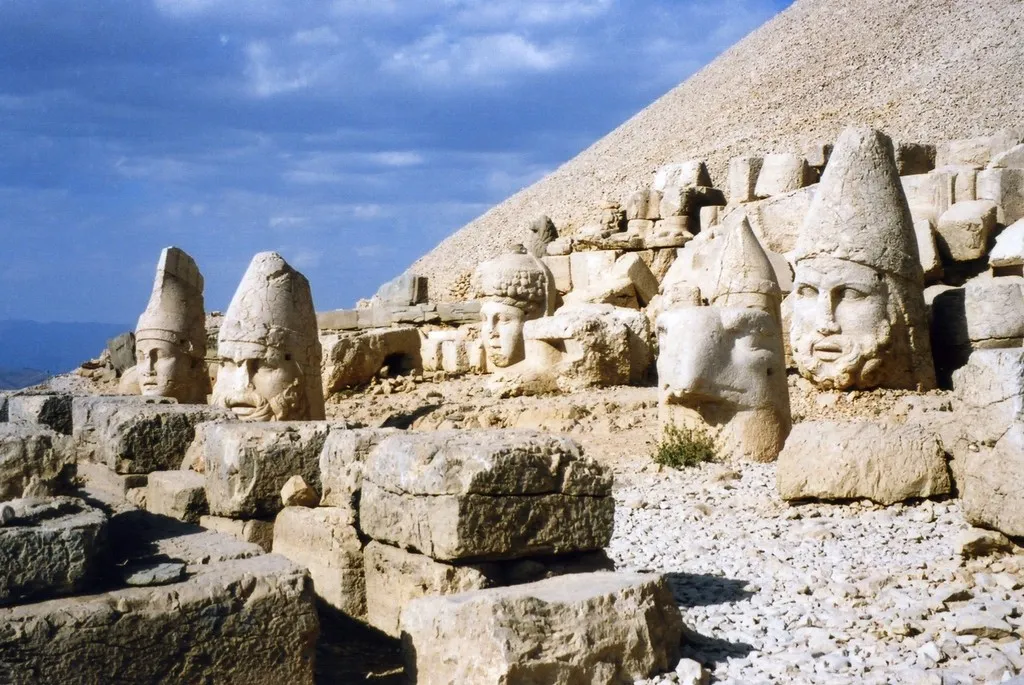

Preservation work has begun on the ancient Armenian stone statues located on Mount Nemrut, a UNESCO World Heritage site situated in present-day Turkey.
According to Ermenihaber, the restoration and preservation efforts, which began in 2022, have already yielded positive results. Currently, nano solutions—particularly nano limestone—are being used to enhance the longevity of the site’s symbolic monuments.
The work is being carried out by staff from the Gaziantep Regional Restoration and Conservation Laboratory and the Adıyaman Museum Directorate.
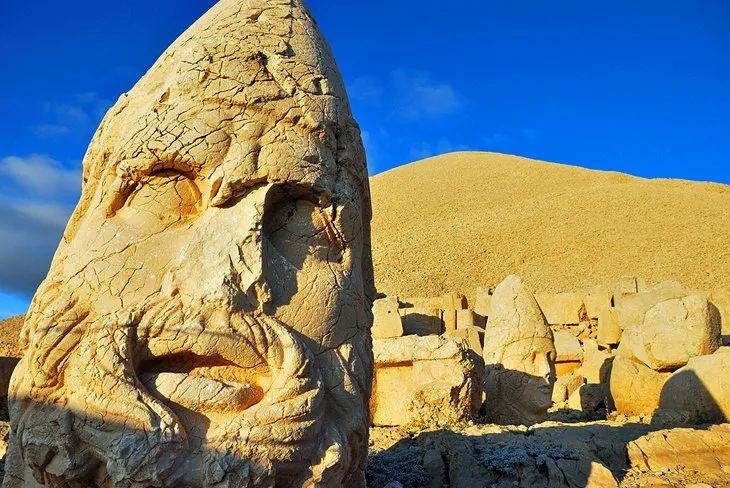
The Armenian Pantheon of Gods on Mount Nemrut was erected in 63 BC by King Antiochus I Theos of the Orontid (Yervanduni) Dynasty of the Armenian Kingdom of Kamakh (Commagene). Antiochus’s great-great grandfather was King of Armenia Orontes (Eruand or Ervand) IV.
When constructing this pantheon, Antiochus drew heavily from Parthian and Armenian traditions in order to reinvigorate the religion of his ancestral dynasty. The statues were once seated, with names of each god inscribed on them. At some point the heads of the statues were removed from their bodies, and they are now scattered throughout the site.