
By KRIKOR KHODANIAN
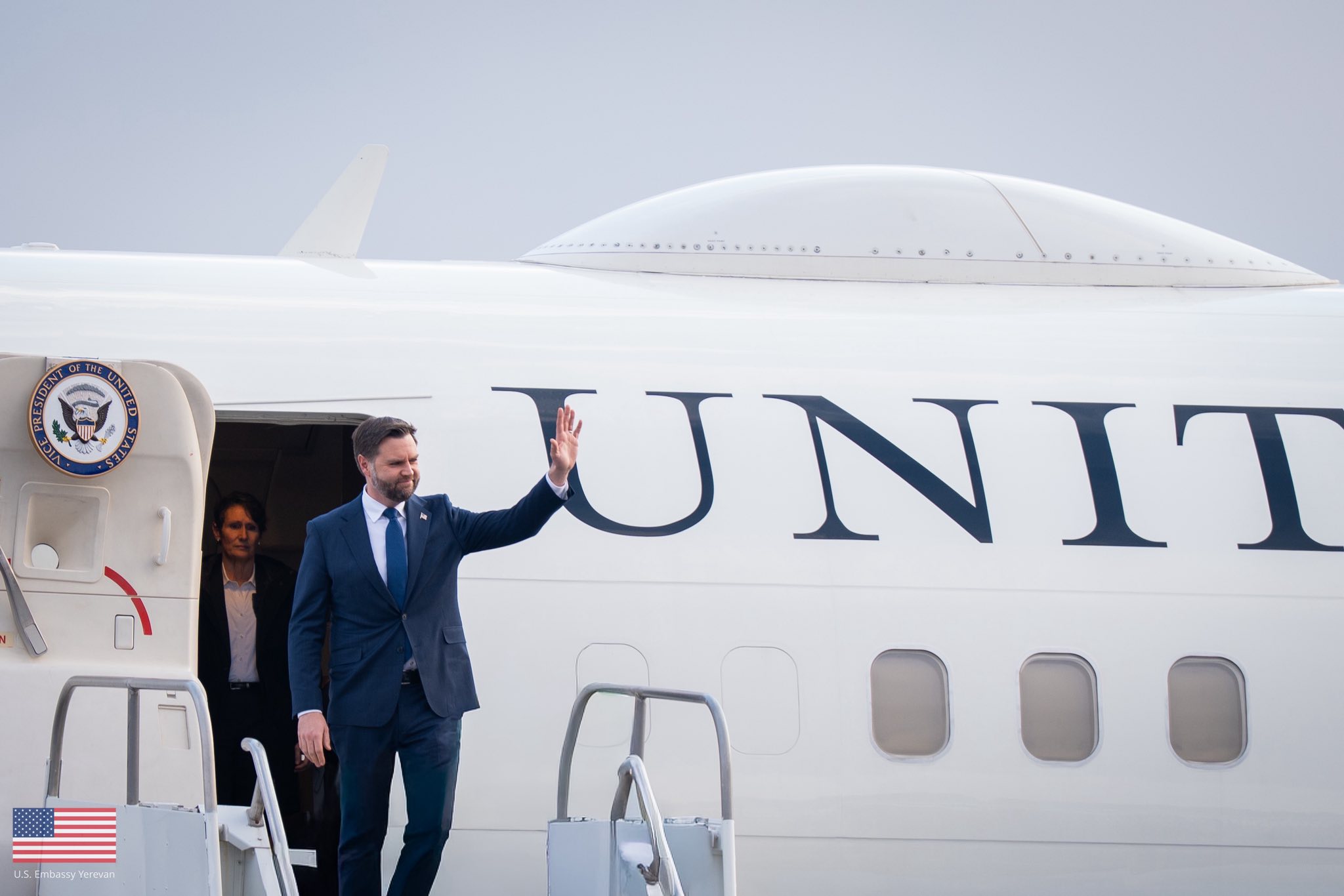
The arrival of J.D. Vance in Yerevan was a significant event, as for the first time in history, a U.S. president or vice president had visited Armenia. The overall impression from the official reception, the negotiations between delegations, the signing of an agreement on cooperation in the field of civilian nuclear energy, and the subsequent joint press conference was that the deepening of relations between the two countries has entered a practical phase—one that will alter the geopolitical landscape of the South Caucasus by turning Armenia into the window through which the United States enters the region.
In the final days of President Biden’s term, a strategic partnership agreement between the United States and Armenia was signed. Still, there were concerns that it might remain on paper once the new administration took office. Subsequent developments have shown that President Trump’s administration has not only remained committed to that agreement but has also developed broader and more expanded programs and is steadily putting them into implementation.
During this visit, it became known that for the first time, the United States had sold reconnaissance unmanned aerial vehicles to Armenia (Drones). This fact shows that America is ready to extend cooperation with Armenia into the military sphere as well. Among analysts, the view has begun to take shape that Armenia’s security and peace must become irreversible, so that the investments envisioned for the implementation of the “Trump Route” program can be put into action.
Opening a parenthesis here, it is worth asking whether the unveiling of reconnaissance drones during the vice president’s visit, along with the display of weaponry received from India a few days earlier, and the video released the next day by the Ministry of Defense about new defensive positions and structures of the armed forces, were coincidences—or whether they pursued a specific aim: to show that Armenia’s army is not what it was three years ago, and that the time has come for Baku not to think about extracting concessions or imposing conditions by military means, but to sign the Peace Treaty, on the points of which final agreement has already been reached.
The senior American official did not hesitate to emphasize that Armenia has become attractive to investors and that economic prospects have opened before it, citing, as an example, the exceptional permit granted for importing semiconductors to establish an artificial-intelligence cloud center and the expected four-billion-dollar investment that will create numerous jobs.
There is no doubt that the U.S. vice president’s visit to Yerevan aims to weaken the influence of Russia and Iran in the region. The importance given to small Armenia has its reasons, chief among them being its status as the only democratic country in the region, Armenia’s advances in technology, and the human capital with knowledge and experience in that field, today’s main driving force of economic development worldwide.
The symbolic and practical outcomes of Vice President J.D. Vance’s visit can have turning-point significance for Armenia’s progress and prosperity, upon which the homeland’s future will be built.
MASSIS