 INTERVIEW CONDUCTED BY HARUT DER-TAVITIAN
“MASSIS”
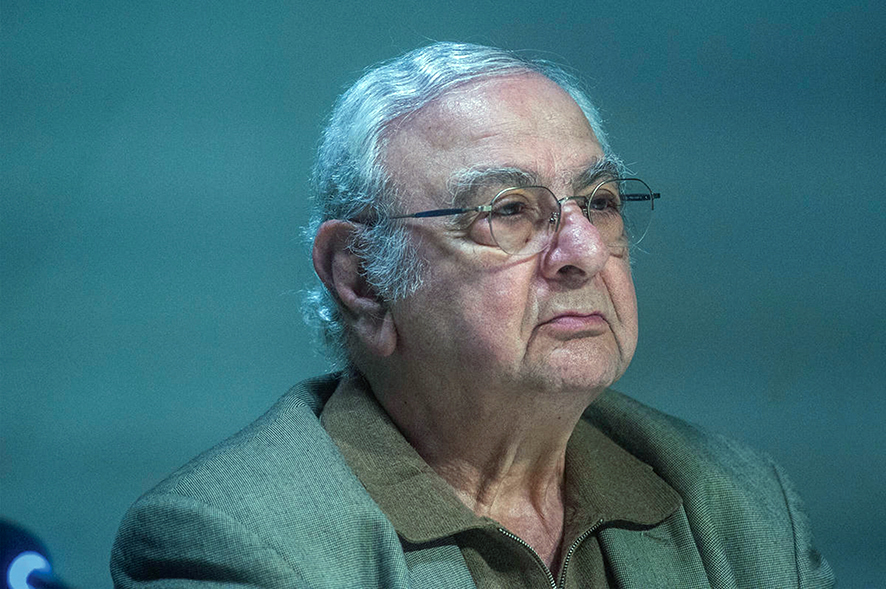
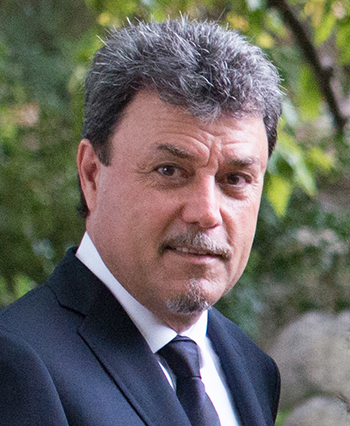
On February 12, 2026, several prominent figures of the Diaspora issued a public statement regarding the ongoing conflict between the Government of Armenia and the Armenian Apostolic Church. On February 19, 2026, following its two-day session in St. Pölten, Austria, the Assembly of Bishops released a statement on the same issue. Noting that some of the views expressed there are not only incorrect but also provocative and dangerous, we decided to conduct an interview with the well-known historian, political scientist, and diplomat, Prof. Gerard Libaridian to discuss these matters. Below is the interview conducted on February 22.
— When a crisis or problem exists, one must seek out its root causes. Unfortunately, that is often not done; instead, people try to muddy the waters in order to catch their preferred fish.
Thank you for giving me the opportunity to present my views. To ground what I will say, I should first speak about a few principles that form the basis of my perceptions and interpretations, that is, how I approach when I think about such issues.
First, any individual, organization, party, or institution that has played a role in history is subject to the judgment of history and scholarly scrutiny. Such judgments are not always pleasant. Likewise, any individual, organization, party, or institution that enters the political arena becomes subject to the rules of politics, which can at times be harsh.
Second, these individuals, organizations, parties, or institutions may be part of a problem or part of the solution of a problem. Which category they fall into is a matter of their own choosing.
Third, what we do not know but should know, as well as what we know but choose to ignore or “forget” for one reason or another, is just as important as what we affirm in our thinking and in the words we utter publicly.
Fourth, what we say and what we do matters, and we are responsible for it. We are also responsible for what we did not say or did not do when we should have said or done it.
These principles may seem obvious or simple once articulated, yet they are often ignored in public discourse.
Now, to respond to your question about fishing in muddy waters: you are right, there are many who do so. There are also cases where a commentator’s intentions may be honorable and not aimed at muddying the waters, yet the commentary lacks proper grounding. In such cases, the commentary is not very useful and can even be harmful, because the assumptions behind it have not been examined.
— What motivations drive these individuals to speak in the name of the entire Diaspora and to issue such a grave statement? Our obligation should be to expose the tendencies—religious or secular—that threaten the security and well-being of Armenians in Armenia and around the world.
I do not question the sincerity or patriotism of those who signed the statement by these prominent figures. Most of them have made, and continue to make, significant contributions to strengthening the welfare of the Republic of Armenia. I hope they will continue to do so. However, this does not mean that every action or statement they make necessarily aligns with the interests of the Armenian state or the people living there.
That statement is political in nature, even if the signatories believe they are speaking only in defense of the Church. Because, quite simply, the Church itself is politicized. People often fail to consider that readers interpret their words within a broader context, not within the narrow framework of the author’s intended meaning.
As I said earlier, any position put forth in the public sphere is subject to collective interpretation and debate. Those who conceived, edited, and signed this statement operated under the mistaken assumption that every reader would interpret it within the limits they themselves intended and that it could only carry a positive meaning. This assumption likely stems from the belief that readers would accept their words as absolute truth simply because they are prominent figures.
I believe that some of the signatories have already realized that the statement contains problematic expressions and are now attempting, in private conversations, to explain or even walk back those points. That reassessment should have taken place before signing the statement. Or they should now express their reassessment publicly, just as they issued the original statement publicly.
— What about speaking in the name of the entire Diaspora?
Speaking in the name of the entire Diaspora is, at the very least, not justified. But that would not be as significant if it ended there. In this case, it goes further. First, it reflects either disregard for or ignorance of the complex nature of the Diaspora—though most of the signatories are well-informed individuals. Why they reserved such a right for themselves, or took on such a burden, I can only speculate. Readers may do the same.
In 1995 or 1996, when I was working with the President of Armenia, there was a day when many prominent Diaspora Armenians and leaders were in Yerevan. President Ter-Petrossian agreed to meet with those various groups. He wanted me to be present at those meetings, since I was from the Diaspora and familiar with Diaspora issues and perspectives.
I asked him to understand why I did not want to attend those meetings. First, because I generally avoided entering the arena of relations with the Diaspora. Second, because I was already deeply involved in negotiations with Azerbaijan and Turkey, the Karabakh conflict, and diplomatic work with many other states.
At the end of the day, after meeting several groups, the President called again and asked me to attend his final meeting with a Diaspora group. I did attend. At the end of that meeting, the President said roughly the following: All day I have listened to representatives of various Diaspora groups. Each of you has different, sometimes even contradictory positions and demands. Yet each of you speaks in the name of the entire Diaspora. Which Diaspora am I supposed to base policy on? Whether I am right or wrong, I can speak in the name of Armenia. When the Diaspora creates a structure and a leadership that has the authority to speak on its behalf, I will sit with them as equals and discuss our issues.
The fact is that no such Diaspora structure or leadership exists. In the United States, the Armenian Assembly attempted to become such a body but quickly became just one organization among the others. In France, a similar attempt also failed, as the newly formed so-called pan-French Armenian organization became an instrument in the hands of two individuals.
On this issue, I recommend that readers familiarize themselves, if they have not already done so, with Garo Armen’s restrained and thoughtful statement responding to the declaration of the prominent figures, as well as the interview of French-Armenian scholar Tigran Yegavian with Mediamax, which is particularly important regarding the issue of Diaspora structures.
— Given that the statement emphasizes Armenia’s status as one of the oldest Christian nations, the historic role of the Armenian Church in preserving national identity, and the issue of church–state relations, how do you assess these claims?
The Church has simultaneously been both a solution to a problem and, in itself, a problem.
Internal divisions within the Church and misconduct by clergy have been an inseparable part of its history. Each of the four Sees has had its share of problematic behavior and politics. These issues have always drawn the attention of our people and political forces, particularly because the Church was either unwilling or unable to resolve its problems on its own.
More important is the Church’s questionable role in a fundamental problem of our political thinking. After the loss of Armenian statehood in the 11th century, the Seljuks and later the Mongols systematically destroyed our political elite. The nobility and princes, however imperfect, represented that political leadership. Alongside the elimination of the ruling class, the Mongols strengthened the Armenian Church, which over centuries became the instrument through which we were transformed from a political entity into a religious community.
Living primarily as a religious community within Islamic empires, it was inevitable that we would perceive our problems as those of a Christian community and seek salvation only from foreign Christian powers. Religion, language, and culture became the foundations of our identity, transmitted through the Church. For this reason, the Church played an important role in our history, but did so at the cost of losing political identity and political thinking.
Unfortunately, this mindset still underpins Diaspora political identity and, to some extent, is in Armenia as well.
The two revolutionary political parties—the Hnchakian Party and the Dashnaktsutyun—attempted to transform this reality and politicize our people. Anyone who reads their founding programs will see that the Church, and even religion itself, are largely absent. Yet even these parties ultimately could not fully detach themselves from the self-image of being a Christian religious community.
None of this awareness is present in the two statements.
— What problems does this create?
An idealized history of a nation, political party, or of the Church is problematic because it obstructs serious evaluation of our institutions. The positions taken in those statements rely on an idealized history that cannot yield useful lessons. On the contrary, it sometimes inspires lessons that lead to repeated failures and disasters.
Finally, even when the Church did not initiate political action, it allowed itself to be used by political forces, both in Soviet Armenia and in the Diaspora, becoming an instrument of division and conflict.
This analysis in no way diminishes the value of the Church as a transmitter of culture and identity, especially in the absence of statehood. However, history is replete with cases where an institution solves one problem while simultaneously creating another, sometimes an even greater one.
My observations aim to offer a more comprehensive historical assessment of the Church’s role, particularly the negative impact of the dominance of religion-based culture and identity on our political perception and behavior. As in these two statements, when we speak about the Church, we are engaging in politics; when we speak about politics, our discourse is often rooted in a mindset derived from our identity as a religious community.
History is a complex discipline; it is not a trash bin from which one selects only what is convenient at a given moment.
It is also important not to equate the Church with its temporary head, nor to equate the Armenian Apostolic Church with the entire Armenian people. Our nation includes adherents of other denominations as well as many who are not particularly religious.
When we have a state, the Church must limit itself to spiritual, cultural, and social domains grounded in human values, and manage its internal affairs in a way that continues to merit the people’s respect and support. In such a case, the state would have neither reason nor the right to intervene. Otherwise, that institution cannot be regarded as the people’s Church.
— Based on your explanation, do these statements contribute to resolving the church–state crisis?
As I have said, I consider both statements to be fundamentally political documents, regardless of their references to unity, identity, sanctity, or Diaspora–Armenia relations. They are political in that their authors have taken a clear position in the church–state conflict and seek to justify that position through an idealized interpretation of history.
I ask myself: what problems are these statements trying to solve? It is essential to clarify the issues that have led to the deadlock between the Prime Minister’s demand for the Catholicos’s resignation and the Catholicos’s refusal to resign. Everything has ultimately converged on this simple knot; but that knot cannot be ignored.
The statements mention the need for reforms within the Church, yet neither specifies what problems those reforms are meant to address. I should note that calls for Church reform were scarcely heard until the Prime Minister raised the issue in his own blunt way. One does not need to agree with every statement of the Prime Minister or every action of the government to recognize that serious problems exist.
A problem cannot be solved if it is not clearly defined or if there is no willingness to define and acknowledge it. Both statements avoid this step, even though the signatories privately and implicitly admit that serious problems exist.
I will attempt to outline these problems, aware of the risks involved in doing so:
– The person of the Catholicos and the issue of his vow of celibacy. If religion, canon law, and vows are sacred, this issue cannot be ignored or concealed.
– The Catholicos’s style of administrative governance of the Church, characterized by arbitrariness and executive decrees—an approach inconsistent with how a people’s Church should function.
– The lack of transparency in Church finances.
– The deep involvement of the Church in politics, functioning almost like a political party without the accountability required of one. The Church’s political character today has two dimensions: The involvement of many of its highest ranked clergymen in politics and the substance of the politics these clergymen pursue.
To my knowledge, even some of the Catholicos’s most ardent supporters have advised him to change the manner he governs and withdraw from politics, but these efforts have failed. Meaningful reform is unlikely under a leader who is himself at the center of the problem and rejects any solution.
When the problems are stated as clearly as above, the range of solutions narrows. The Prime Minister has one solution, which neither the Catholicos nor his loyal supporters accept. Other solutions may exist, but I do not believe any of these problems can be resolved independently of each other.
— Do you have any proposal for resolving this crisis?
Based on what I have said, I propose one possible solution in five points:
-Catholicos Garegin II remains Catholicos and retains his title.
-The Church Assembly elects a coadjutor Catholicos, a step that historical precedents.
-The coadjutor assumes the full powers and duties of that the current Catholicos has.
-Church reforms are implemented under the leadership of the coadjutor Catholicos.
-The Church and the state begin a dialogue to draft a document that clearly defines the church–state separation and the rights and responsibilities of each.
Catholicos Garegin II may accept or reject such a solution. His supporters, however, bear at least a moral responsibility to persuade him to accept this or a similar compromise. If he rejects it, their continued support of Garegin II becomes incomprehensible. Otherwise, the signatories to these two documents remain part of the problem rather than part of the solution, and thus bear responsibility for the continuation, even or deepening, of the crisis.
Yet the church–state conflict has deeper roots than today’s need for reform alone. While these statements speak of reform, they effectively convey the message that it is the Prime Minister and the government’s policies that must change. The Catholicos’s and senior bishops’ politics aim to preserve, at all costs, the traditional self-perception of Armenians as primarily a religious people.
Ultimately, that is the essence of both statements. A religious community seeks its security from a Christian savior state, which inevitably leads toward Russia and acceptance of Armenia as a country under Russian patronage. This mindset does not serve Armenia’s statehood or sovereignty.
Defining the nation, at least the state, politically leads toward a policy normalization of relations with neighbors, peace, and reduced threats. Defining ourselves primarily as a religious entity and becoming a tool of an external power creates at least as great, if not greater, threats to the Republic’s security.
— We want to be optimistic, but to what extent have the regulations of the National/Church Assembly been respected by Garegin II, who arbitrarily defrocked more than 200 clergymen—many of them highly deserving—and appointed his relatives and loyal flatterers to positions?
The key word in your question is “arbitrarily.” Church regulations grant the Catholicos the authority to defrock a clergyman. However, those same regulations require that such a step follow a defined process and be based on limited and specific grounds, namely, serious violations of Church canons or breaches of clerical vows.
In the case of Catholicos Garegin II, it is unclear whether these conditions were respected before defrocking such a large number of clergy. It appears that those defrocked or removed from office were generally individuals who did not profess absolute loyalty and submission to the Catholicos but instead exercised a sense of responsibility.
— By going beyond his autocratic conduct within the Church, by what right did Garegin II enter the political arena, demand the resignation of a democratically elected Prime Minister, and “freeze” Bishop Bagrat’s clerical status, inciting him toward a so-called “sacred struggle” and protests against the Prime Minister?
This brings us directly to the essence of the problem.
I do not know who issued the birth certificate for Bishop Bagrat’s political activity. But it is clear that both the Catholicos and the Kocharyan-aligned opposition immediately supported him, further clarifying the political nature of that activity, something clearly outside the Church’s spiritual and social mission.
Two observations are relevant here. Throughout our history, the Church’s political ambitions are not new. They date back to the fourth century, immediately after Armenia’s adoption of Christianity. Recall the Church’s struggles against Kings Arshak II and Pap, when Catholicoses allied with certain nakharars to weaken royal authority. With the fall of Armenian statehood, the Church prevailed, having aligned itself with forces acting against a centralized, strong state.
— And today?
Today the situation is no different. From the outset, Garegin II aligned himself with the Kocharyan-backed political opposition against Prime Minister Nikol Pashinyan, initiating the church–state confrontation. This becomes clearer if we replace the word “nobles” or “princes” with “oligarchs” or “parties.”
Why the Catholicos took this step can be inferred. We know he shared the opposition’s approach to both internal and external issues: top-down authority regardless of popular vote, alignment with oligarchic interests, and ultimately the return of the Kocharyan faction to power. In foreign policy, it meant once again becoming a Russian satellite. These considerations are interconnected.
The primary aim of the Kocharyan opposition has been—and remains—returning to power, also to secure their class interests. What this means for statehood and independence is, at best, secondary to them. They may sincerely believe their policy is best for Armenia, but sincerity does not alter outcomes.
— What about Armenia’s security?
I know many speak of Armenia’s security to counter my approach, insisting on the necessity of Russian protection at any cost. Yet in recent years, regarding both Karabakh and Armenia’s borders, we have seen the value of Moscow’s signatures.
Armenia’s security must be based on working with neighboring states, understanding threats in real terms–not reflexively and based on unexamined assumptions–and reducing those threats. Otherwise, speaking of independence and democracy is either dishonest or self-deception. We may have allies, but we have no saviors. No Western or Eastern state—Christian or otherwise—will send its soldiers to save us if necessary. We have all seen this.
Either we understand the essence of our condition, or we repeat the mistakes of our history—as we generally have, including in recent years.
— The removal of a problematic leader is neither a threat to Armenians worldwide nor a danger to their spiritual nourishment, as claimed in the statement. On the contrary, it would have a beneficial effect.
I believe you are largely correct. Defending such a problematic Church leader under the pretense of defending the Church actually erodes individual Armenians’ devotion once they understand the nature of the problem. Any Armenian who follows the news knows what has already been revealed.
This approach does not strengthen the Church; over time, it weakens faith and, above all, erodes support for and connection to the Church, even if individuals baptize their children or make the sign of the cross when passing a church.
— We find it infuriating that the authors claim “the Armenian government is threatening to sever relations with the Diaspora—something even the Ottoman Empire or the Soviet Union could not do.”
That statement is indeed infuriating, first because it is historically false. At the time, neither Armenia as a state nor the Diaspora as such existed as they do today. Speaking of Armenia–Diaspora relations during the Ottoman period is ignorance at best.
I am aware of two cases when the Ottoman state intervened in Diaspora affairs. The first was following the 1894-1896 massacres, when a large number of Western Armenians emigrated to the US and supported the Hnchakian Party’s activities against the Sultan’s government. Because these emigrant workers and peasants were from Western Armenia, their Church came under the jurisdiction of the Istanbul Patriarchate. The Ottoman government pressured the Patriarch of Istanbul, demanding that the Patriarch exert its authority on the emigrants to end their activities against the Ottoman government. The Patriarch wrote a letter to the Catholicos in Etchmiadzin, asking that the diocese of the US be part of the Catholicos’s jurisdiction, which would relieve the Ottoman government’s pressure on him. So it was done.
The following was the second case. The Ottoman government used its diplomatic and political connections with some European states and political forces to react to the increasing pro-Armenian dispositions following the 1894-1896 massacres.
As for the Soviet Union, claiming it did not seek or succeed in dividing the Diaspora from Soviet Armenia is more than historical ignorance; it is inexcusable and shameful. Both the Soviet state and the Dashnaktsutyun used every means to divide the Diaspora, with consequences we still live with.
Comparing the Prime Minister’s policies to Russian, Soviet, or Ottoman policies goes beyond the bounds of reasonable discourse. That sentence alone proves the political nature of the document and its irresponsible use of historical analogy. I do not wish to say more.
— We also find extremely dangerous their call for Diaspora Armenians to pressure their host governments to intervene in Armenia’s internal affairs, “including legal action if necessary.”
A few days ago, an acquaintance called me and said that that sentence amounts to treason. I am not sure that assessment is correct. However, this and similar statements call into question the claim that these individuals support Armenia’s independence and dialogue.
Such language reinforces the idea that we seek political salvation from other states. It invites Diaspora communities to use their institutions and resources against Armenia itself. Since many in the Diaspora disagree with this statement, especially that specific call, it ultimately deepens existing fractures in the Diaspora, despite assurances that unity is the goal.
All such statements speak of unity. The issue is not the value of unity itself; that value is unquestionable. The issue is: unity around what policy, value system, idea, or ideology? Once that question is asked, the emptiness—and even the divisive nature—of such calls becomes clear.
— We all know that the Church in the Diaspora is divided for political and economic reasons, and neither the Armenian government nor the Mother See created this division.
Indeed, we know this, yet we are willing to ignore or “forget” many facts to preserve and justify our current political positions, if not prejudices. This is called lack of critical thinking. It leads to flawed conclusions and policies, whose consequences we have seen in recent years and may still see. I hope we will not see them again.
— Thank you, Prof. Libaridian, for this valuable interview. Let us hope that national interests and just solutions will prevail over personal or factional considerations.