
Armenian Communities Around the World Today
The population of Armenia is approximately three million, while the Armenian diaspora is estimated to number between eight and ten million.
- The estimated Armenian population in Russia is between 2.5 million and 3 million.

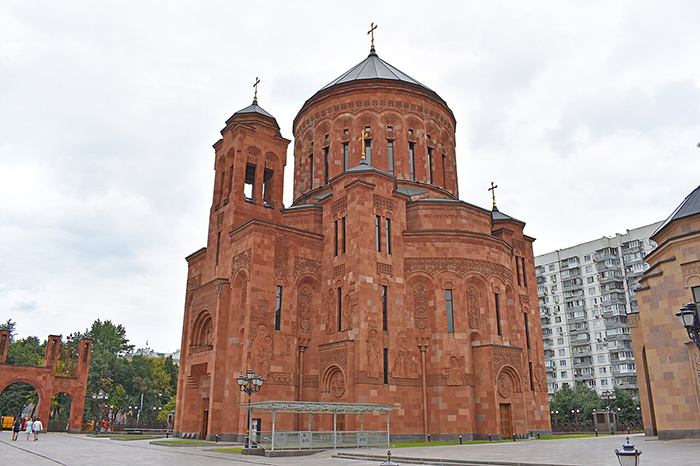
Armenian church in Moscow- Russia - The number of Armenians in the United States ranges from 1.2 million to 1.5 million, with California housing the largest population.
Armenian legacy in America - France ranks third, with a population of over 500,000 Armenians.
- In Georgia, the 2014 national census recorded 168,100 Armenians.
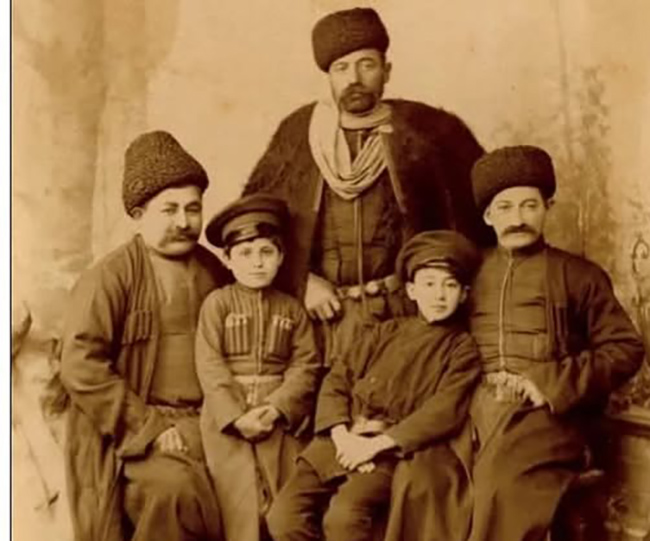
Armenian men and children in Tiflis (Tbilisi) Georgia in 1915. - According to the 2001 Ukrainian census, the Armenian population of Ukraine is 99,894.
- Brazil has a large Armenian community numbering around 100,000.
- Argentina has a well-established and affluent Armenian community estimated at between 120,000 and 165,000 individuals. Armenian communities also exist in Venezuela and other countries.
- The Armenian population in England is estimated at between 15,000 and 18,000.
- In Spain, there are an estimated 40,000 to 50,000 ethnic Armenians.
- The Armenian community in Canada is estimated at between 80,000 and 100,000. They are concentrated mainly in Ontario (Toronto) and Quebec, especially the Montreal area.
- The Armenian population in Australia is estimated at between 50,000 and 60,000 people, with the majority residing in Sydney and Melbourne.
- In the 1970s, there were approximately 300,000 Armenians in Iran. Tens of thousands left during the final years of the Shah’s reign and under the current regime. Today, fewer than 100,000 remain, and they have two representatives in parliament.
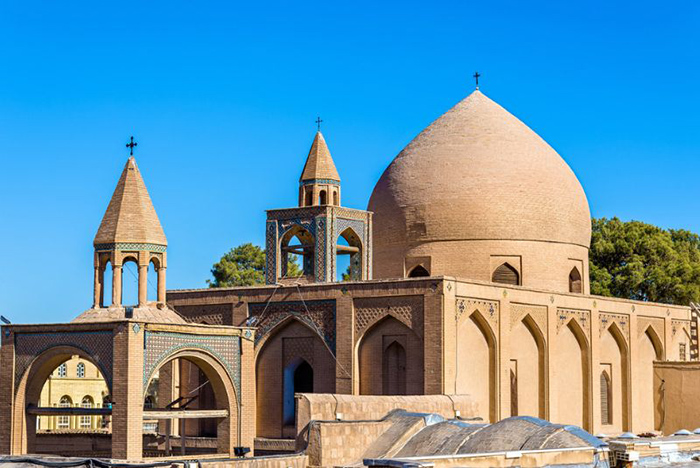
The Holy Savior Armenian Apostolic cathedral in the New Julfa district of Isfahan, - After the Genocide, 250,000 Armenian refugees arrived in Lebanon. Many later left, especially following the outbreak of the civil war in 1975.
- More than 100,000 refugees arrived in Syria after the Genocide, with thousands having departed in recent years.
- Poland has a historically significant Armenian community. The 2021 Polish census reported nearly 7,000 ethnic Armenians, though estimates range between 40,000 and 80,000.
- The Armenian population in Greece is estimated between 60,000 and 80,000.
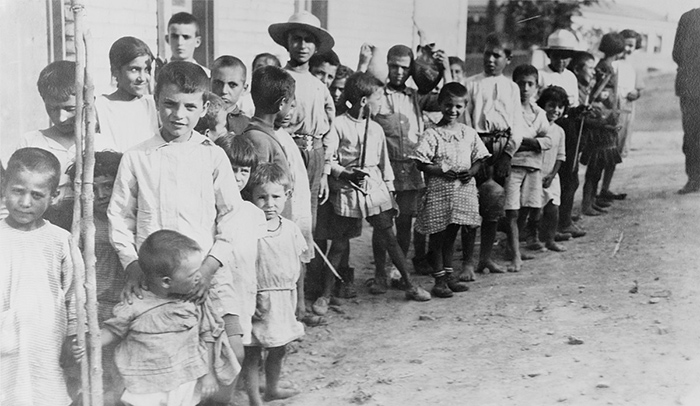
Greek and Armenian refugee children from Anatolia near Athens, Greece in 1923. - According to the Armenian ambassador to the Netherlands, approximately 40,000 Armenians live in the country.
- Armenian organizations in Bulgaria estimate their population at between 30,000 and 80,000, while the official census reports a significantly lower figure.
- The number of Armenians in Belgium is estimated at around 25,000 to 40,000.
- The Armenian population in Belarus is estimated to be between 10,000 and 30,000.
- Some European countries have very small Armenian communities: Romania (3,000–4,000), Italy (3,000), Switzerland (4,000–6,000), Austria (6,000–7,000), Hungary (a few thousand), Sweden (8,000–13,000), Cyprus (4,000), and Finland (1,200).
- Armenians in Egypt historically held prominent positions, including Nubar Pasha Nubarian, the first Prime Minister of modern Egypt. Many Armenians left in the mid-1950s. The current population is estimated at around 5,000.
- After fleeing the 1915 Armenian Genocide, over 50,000 Armenians arrived in Iraq, though only about half settled there. Emigration has reduced the present population to between 6,000 and 8,000.
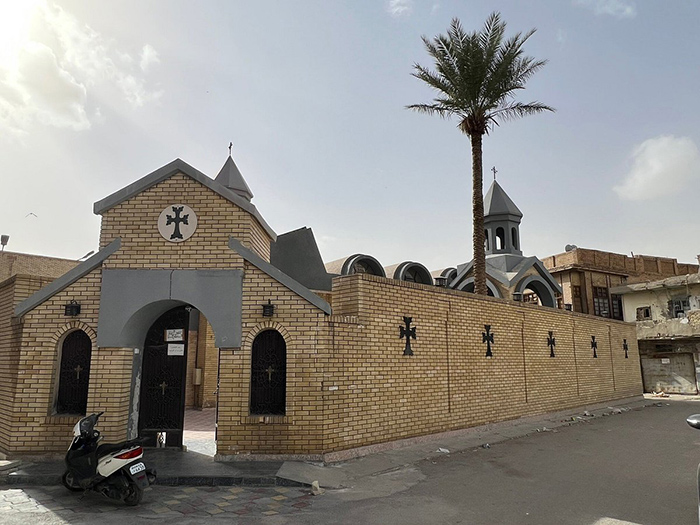
St. Mary Armenian churches in Baghdad- Iraq. Built in (1639-1640) AD - Kuwait has an organized Armenian community of approximately 5,000 to 6,000 members, supported by the government.
- There are large Armenian communities across former Soviet republics, including Belarus, totaling around 30,000, with thousands more dispersed throughout the region.
- In the early 1990s, around 300,000 Armenians fled Azerbaijan. Additionally, in September 2023, 120,000 Armenians fled from Armenian Artsakh (Nagorno-Karabakh) following Azerbaijan’s military operations and capture of the territory.
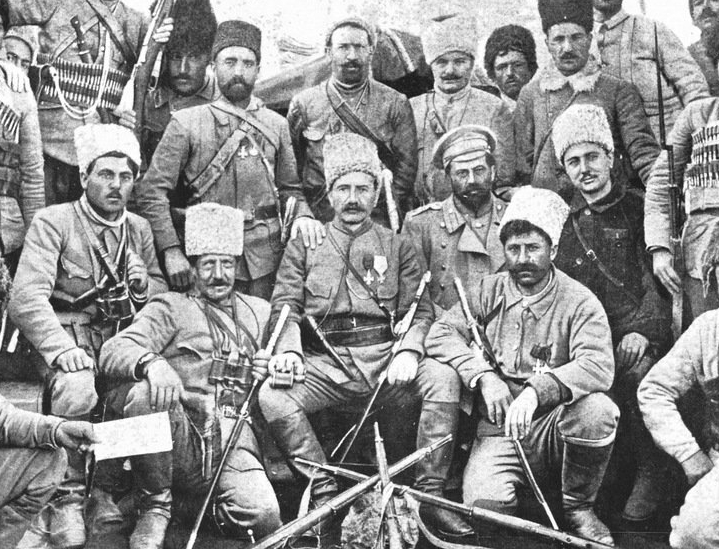
General Antranik in Zankezur - China has a small Armenian community of nearly 1,000 members, many in Hong Kong. Singapore has a very small Armenian community active in trade and banking.
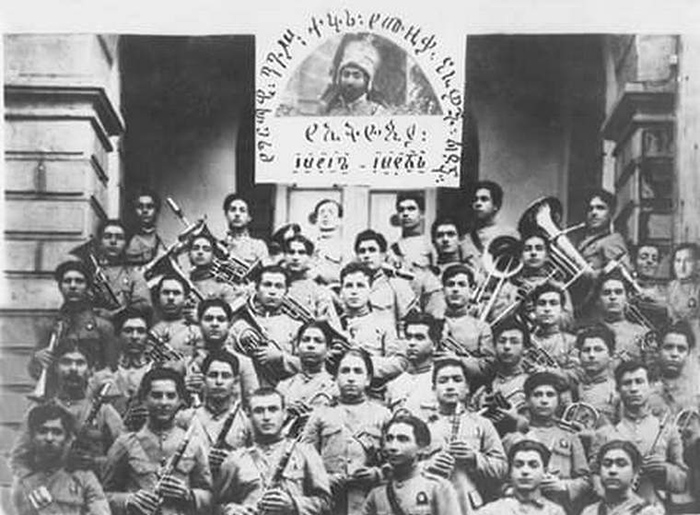
- A very small Armenian community exists in Ethiopia, primarily in Addis Ababa. Armenians have traded with Ethiopia since the first century AD.In 1924, future emperor Haile Selassie adopted 40 Armenian orphans from Jerusalem, who were survivors of the 1915 genocide, to form Ethiopia’s first imperial brass band, this band composed the first national anthem.
The Brass Band of the last emperor Haile Selassie - Small Armenian communities also exist in other African countries, particularly South Africa, where about 350 Armenians reside. The first Armenians arrived there in 1890 following the Hamidian massacres.
- In the Gulf states, Armenian communities are growing, primarily composed of individuals from Lebanon and Syria.
- Although small today, the Armenian community in Singapore has made significant contributions to civic, economic, and cultural life since the 1820s.
- Armenians have a long history in India dating back to at least the 16th century. They were prominent merchants in cities such as Kolkata, Agra, and Surat, though their community is now quite small.
- More than 100 countries around the world host Armenian communities. Diaspora organizations work to preserve Armenian heritage, advocate for Armenian causes, and provide humanitarian aid. Continuous efforts are made to expand diaspora participation in Armenia’s development. Most Armenians speak Armenian, using the Eastern dialect in Armenia and the Western dialect in the diaspora.

It is important to note that most figures regarding the number of Armenians in the diaspora are approximate. This is due to limited population statistics in certain countries and the fact that many Armenians do not disclose their ethnicity or do not participate in censuses. As a result, Armenians are often counted within larger ethnic categories. Armenian churches may assist in estimating diaspora populations by registering births, marriages, and deaths; however, this would require substantial staffing and dedicated funding.
General Aims of Armenians in the Diaspora
Armenians in the diaspora strive to preserve their cultural identity through art, music, literature, and community development while also adapting to the cultures of their host countries. A primary goal is international recognition of the Armenian Genocide. Diasporan Armenians engage in lobbying efforts in support of Armenia and contribute to its economic and political development through remittances and professional expertise. They also work to strengthen long-term relationships between the diaspora and Armenia to promote national unity. Diaspora organizations raise funds for humanitarian aid and development programs in Armenia.

Diaspora Armenian Religious Life
Diaspora Armenian religious life centers on the Armenian Apostolic Church, which serves as a cornerstone of faith, national identity, culture, and language. The Armenian Catholic and Evangelical churches also play important roles. The Armenian Church remains a vital institution and community hub, preserving ethnic identity and social cohesion. Religious practice varies across communities due to immigration history, population size, and generational differences. While some remain deeply religious, others view faith in a cultural context or identify as secular. The Church continues to evolve as it adapts to societal change and secularization, which also affects attendance and funding.
The Church has two co-equal Catholicosates: the Mother See of Holy Etchmiadzin in Armenia (the primacy of honor) and the Holy See of Cilicia in Lebanon.
Significant Armenian Apostolic dioceses exist worldwide, including in Russia, North and South America, Europe, and the Middle East. Historic centers include the Armenian Patriarchate of Constantinople and the Armenian Quarter of Jerusalem.
Diaspora Armenian Schools and Educational Life
Diaspora Armenian schools are essential centers for cultural and linguistic preservation, fostering strong Armenian identity, history, and values while countering assimilation. These institutions serve not only as academic centers but also as community hubs that strengthen cultural continuity and belonging. Organizations such as the Armenian General Benevolent Union (AGBU) were founded to combat cultural dissolution following the Armenian Genocide.
An estimated 1,000 Armenian schools operate globally, ranging from full-time primary and secondary institutions to supplemental language and cultural programs. The largest concentration of these schools is in the Los Angeles area.
Next — Why the Turkish State Does Not Recognize the Armenian Genocide