
By KRIKOR KHODANIAN
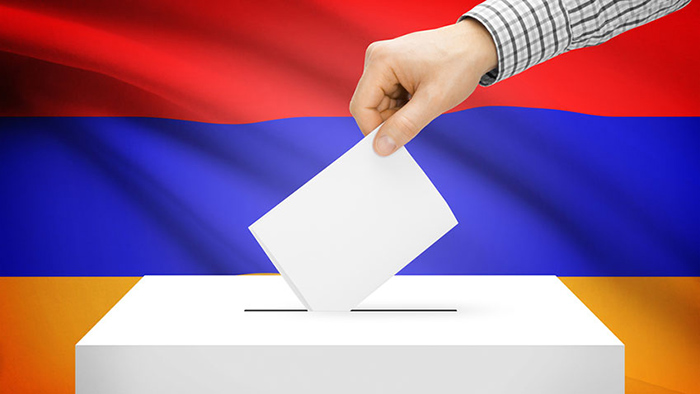
In the upcoming parliamentary elections of Armenia, scheduled for next June, among other issues on the agenda will be the question of joining the Russia–Belarus Union State. Voters participating in the election will indirectly cast their votes on that issue.
The question of becoming part of the Union State gained urgency after Vardan Ghukasyan, the mayor of Gyumri—Armenia’s second-largest city—recently declared that Armenia should join the union, since doing so would allow the country to enjoy Russia’s protection. According to the opposition mayor, “Armenia represents nothing on its own and cannot survive without joining such a union.”
The opposition forces that supported Ghukasyan’s election as mayor—with only ten percent of the vote—also bear responsibility for such a statement. It is clear that the main forces operating in the opposition field all share Ghukasyan’s view and are willing to sacrifice Armenia’s independence and sovereignty in order to demonstrate loyalty to the Kremlin and, by doing so, gain its support in the upcoming elections.
Vardan Ghukasyan was not the first to defend such a position. Before him, Robert Kocharyan had hinted at the idea of joining the Union State. Serzh Sargsyan, who has not yet made a public statement on the matter, will also be compelled to clarify his stance. As for the political movement forming around Russian-based tycoon Samvel Karapetyan—currently under arrest—it is unlikely to hold a different view, and if it comes to power, it too would likely rush toward joining the Union State.
During a government Q&A session, Prime Minister Nikol Pashinyan responded to the issue, saying:
“I believe that those who make statements against the sovereignty of the Republic of Armenia should simply be cast out of the political and public sphere—by every political means applicable in a democratic country.”
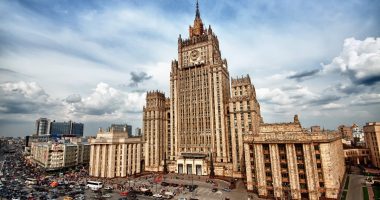
As for the talk of “enjoying Russia’s protection,” recent experience does not inspire public confidence. Despite Armenia being a member of the Russia-led Collective Security Treaty Organization (CSTO)—a military alliance comprising several former Soviet republics—Moscow did not provide assistance to its ally either during the 44-day war or afterward, when it had assumed responsibility as a guarantor of the security of the Armenians of Artsakh.
Thus, the political field is divided into two camps: those who favor a Moscow-led union and those for whom Armenia’s independence and sovereignty are supreme values.
We believe that the majority of Armenia’s citizens will defend their country’s independence while maintaining friendly and mutually beneficial relations with Russia, without falling under its subordination.
Therefore, on the ballot of the upcoming elections, there will appear not only the names of political forces, but also the future of Armenia itself—as an independent, sovereign, and democratic country.
“MASSIS”
Note: Translated with the assistance of ChatGPT