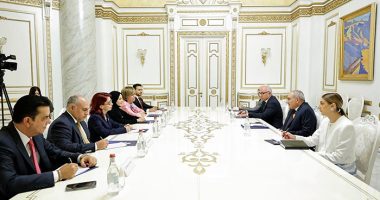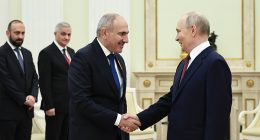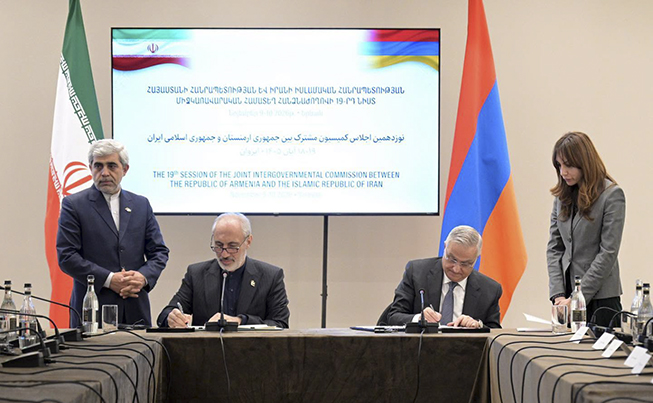

YEREVAN — Iran is prepared to increase natural gas exports to Armenia if conditions permit, Iranian Vice President Seyed Hamid Pourmohammadi announced following the 19th session of the Armenian-Iranian Intergovernmental Joint Commission, held in Yerevan.
“Iran possesses some of the world’s largest natural gas reserves, and if we have the opportunity to export gas, what better partner could there be than Armenia?” Pourmohammadi said in response to a question from Radio Free Europe/Radio Liberty’s Armenian Service.
The Iranian vice president noted that energy cooperation was a major focus of the discussions, covering natural gas, diesel fuel, electricity, and Armenia’s long-term energy security.
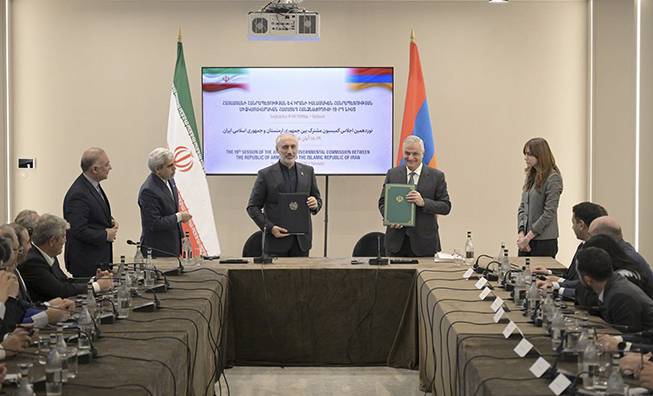
Armenian Deputy Prime Minister Mher Grigoryan, who co-chaired the meeting with Pourmohammadi, said the two countries had reached understandings across a broad range of sectors.
“There is no sector in which we have not reached agreements,” Grigoryan stated, citing trade, energy, natural gas, electricity, infrastructure development, cultural cooperation, and opportunities to expand existing joint projects. However, he did not specify implementation timelines.
The discussions also addressed the possibility of expanding the existing gas-for-electricity exchange arrangement, under which Armenia receives Iranian natural gas in exchange for electricity.
In July, Armenian Minister of Territorial Administration and Infrastructure Davit Khudatyan told RFE/RL that Iranian gas supplies under the arrangement could potentially be at least doubled.
The renewed discussions on increasing Iranian gas imports come amid warnings from Russia about possible increases in the price of natural gas supplied to Armenia.
The Iran-Armenia gas pipeline, constructed nearly two decades ago, has an annual transportation capacity exceeding two billion cubic meters. However, it has operated at only a fraction of its capacity for years.
Since 2015, the Armenian section of the pipeline has been under the control of Russia’s Gazprom. Some energy experts maintain that substantially increasing Iranian gas imports would require Russian approval.
Khudatyan, however, has rejected concerns about such restrictions, stating that Armenia faces no limitations under the gas-for-electricity exchange arrangement.
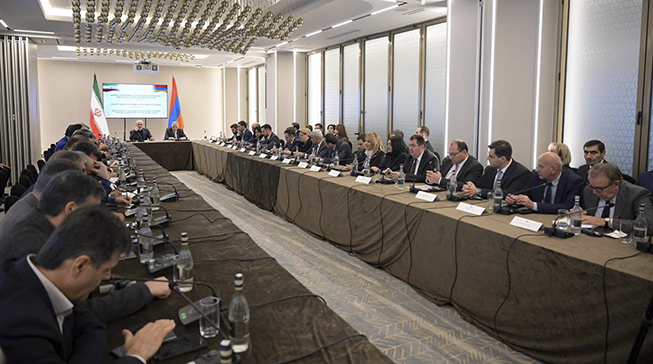
Beyond energy cooperation, the intergovernmental commission reviewed ongoing joint initiatives in transportation, trade, infrastructure, and business development. Both sides described the commission as an effective platform for translating political commitments into practical cooperation.
During the meeting, Deputy Prime Minister Grigoryan emphasized that reopening regional transportation routes would create new economic opportunities for countries throughout the South Caucasus.
He reaffirmed Armenia’s readiness to develop regional connectivity based on the principles of sovereignty, territorial integrity, jurisdiction, and reciprocity.
In this context, Grigoryan welcomed Iran’s support for Armenia’s Crossroads of Peace initiative, which seeks to strengthen regional transportation and economic links.
The 19th session concluded with the signing of a memorandum of understanding, reaffirming both countries’ commitment to expanding bilateral cooperation and advancing joint economic and infrastructure projects.