YEREVAN — Prime Minister Nikol Pashinyan has called for greater transparency regarding the wealth accumulated by former senior Armenian officials, arguing that the public deserves to know how individuals who held high government positions acquired substantial fortunes.
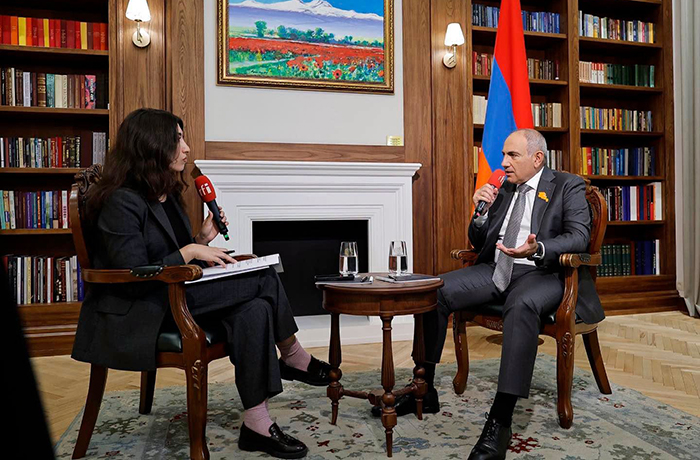
In an interview with Radio France Internationale (RFI), Pashinyan also rejected suggestions that Armenia’s political situation remains unusually tense, maintaining that vigorous political competition and public debate are essential features of democracy.
“Political tensions exist in all, or at least most, European Union countries, often to an extreme degree,” Pashinyan said. “In democratic countries, political competition and debate are always intense. The tensions you describe are themselves important evidence of democracy.”
Addressing questions concerning businessman Samvel Karapetyan, Pashinyan referred to a criminal case involving him in France and questioned whether such proceedings should automatically be interpreted as political persecution.
Turning to former President Robert Kocharyan, the prime minister noted that criminal proceedings related to the March 1, 2008, events have been ongoing for years. He also referred to a recent European Court of Human Rights ruling concerning those events, saying it identified the state authorities of that period as responsible for the killings.
Pashinyan then questioned how Kocharyan, who served as Armenia’s president for a decade, could have accumulated what he described as assets worth several hundred million dollars.
“Kocharyan spent his entire career as a public official, including ten years as president of Armenia. How could someone holding such a position accumulate several hundred million dollars?” Pashinyan asked.
He contrasted Kocharyan’s alleged wealth with his own financial circumstances, saying that despite serving as prime minister for more than eight years, he had not become a millionaire.
Referring to businessman and political figure Gagik Tsarukyan, Pashinyan argued that the 2018 Velvet Revolution was driven partly by public demands for accountability over alleged corruption and the misuse of state resources during the administrations of Kocharyan and former President Serzh Sargsyan.
He accused former officials and their associates of benefiting from unlawful external protection and entrenched corruption within Armenia’s judicial system, which he said had prevented accountability.
According to Pashinyan, Armenian voters have repeatedly expressed their expectation that the promises of the 2018 revolution, particularly justice, accountability, and the rule of law, must be fulfilled.
“The people of Armenia must know how former high-ranking officials accumulated their millions,” he emphasized.
The prime minister also highlighted Armenia’s existing system for confiscating illegally acquired assets, saying that properties allegedly obtained unlawfully from the state or local communities are being recovered and returned to public ownership.
Pashinyan presented these efforts as part of the government’s broader commitment to combating corruption and ensuring accountability among former officials.