By KRIKOR KHODANIAN
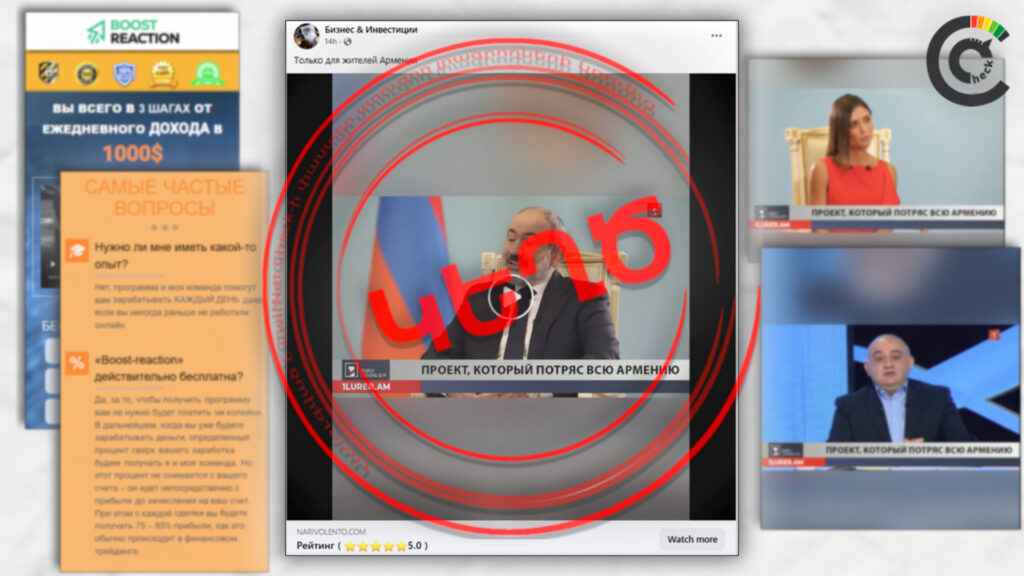
Across the world, states and societies are facing the growing phenomenon of disinformation spreading through the internet and various social media platforms—often posing a threat to national security.
Recently, a story circulated online claiming that Georgian law enforcement authorities had discovered hundreds of thousands of fake Armenian passports printed in Turkey. This information was also shared by a former Armenian Minister of Justice who had served under a previous government—someone who, given his professional background, should have verified the accuracy of the report before posting it on his personal page.
From there, the minister’s post spread from social media to opposition media outlets, which insisted that the alleged passports were intended for falsifying the upcoming 2026 parliamentary elections.
Armenia’s Fact-Checking Platform, considered the country’s most reliable source for verifying news and exposing falsehoods from all sides, contacted the official Georgian authorities and confirmed that the story was entirely fabricated and had no connection to reality whatsoever.
This example is neither the first nor the last instance of disinformation spreading, especially as Armenia enters an election period—when such incidents are expected to become more frequent in the pursuit of political goals.
The main concern in this regard stems from Russia, which operates specialized services dedicated to spreading disinformation in order to influence election outcomes in various countries. It is no secret that Moscow views Prime Minister Pashinyan’s government unfavorably and would prefer to see a leadership in Armenia that is more sympathetic and loyal to Russian interests. Ahead of the upcoming elections, Russia is expected to assist opposition forces by fostering negative attitudes toward the government and ruling party within Armenian society.
Unlike authoritarian countries—where the state strictly controls the internet—Armenia, as a democratic and free nation, has imposed no restrictions on online speech. Individuals, organizations, and both internal and external adversaries are therefore free to write and comment on political events and even the personal lives of government officials.
So far, it has not been possible to curb the spread of false information online. In fact, the situation has become even more dangerous with the rise of artificial intelligence, which enables the creation of videos that blur the line between reality and fabrication.
How much the disinformation campaign will influence the outcome of the elections largely depends on the public’s awareness and its ability to distinguish truth from falsehood. In this context, independent media outlets and civil society organizations have an important role to play in countering and educating the public, thus helping to protect the freedom and fairness of elections.
“MASSIS”
Note: Translated with the assistance of ChatGPT.