
By KRIKOR KHODANIAN
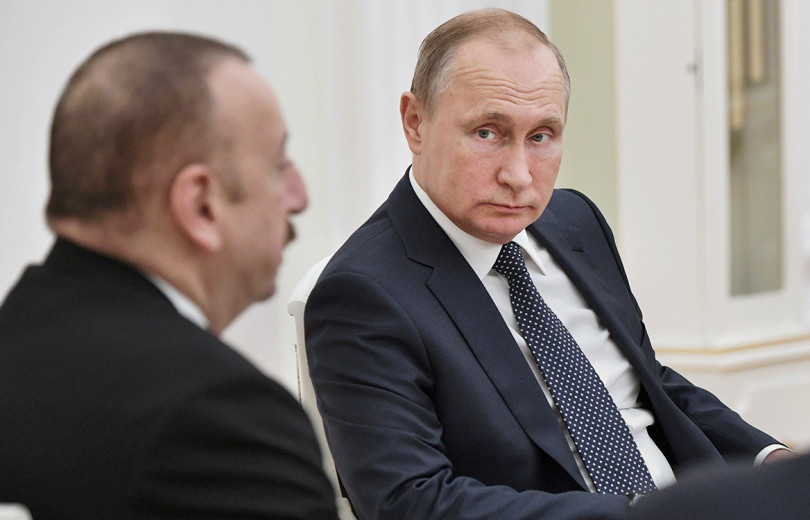
In recent weeks, particularly following the downing of an Azerbaijani plane—an incident for which Baku holds Moscow responsible—Russian-Azerbaijani relations have entered a new and strained phase. An anti-Russian campaign has emerged within Azerbaijani official and media circles, further escalating tensions.
One of the key developments was the closure of the “Russia House” in Baku, accused of functioning as a spy hub allegedly engaged in activities harmful to Azerbaijani interests. Additionally, five former high-ranking Azerbaijani officials were accused of conducting espionage for Russia.
The motivations behind Azerbaijan’s increasingly confrontational stance toward Russia remain unclear. Some analysts suggest that Baku is acting under Turkey’s influence, while others believe President Ilham Aliyev is seeking to strengthen ties with Europe. Another perspective argues that after resolving the Karabakh issue largely in his favor with Russian assistance, Aliyev now sees Moscow as expendable.
A Russian political commentator, analyzing Aliyev’s recent open criticisms of Russia and President Vladimir Putin personally, concluded that fear of Moscow has significantly diminished among post-Soviet leaders. He pointed out a series of instances where Russia overlooked Azerbaijan’s actions: the downing of a Russian helicopter during the 2020 Karabakh war, the blockade and eventual expulsion of the predominantly Russian-speaking Armenian population from Nagorno-Karabakh, and the arrest of Karabakh leaders allied with Russia, including businessman and philanthropist Ruben Vardanyan.
A similar sentiment was expressed by Konstantin Zatulin, a deputy of the Russian State Duma. “When it was necessary for Russia to ignore the Karabakh war, provocations, crimes, and even the downed helicopter, we maintained partnership relations. When Azerbaijan needed pipeline routes, it courted us with attention and cooperation. Now that the conflict has ended on their terms, Azerbaijan is using any pretext to demonstrate its new stance toward Russia,” Zatulin remarked. Several other Russian deputies have echoed his views, calling for retaliatory measures against Azerbaijan.
Despite these growing tensions, key Kremlin figures—including Dmitry Medvedev, Sergey Lavrov, Dmitry Peskov, and Maria Zakharova—have remained largely silent. Instead, they continue to direct accusations and warnings toward Armenia, a country that is merely seeking to secure its borders and territorial integrity based on its national interests, without engaging in the kind of anti-Russian rhetoric currently employed by the Aliyev government.
This situation raises questions about whether Baku has abandoned hopes of securing the so-called “Zangezur corridor” with Russian support and is now willing to downgrade its strategic alliance with Moscow. Regardless of Baku’s objectives, it is time for the Kremlin’s highest echelons to reassess their past decisions. Their willingness to embrace Azerbaijan as a trusted ally at the expense of Armenia and its people may have been a grave geopolitical miscalculation—one that demands urgent reevaluation.
“MASSIS”