By KRIKOR KHODANIAN
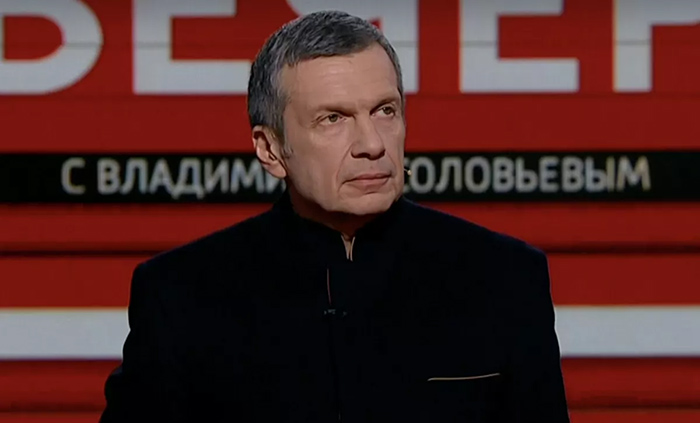
There are still influential circles in Russia that cannot reconcile themselves with the reality that Armenia, as an independent state, has the right to pursue its own foreign policy, and that continue to view it as Russia’s periphery or even as one of its provinces. The most recent and striking manifestation of this attitude came from Russian television host and state propagandist Vladimir Solovyov, who, during his program, expressed the view that losing Armenia runs counter to Russia’s national interests. According to him, a “special military operation” should be carried out not only in Ukraine, but also in other territories within the Russian Federation’s sphere of influence, and that “international law should simply be disregarded.”
Solovyov likens Armenia to the example of Venezuela, claiming that U.S. forces attacked and arrested President Maduro and are now attempting to place the country under their complete control, particularly its oil reserves.
Solovyov’s threats caused widespread outrage among the Armenian public, and the Ministry of Foreign Affairs submitted a formal protest note to the Russian ambassador in Yerevan, describing the statements broadcast on state television as an unacceptable encroachment and a hostile act, “which grossly violate the fundamental principles of friendly relations between Armenia and Russia.”
In recent months, accusations directed at Armenia by official Russian representatives had significantly decreased, and the only issue they continued to raise was that membership in the European Union cannot be compatible with participation in the Eurasian Economic Union. At present, the latter is considered Armenia’s number one economic partner, and Armenia has to date not expressed an official position regarding these warnings, taking into account that accession to the European Union would require a decade or more. Solovyov’s statements place Russia’s attitude toward Armenia on an entirely new level.
Apparently, the attack on Venezuela and President Trump’s plans to take control of the island of Greenland, which belongs to Denmark, are being used as sufficient justification for Russia as well to employ its military capabilities to return Armenia and the countries of Central Asia to its sphere of influence.
Circles close to the Kremlin should by now have realized that the 44-day Artsakh war and the subsequent depopulation of Nagorno-Karabakh marked a turning point in the attitude toward Russia on the part of official Yerevan and the Armenian people in general. As a result of its short-sighted policies, Russia lost its credibility in the South Caucasus region, and if it still retains any influence, it is largely thanks to Armenia, where it maintains a military base and wields considerable economic leverage. The threats voiced by figures like Solovyov in no way contribute to Armenia–Russia relations and, on the contrary, only deepen the existing rift.
Days after Vladimir Solovyov’s public threats, Armenia’s opposition circles and media outlets remain silent—those same outlets that relentlessly criticize every step and decision taken by the authorities, yet are prepared to ignore external threats directed against Armenia’s independence and sovereignty when they come from Russia. For many of them, the fastest path to power is Russian intervention, whether through military means or other methods.
This is not the first time Vladimir Solovyov has delivered anti-Armenian rhetoric; for this reason, his programs are not broadcast on Armenian territory. However, Russian channels remain accessible to the public, and as parliamentary elections approach, they will increasingly attempt to influence Armenian public opinion to bring to power forces willing to submit to them.
It is time for the broadcasting of these channels to be halted. They have begun to pose a threat to Armenia’s national security.
“MASSIS”
Note: Translated with the assistance of ChatGPT