
By ENG. HAMBERSOM AGHBASHIAN
Armenians in Turkey Today
Armenians In Istanbul
For over 1,600 years, Armenians have significantly contributed to shaping Istanbul’s cultural identity. Their presence began in the 4th century under Byzantine rule and flourished during the 600-year Ottoman era, where they were known as the millet-i sadıka, or “loyal nation.” Just two years after the conquest of Constantinople in 1453, Sultan Mehmed the Conqueror designated it as the capital of the Ottoman Empire. During his reign, the Armenian Patriarchate was established in Istanbul, along with the adjacent church.
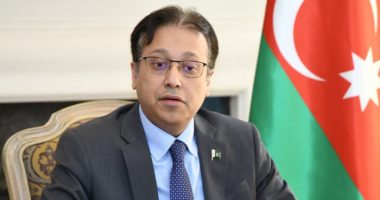
Patriarch of Istanbul, Archbishop Sahak II Mashalian
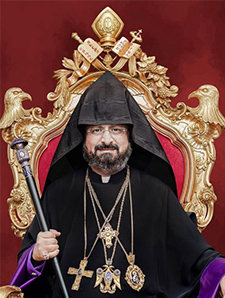 Archbishop Sahak II Mashalian was elected Patriarch of Istanbul, in 2019, and like his predecessors, serves in a sensitive socio-political environment where his leadership demands a cautious, open-minded, and responsible approach, mindful of the Turkish state’s scrutiny of the Patriarchate’s activities.
The genocide symbolically began in Istanbul on April 24, 1915, with the arrest and execution or deportation of some 250 Armenian intellectuals, community leaders, and political figures. Unlike the systematic, total deportations and massacres in the interior provinces, mass killings were generally avoided in Istanbul due to the presence of foreign diplomats and journalists. The Ottoman authorities sought to maintain an appearance of legitimate wartime measures and minimize international interference. While the community faced discrimination, massacres (such as the Hamidian massacres in the late 19th century and the Adana massacre in 1909), and property confiscation, a small Armenian population did survive in Istanbul, unlike in Western Armenia. However, their numbers were drastically reduced from pre-war levels, and their social and political influence was greatly diminished. The community in Istanbul today represents only a fraction of the historical Armenian presence in the city and wider region.
In essence, while the methodologies varied between Istanbul and the eastern provinces, the intent was a general policy of eliminating the Armenian presence from the entirety of the Ottoman Empire. The result was the near-total destruction of Armenian civilization across its historic lands, from the eastern provinces to the capital city’s once-vibrant cultural and intellectual life.
There are currently approximately 40,000 – 50,000 Armenians living in Turkey, with most residing in Istanbul. They have their own social, religious, cultural, and charitable activities. They are allowed to teach the Armenian language and the Christian religion in their schools.
The teaching of Armenian history is strictly prohibited. Turkish history is taught in Turkish, and geography teachers must be Turkish.
For years, public schools mandated Islamic religious education, -which alienated Armenian students and ignored their Christian faith. Only in recent years have Christians and Jews been allowed to opt out of these classes. They have Armenian, Bilingual and trilingual newspapers.
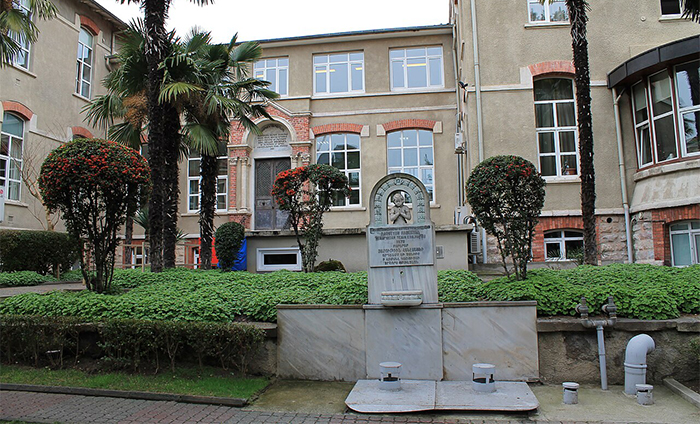
The Armenian community in Turkey continues to decline due to a significant disparity between the number of deaths and births. Additionally, some people migrate abroad for economic or educational reasons, and don’t come back again.
Armenians have two hospitals operating in Istanbul. The Saint Savior Hospital (Orthodox Armenians)is located in the Fatih district. It was established in 1832 by Kazaz Artin (Harutyun) Amira Bezjian, a prominent Armenian philanthropist and financial advisor to Sultan Mahmud II of the Ottoman Empire. It is a historic institution that has served the community since 1834. It is now a modern medical facility offering a wide range of services, including emergency care, pediatrics, and internal medicine. Also, it features the Bedros Sirinoglu Museum dedicated to Armenian cultural heritage. Saint Saver Hospital is the largest and wealthiest institution of the Armenian community and meets the highest modern healthcare standards.
Saint. Hagop (Surp Hagop) Hospital (Catholic Armenians) in the Şişli district, founded in 1837, is no less prestigious than Saint. Savior Hospital.
Most Armenians in Turkey have Turkish surnames, mostly without Armenian suffixes (IAN or YAN), because they were required to change them. In 1934, as part of Atatürk’s nation-building project, the Turkish government implemented the Surname Law (Soyadı Kanunu), which mandated the replacement of non-Turkish surnames with Turkish ones.
Famous Armenians in Turkey
Famous Armenians in Turkey today include musician and composer Hayko Cepkin, singer Rober Hatemo, and Massis Aram, the conductor of the Bosphorus Jazz Choir. Other notable figures are actresses Ani İpekkaya and Anta Toros, as well as musician, composer, and conductor Arto Tunçboyacıyan. The singer Cem Karaca, actress Adile Naşit, and musician Onno Tunç are also recognized for their contributions. Additionally, journalist and activist Hayko Bağdat, (who is currently in exile). The journalists Ara Koçunyan and Pakrad Astookian, are part of this vibrant community.
Notable post-Genocide Armenian figures who passed away include linguist Hagop Martaian (Agop Dilâçar), photographer Ara Güler, intellectual Hrant Dink, who was assassinated in Istanbul in 2007, and journalist Rober Haddeciyan.
Hagop Martayan (Agop Dilâçar)
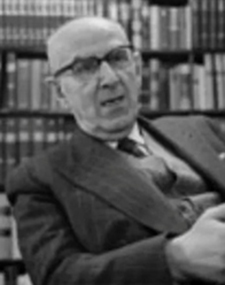 Hagop Martayan (Agop Dilâçar) (1895-1979) was a Turkish Armenian linguist who served as the first Secretary General and chief specialist of the Turkish Language Association. His surname, Dilâçar, translates to “language opener” a name suggested by Mustafa Kemal Atatürk. In 1928, Atatürk established a commission to develop the modern Turkish alphabet, where he played a crucial role in the reform. This commission comprised linguists, writers, and educators, and Dilâçar was instrumental in both the creation and implementation of the new alphabet.
Ara Guler
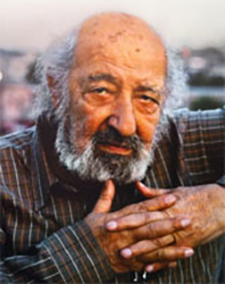 The renowned photographer Ara Güler (1928 – 2018) was the most prominent photographer of his generation in Turkey. He earned the nicknames “the Eye of Istanbul” and “the Photographer of Istanbul,” and he was one of Turkey’s few internationally recognized photographers.
He was born to Armenian parents in Istanbul. Ara Guler took photos of Recep Tayyip Erdogan, including portraits of him and his family, in 2015. He defended his decision to photograph the president, stating it was a natural journalistic opportunity, not a political endorsement.
Daron Acemoğlu
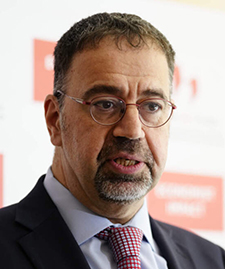
Daron Kevork Acemoğlu is an Armenian economist born on September 3, 1967, in Istanbul. He is currently a US citizen and has been teaching at the Massachusetts Institute of Technology (MIT) since 1993. At MIT, he holds the title of Elizabeth and James Killian Professor of Economics and was appointed an Institute Professor in 2019. Acemoğlu was awarded the John Bates Clark Medal in 2005 and won the Nobel Prize in Economics in 2024. His father, Kevork Acemoğlu (1938–1988), was a commercial lawyer and a lecturer at Istanbul University. His mother, Irma Acemoğlu (d. 1991), was a poet and served as the principal of an Armenian elementary school in Kadıköy.in Kadıköy.
Bilingual and trilingual newspapers
Armenians are allowed to have newspapers in Turkey because they are a recognized minority with their own institutions. They are recognized as a separate “millet” and have their own media, religious, and educational institutions. They face challenges such as economic difficulties and limited scope for public discourse, particularly on sensitive topics like the Armenian Genocide.
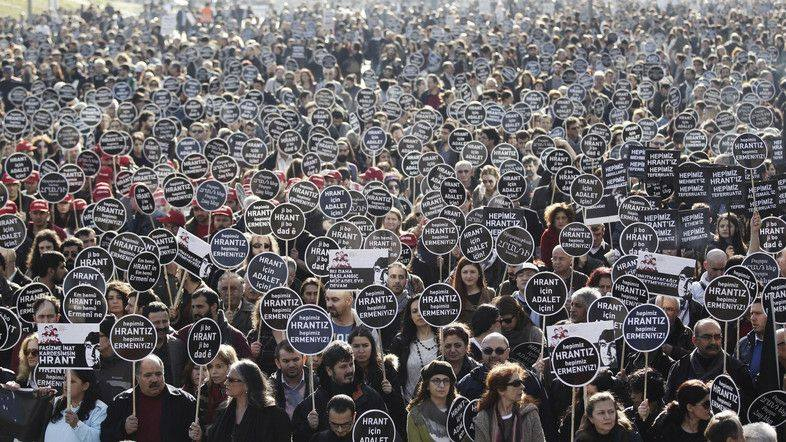
Agos: Founded in 1996 by Hrant Dink, Luiz Bakar, Harutyun Şeşetyan and Anna Turay. It is published in both Turkish and Armenian as well it has as an online English edition. It covers issues important to the community, including democratization, minority rights, and the Armenian genocide. The current editor-in-chief is Yetvart Danzikyan, he succeeded Hrant Dink after his assassination.
Jamanak: Established in 1908, it is the longest-running Armenian newspaper in Turkey, published in Armenian. The editor-in-chief of the Armenian newspaper Jamanak is Ara Koçunyan. He is the great-grandson of the newspaper’s founder, Misak Koçunyan, and has been in the role since 1992.
Marmara: Founded in 1940 by Souren Shamlian, its last editor-in-chief was Rober Haddeciyan, who held the position from 1967 until his death in 2025. He was a writer, playwright, and journalist.
Luys: An Armenian newspaper that has become the first Armenian channel to be broadcast on Turkish television, the Luys TV channel airs in both Armenian and Turkish.
Hrant Dink
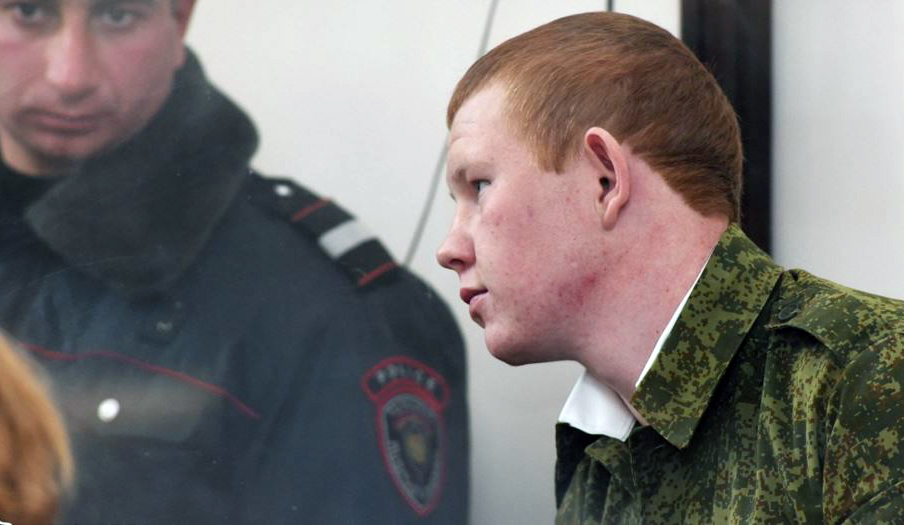
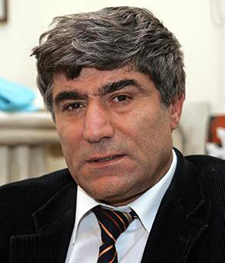 Hrant Dink (September 15, 1954 – January 19, 2007) was a prominent Turkish intellectual of Armenian descent, owner and editor-in-chief of the bilingual newspaper Akos. He was known for his advocacy of coexistence between Turks and Armenians and for his advocacy of human rights and minority rights in Turkey. He frequently criticized Turkey’s denial of the Armenian Genocide and the Armenian diaspora’s campaign for international recognition of it. Hrant Dink was assassinated in Istanbul on 19 January 2007 by a 17-year-old Turkish nationalist.
Turkified and Kurdified Armenian villages and Inhabitants
Hidden Armenians
According to historians and different sources, hundreds of thousands of Armenians outside Istanbul live as Turks or Kurds, and most of them currently have no connection to their origins. Although from time to time, a few individuals contact the Patriarchate to return to Christianity, the case is very sensitive. Those people are in entire villages converted to Islam to be protected from Genocide. Others were converted forcibly, mostly kidnapped women and adopted children.
crypto-Armenians is an umbrella term to describe Turkish citizens hiding their full or partial Armenian ancestry from the larger Turkish society. They are mostly descendants of Ottoman Armenians who, at least outwardly, were Islamized (and Turkified or Kurdified) “under the threat of physical extermination” during the Armenian genocide.
Turkish journalist Erhan Başyurt describes hidden Armenians as “families (and in some cases, entire villages or neighborhoods), who converted to Islam to escape the deportations and death marches ,of 1915, but continued their hidden lives as Armenians, marrying among themselves and, in some cases, clandestinely reverting to Christianity.” According to the 2012 European Commission report on Turkey, a “number of crypto-Armenians have started to use their original names and religion.” The Economist suggests that the number of Turks who reveal their Armenian background is growing. In Turkish, they are referred to by the derogatory term “leftovers of the sword” ( kılıç artıkları).
Vakıflı,The last surviving Armenian Village in Turkey
The Musa Dagh Armenian defence was a heroic resistance against the Ottoman government’s deportation orders during the Armenian Genocide in 1915. The 4,200 Armenians from the six villages at the foot of the mountain retreated to the heights of Musa Dagh, where they held out for 40 days, fighting against Ottoman forces. Their resistance ultimately led to their rescue by the French warship Guichen, and they were transported to Port Said in Egypt. The struggle inspired many generations of Armenians and also foreign writers, including the literary giant Anatole France, who in 1916, famously declared (A nation that does not want to die, does not die. The story of the Musa Dagh resistance was later immortalized by Franz Werfel in his 1933 novel, The Forty Days of Musa Dagh.
The last Armenian village in Musa Dagh in Turkey is Vakıflı , located in the Samandağ district of Hatay Province near the Syrian border. It is situated on the slopes of Musa Dagh and overlooks the Mediterranean Sea. The village has a history tied to the resistance during World War I, as many of its residents chose to stay and not evacuate to Lebanon in 1939, unlike those from six other villages on Musa Dagh.
Today, the village is home to a small community of ethnic Armenians who are working to preserve their heritage through projects like a museum that showcases their culture, language, and traditions. As of 2022, the population is around 103 people, with the local Western Armenian dialect being significantly distinct from others.
Minority Status
Armenians in Turkey remain marginalized. As non-Muslims, they fall under the category of minorities recognized by the 1923 Treaty of Lausanne, but their right are often inadequately protected. The state exerts control over Armenian institutions, with the government directly influencing the election of the Armenian Patriarch. Land disputes are another contentious issue. Many properties once owned by Armenians < including churches, schools and cemeteries, were confiscated during the republican era and remain in state or private hands.
Next — The Armenian Diaspora