WATERTOWN, MA–The Armenian Museum of America is pleased to announce the opening of Beyond the Curtain: Materiality and Devotion in Armenian Art on October 22. This new exhibition includes more than 20 objects from the Museum’s collection, and it is curated by Anahit Gasparyan. The exhibition examines Armenian religious art through the materials that have shaped devotional experiences, inviting visitors to consider how faith becomes tangible through art, ritual, craftsmanship, and sacred objects.
At the heart of the exhibition is the Mardin Altar Curtain, a remarkable textile that provides a point of entry into the material and visual world of Armenian religious practice. This piece was exhibited at the Tufts University Art Galleries in 2021. The exhibition is also anchored by the Garabed Gospel, which was completed in the year 1207, connecting the presentation to the traditions of medieval Armenian Christianity and demonstrating the enduring relationship between material culture and religious devotion.
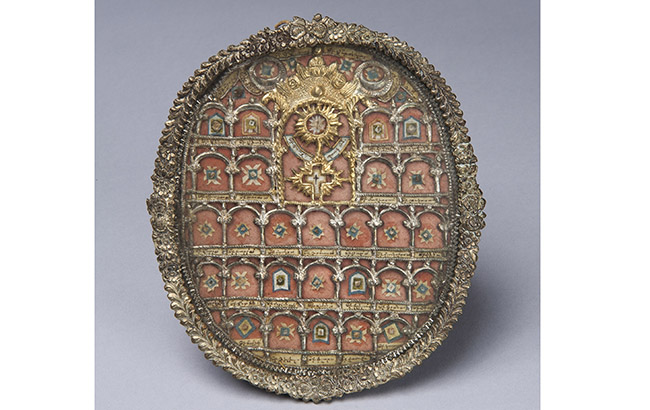
Rather than approaching religion as an abstract concept, Beyond the Curtain considers how the physical materials of religious objects have helped shape the experience of faith. Manuscripts, reliquaries, crosses, textiles, clothing, and other sacred objects reveal the significance of the materials from which they were made. Parchment, metal, thread, wood, and other materials become carriers of devotion, artistry, ritual, memory, and cultural continuity.
Through these objects, the exhibition encourages visitors to look closely at the ways materials themselves can communicate meaning. The tactile qualities, craftsmanship, decoration, and histories embedded within sacred objects offer a deeper understanding of Armenian religious life and the communities that created, used, preserved, and passed these objects from one generation to the next.
“Beyond the Curtain places particular emphasis on medieval foundations of Armenian Christian material culture that continues to shape Armenian art across later centuries,” explains Curator Anahit Gasparyan. “Rather than asking what these objects symbolize, I hope visitors will ask what these materials do: how cloth conceals and reveals, how parchment carries sacred language, how metal and precious stones reflect light. Together, these materials make devotion physical.”
The exhibition reflects the Armenian Museum of America’s commitment to presenting Armenian art and cultural heritage through thoughtful, object-centered scholarship while creating opportunities for visitors to engage with its collection and the richness and diversity of Armenian artistic traditions.
The Armenian Museum of America is located at 65 Main Street, Watertown, MA. The gallery hours are Thursday through Sunday from 12:00 to 6:00. For more information, visit www.armenianmuseum.org.