Armenia is facing a difficult moment. The relationship between the Republic and the Armenian Apostolic Church has become a serious source of disagreement. The debate involves faith, national identity, political authority, and Armenia’s future.
This should not be reduced to a question of supporting or opposing the present government, or supporting or opposing the Catholicos. The larger question is this: How can a modern Armenian state and an ancient Armenian institution coexist in a way that protects the dignity of both and serves Armenians everywhere?
For centuries, Armenians lived under different empires and in different countries. Armenians in Russia, Iran, France, the Ottoman Empire, and elsewhere developed different histories and experiences. They shared language, religion, and culture, but they did not form one political community.
When there was no Armenian state, the Armenian Apostolic Church became a vital institution for preserving faith, language, education, culture, and identity.
That historic role cannot be overstated.
But Armenian independence in 1991 created a new reality: Armenians once again had a sovereign state.
This changed the relationship between the Church and Armenian national life.
A modern republic is much more than a government that provides security and collects taxes. It creates permanent public institutions responsible for the many areas that allow a society to develop and preserve itself. Ministries and public institutions for education, culture, science, economic development, social welfare, and other areas of national life can build schools and universities, support scientific research, preserve archives and historic sites, operate museums and cultural centers, develop libraries and learning institutions, protect the Armenian language, and document and teach the history and culture of the Armenian people. They also create the economic and social conditions that allow families and communities to remain in the country and build their future.
These are functions that the Church could not have carried out on this scale when Armenia had no state. The Church preserved what existed; a modern state has the capacity to develop, expand, organize, and transmit that heritage through national institutions from one generation to the next.
These responsibilities were never exclusively those of the Church.
The Church helped preserve Armenian identity when Armenia had no state. The Republic now has the responsibility to develop and protect that identity through the institutions of a modern state.
This does not diminish the Church. It gives the Church the opportunity to concentrate on what a spiritual institution does best: faith, spirituality, moral values, and religious tradition.
The title “Catholicos of All Armenians” has deep historical and spiritual meaning. The Catholicos is the spiritual leader of the Armenian Apostolic Church and its faithful throughout the world.
But spiritual leadership is not political leadership.
The Catholicos can be the spiritual leader of Armenians belonging to the Armenian Apostolic Church worldwide without becoming the political leader of every Armenian.
Likewise, Armenia’s Prime Minister is the elected head of the government of the Republic. He represents the state within its constitutional system, but he is not the political leader of Armenians living in other countries.
Most importantly, we must separate the person from the institution. Disagreement with a Catholicos is not disagreement with God , Christianity or with the Church . Defending the independence of the Church is not opposition to Armenia. Defending the constitutional authority of the Republic is not opposition to the Church.
A mature society must be able to make these distinctions.
The Church must be accountable. Its finances should be transparent, and clergy should be subject to the law like every other citizen.
But accountability is not political control.
If a Church leader is accused of breaking the law, there must be evidence, due process, and independent legal procedures. The government should not decide who leads the Church.
At the same time, religious independence cannot mean immunity from legitimate public scrutiny.
The Church must not become a state within the state, and the state must not become the governing authority of the Church.
This principle must apply regardless of who is Catholicos or Prime Minister.
The present confrontation should not become a struggle over who defeats whom. Armenia needs a lasting institutional understanding, not a temporary political victory.
If the present leadership can reach such an understanding, that would be the best outcome. If it cannot, a dignified change in Church leadership may eventually become necessary—but only through a legitimate ecclesiastical and legal process.
The goal should not be to weaken the Church or the Republic.
Armenia needs both.
The Church preserved Armenian identity when there was no Armenian state. Now the Republic has the responsibility to ensure that Armenian culture, language, education, history, and national life can flourish within a sovereign country.
The future requires both institutions to respect their distinct responsibilities.
The Church should remain a strong spiritual home for Armenians everywhere. The Republic should remain a strong, independent homeland for generations to come.
That is the challenge of moving from preservation to statehood.
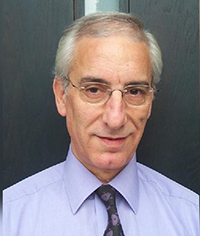
M. Greg Sarkissian is Cofounder and President of the Zoryan Institute
The views expressed in this article are solely those of the author and do not represent the official position of the Zoryan Institute.
YEREVAN — While Armenia boasts a vibrant artistic landscape, its cultural sector faces persistent structural…
NEW YORK -- Armenia’s Permanent Representative to the United Nations, Paruyr Hovhannisyan, has reaffirmed Armenia’s…
YEREVAN -- A swearing-in ceremony for members of the Armenian government was held at the…
By BERGE JOLOLIAN Ilham Aliyev has an unusual way of explaining his commitment to peace.…
SHANGHAI -- Armenia has earned its first-ever Medal of Excellence at the WorldSkills International competition,…
YEREVAN -- The Trump Route for International Peace and Prosperity (TRIPP) has advanced to the…