
By KRIKOR KHODANIAN
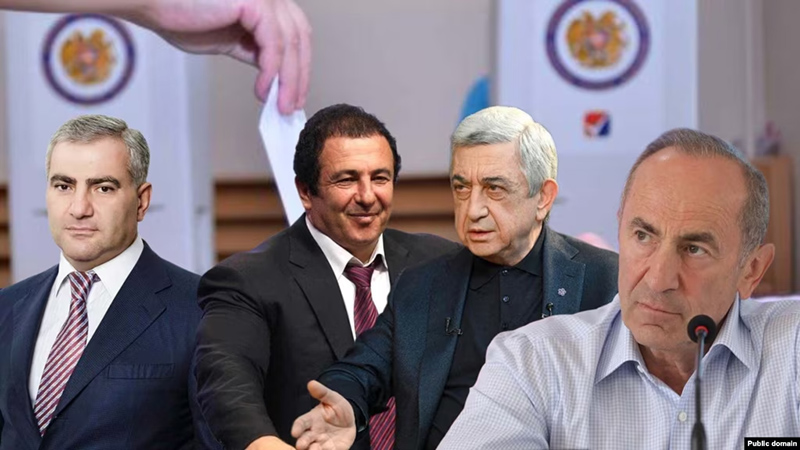
An examination of the prospects of the political forces participating in Armenia’s upcoming parliamentary elections makes it clear that the entry of Russia-based billionaire Samvel Karapetyan into politics has significantly altered the alignment of players within the opposition field. Until the middle of last year, the “Armenia” Alliance, led by former president Robert Kocharyan and including the Armenian Revolutionary Federation, was considered the ruling party’s main challenger.
The circumstances have now changed, and that alliance has effectively ceded its position to Karapetyan’s “Strong Armenia” party. A number of prominent figures who previously stood alongside Kocharyan have already shifted their support to Karapetyan. In the 2021 elections, the “Armenia” Alliance received 21 percent of the vote, but it is believed that a large portion of those votes will move to “Strong Armenia” in the upcoming elections. There are even doubts about whether Kocharyan’s alliance will be able to surpass the minimum 8 percent threshold required for electoral alliances to enter parliament.
In this emerging political landscape, it would be more advantageous for Kocharyan if the Central Electoral Commission were to decide to reject the participation of “Strong Armenia” in the elections. Certain political circles have already called for the party to be barred, arguing that Karapetyan—who is also a Russian citizen, operates under Russia’s influence, and receives financing from abroad—should not have the right to shape Armenia’s political future.
Supporters of former president Serzh Sargsyan participated in the previous elections under the “I Have Honor” alliance. Although they failed to reach the required 5 percent threshold, they still secured seats in parliament under a legal provision requiring that at least three parliamentary factions be represented in the National Assembly.
The “I Have Honor” alliance no longer exists, and Sargsyan has stated that no decision has yet been made regarding participation in the upcoming elections. There is a strong possibility that the Republican Party of Armenia, which governed the country for ten years, may not participate in the next elections.
Businessman Gagik Tsarukyan, who had stepped away from politics for some time and whose Prosperous Armenia Party failed to enter parliament in the previous elections, has decided to take part in the upcoming vote. He has stated that he does not intend to form a formal alliance but is willing to include candidates from various parties on his party list to assemble what he calls a “Noah’s Ark.” Several parties have already decided to join Tsarukyan’s list.
According to National Assembly Speaker Alen Simonyan, Karapetyan and Tsarukyan will compete to become the leading opposition force.
However, it is unclear what data this prediction is based on, particularly given that Karapetyan’s party is spending enormous sums and conducting a far more organized, large-scale, and modern-style campaign. Tsarukyan’s camp has not displayed activity on that scale.
Alongside these forces, there are also numerous other opposition parties that will register to participate in the elections, thereby contributing to the fragmentation and dilution of votes among those dissatisfied with the Prime Minister Pashinyan’s Government.
Opposition leaders publicly declare that the parties and alliances that enter parliament as a result of the elections will eventually unite and remove Nikol Pashinyan’s Civil Contract Party from power, similar to what they achieved last year following the local elections in Gyumri. However, the dynamics of local elections differ from nationwide elections, where political issues carry greater significance, and voters go to the polls to determine the country’s future rather than to resolve local concerns.
Three months before the elections, uncertainty dominates the opposition field. All forces are competing against Pashinyan while simultaneously competing against one another. In the absence of unity within the opposition, victory for the ruling party appears inevitable—although the final percentages remain to be determined.
“MASSIS”
Note: Translated with the assistance of ChatGPT