By Orhan Kemal Cengiz
Today’s Zaman
There is certainly a huge difference between knowing and feeling something. I had known for a long time that there was a huge population of Armenians in Anatolia and that they had been scattered to every corner of the world.
But seeing and feeling it is a completely different experience.
Watching the presentation of an Armenian friend on the commemorations in Mexico was such an interesting experience for me when I was taking a course in Canada on genocide. I saw the pictures of Mexican Armenians, mourning for their losses in Anatolia. It was really hard to believe these men wearing these huge Mexican hats were possibly my old neighbors. On the other side of the world, they were still living with old and painful memories from my country. During such moments words are not sufficient to describe what one feels. Only art, a picture, a poem or a sculpture could possibly express what you feel.
I felt the same unexplainable feelings when I visited Yerevan. It was so interesting to hear how these people were referring to their roots. They were from Kars, from Agri, Van and so on. They were still identifying themselves like this.
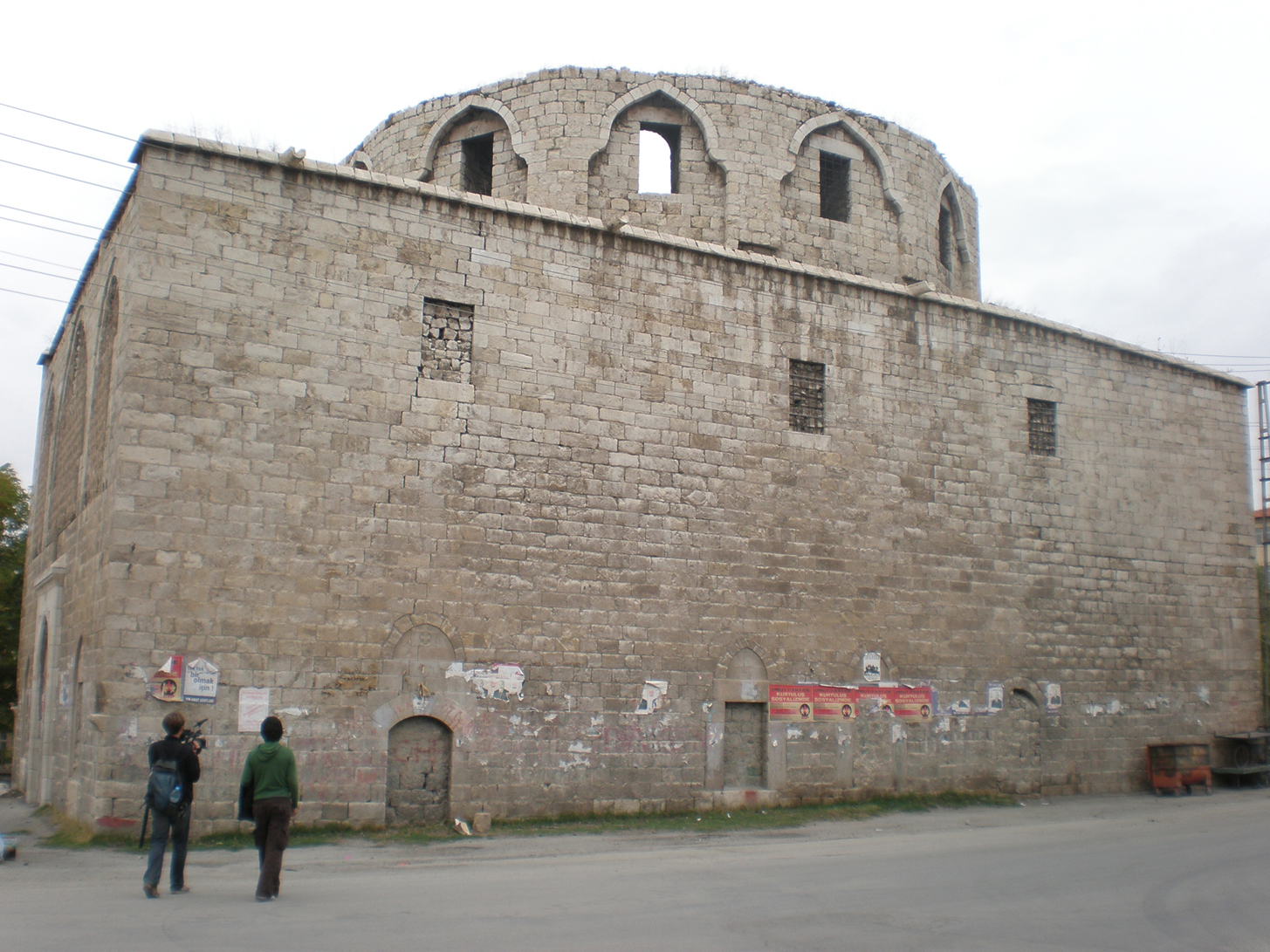
I remembered all these things as I was reading an interesting piece of news in the Turkish-Armenian weekly Agos. The title was “Armenians of Malatya Association has been established.” Two photos accompanied the news coverage. In one of them an elderly woman crying, out of happiness and nostalgia, I guess.
While I read it many other things came to mind. But first let’s read this interesting news piece together: “A new organizational model has been adopted by Armenian society in recent years. They have begun to establish organizations to keep alive the memory of the battle wounds of 1915, and the cultures and traditions that were torn from their roots in Anatolia in order to pass them on to future generations. … MalatyaHAYDer, the foundation of which was officially announced with a press statement last week, organized their first ever event at the Kumkapi Sirp Harutyun Church on Oct. 23, Saturday. About 400 Armenians from Malatya attended the dinner to support the management board. … That evening after the stuffed cherry leaves of Malatya were served, Ankine Evyapan spoke about Malatya poet Rupen Voperyan and presented examples of his poetry.”
The news story continues with an interview with Hosrot Kölevitoglu, one of the founders of the association. Mr. Kölevitoglu also tells us a lot of interesting things about Turkey and Malatya, a city in eastern Anatolia. Let’s lend an ear to his words: “In Malatya, which was once called ‘Little Armenia’ along with Sivas and Erzincan, there were 33 churches until the 1990s.”
As I was reading this sentence I remembered the words of the murderers in the Malatya massacre in 2007. The suspects claimed that there were 40 house churches in Malatya run by Christian missionaries, but the truth was there was only one church and a tiny group of Christians. I can’t help but wonder whether the history of Malatya had anything to do with the creation of this hysteria about Christians. Anyways, let’s continue to read this interesting interview:
“Armenians used to work as tailors, coppersmiths, tin makers, milliners, watch producers, potters and in construction and they used to be involved in artisanship as well as agriculture and animal breeding. … Still in many places, they continue living in their homes by concealing their identities or disguising their religious beliefs. … In our childhood, they spoke about ‘sövketten’ [deportation] when we were away, but they would immediately stop speaking when we approached.”
I also learned from this interview that there are 4,000 Armenians from Malatya living in Istanbul now. Mr. Kölevitoglu added that they have received positive feedback from the local press in Malatya.
Turkey needs to hear the stories of Armenians. Their stories are the lost piece of our history. Five or 10 years ago, these associations could not have been established in Turkey. They would have been met with millions of legal and bureaucratic obstacles. I am glad we have come so far. But I also hope that one day Turkey and Turkish people will have enough self-confidence to confront our past. In this sense, the establishment of these kinds of organizations is very important. They encourage us to open the eyes of our hearts. I welcome
YEREVAN -- Armenian Prime Minister Nikol Pashinyan received United Nations Secretary-General António Guterres at the…
YEREVAN -- Armenian Prime Minister Nikol Pashinyan has stated that a newly established joint working…
YEREVAN -- Armenian Foreign Minister Ararat Mirzoyan has suggested that the border between Armenia and…
Memoir Features Contributions from Pulitzer Prize-Winning Author Peter Balakian and System of a Down’s Serj…
YEREVAN -- The Armenian government has adopted a decision recognizing all shares of Electric Networks…
Authors Hrayr Karagueuzian and Dr. Levon V. Demirdjian Explore How Understanding Health Risks Can Help…