Azerbaijani President Ilham Aliyev speaks at the World Forum on Intercultural Dialogue in Baku on October 27, 2026. Photo credit: Presidency of Azerbaijan.
By BERGE JOLOLIAN
Ilham Aliyev’s latest lesson in peace leaves out the people who lost their homeland.
Addressing the World Forum on Intercultural Dialogue in Baku on October 27, Azerbaijan’s president presented his country’s military victory in Nagorno-Karabakh and the defeated side’s capitulation as an example for other conflicts.
“I always say that we took revenge on the battlefield, and we should not go further.”
He described the 2020 war and September 2023 offensive as lawful self-defense and the implementation of United Nations resolutions. He accused Armenia of occupying almost one-fifth of Azerbaijan, displacing a million Azerbaijanis and destroying 65 mosques, while escaping punishment. These were his assertions, presented to an international audience as the settled account of the conflict.
Aliyev also celebrated Azerbaijan’s ethnic and religious harmony, challenged his critics’ moral authority, and invoked partnerships with the United States, China and ten European Union countries as evidence of international respect.
A day later, in a message to an Islamic cooperation anti-corruption meeting, he alleged that resource extraction during Armenian control had caused severe environmental damage and generated proceeds laundered through international financial channels.
The accusations continue. So does the expectation that the world will accept Baku’s account without examining what happened to the Armenians.
Earlier that month, on October 2, Aliyev had offered a more disturbing explanation of his restraint. Addressing his ruling party’s congress, he said that, had Azerbaijan surrendered to its emotions, a victory arch might now stand in central Yerevan. He also portrayed Armenians as historically treacherous and insisted that Azerbaijan remain overwhelmingly stronger.
For those of us living in Yerevan, the city in that sentence is home. People here want to raise their families, build their careers and make plans without wondering whether another war will interrupt them.
Their security cannot depend on a neighboring president’s judgment about when he has taken enough.
The Armenians Missing from Aliyev’s Account
The Armenian population of Nagorno-Karabakh did not arrive with the wars of the 1990s. Its roots reach back centuries. The thirteenth-century Armenian monastery of Gandzasar stands among the enduring witnesses to that history. In the 1989 Soviet census, approximately 145,500 Armenians constituted 76.9 percent of the Nagorno-Karabakh Autonomous Oblast’s population.
These were families with homes, schools, livelihoods and generations buried in the same soil.
They were at home.
The settlement principles proposed by the United States, France and Russia in 2009 distinguished Nagorno-Karabakh from the surrounding territories. Those territories would return to Azerbaijani control. Nagorno-Karabakh would have an interim status guaranteeing security and self-government, with its final status determined through a legally binding expression of will. Territorial integrity and self-determination both belonged to that proposed framework.
That history matters because Aliyev’s account reduces an entire population to an obstacle removed by military victory.
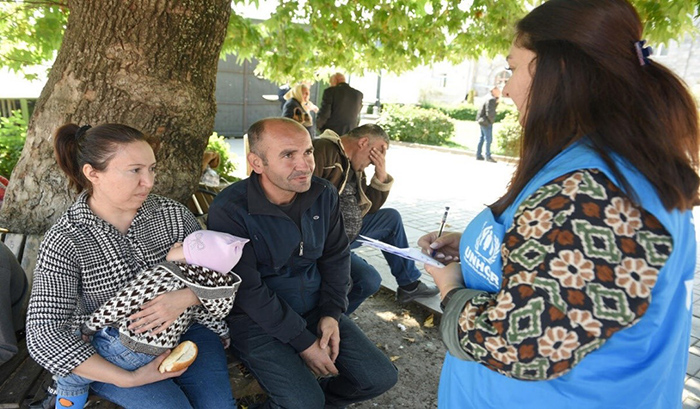
The blockade of the Lachin corridor began in December 2022. By July 2023, the International Committee of the Red Cross reported that it could not bring urgently needed humanitarian supplies into the region and that essential foods were unavailable or scarce. Azerbaijan launched its offensive on September 19, 2023. More than 100,000 Armenians subsequently fled. The European Parliament described their forced departure as ethnic cleansing.
Russian peacekeepers were present. Their deployment did not prevent the blockade or protect the population.
Nor did the population’s flight extinguish its rights. In November 2023, the International Court of Justice issued binding provisional measures requiring Azerbaijan to ensure the safe, unimpeded and prompt return of those who wished to return, and to preserve relevant identity and property records.
Those obligations deserve at least as much international attention as speeches praising reconciliation.
Yet on October 26, presidential aide Hikmet Hajiyev said Azerbaijanis expected an apology from Armenian society. Armenian Foreign Minister Ararat Mirzoyan responded that such language did not contribute to peace. He rejected the suggestion that the apology demand could become another precondition for signing the peace treaty. He also declined to answer with inflammatory rhetoric, acknowledging that wounds remained fresh in both societies.
On October 29, Farhad Mammadov, deputy head of an Azerbaijani state-established policy institute, rejected Armenia’s right to judge which statements served peace. “Neither Yerevan nor Mirzoyan personally has the right to do so,” he said. Mammadov also coordinates the bilateral “Bridge of Peace” initiative. Peace requires a conversation between equals.
Azerbaijanis displaced during earlier phases of the conflict deserve recognition, justice and protection of their rights. The same standard must apply to displaced Armenians. A government cannot credibly demand acknowledgment of its people’s suffering while dismissing the suffering it inflicted.
On October 28, Mirzoyan disclosed that Armenia’s requests for partner countries to arrange visits to Armenians held in Azerbaijani custody had failed. According to the minister, Baku had told the intermediaries to stay away. Securing the prisoners’ release remained a permanent priority, he said, and success must be measured by whether they regain their freedom.
This is an immediate test of good faith. Governments supporting the peace process should press for the immediate and unconditional release and safe return of the Armenian prisoners. Until then, they should insist on regular, independent humanitarian visits, necessary medical care and reliable family contact. These protections cannot substitute for freedom.
The Risks Armenia Faces
Armenia must also assess the military power behind Baku’s diplomacy.
During his October 14 visit to Baku, Israeli President Isaac Herzog praised Azerbaijan’s stabilizing role and discussed deepening the strategic relationship.
Five days later, Israel’s Elbit Systems announced a $235 million contract for PULS rocket launchers and guided rockets, with deliveries over three years. Elbit did not name the customer; Israeli financial publications Globes and Calcalist identified Azerbaijan. Globes also reported Israeli involvement in rifle production inside Azerbaijan.
Turkey remains central to Azerbaijan’s military strength. Turkish defense companies announced more than $500 million in contracts in September, while joint exercises continued into October. The Shusha Declaration, which underpins the Turkish-Azerbaijani alliance, provides for consultations and assistance when either country considers itself threatened.
Recent disagreements between Ankara and Baku offer no reliable assurance that Turkey would restrain Azerbaijan in a future confrontation. Mirzoyan made the sensible point on October 21 that Armenia does not base its policy on those disagreements. Normalization with Turkey should continue, with progress judged by concrete improvements in Armenia’s security and connections to the outside world.
Iran adds another dimension. Tehran has opposed arrangements that undermine Armenian sovereignty or its southern border, while indicating that transport projects respecting those interests can be acceptable.
War or prolonged upheaval in Iran could weaken that constraint on Baku and disrupt Armenia’s transport and energy connections. This is a risk to prepare for, not a prediction that Azerbaijan has decided to attack.
Russia presents a different vulnerability. On October 7, a senior Russian Foreign Ministry official warned that Armenia could lose preferential gas terms if it revised its alliance relationship with Moscow.
These pressures do not need to follow one coordinated plan to become dangerous. A distracted Europe, a crisis in Iran, changing priorities in Washington or renewed Russian pressure could alter the calculations of every government involved.
Armenia needs a peace that can withstand those changes.
What a Durable Peace Requires
The agreement initialed in Washington on August 8, 2025, contains commitments to sovereignty, territorial integrity, the rejection of territorial claims and the prohibition of force or threats of force. It also addresses racial hatred and intolerance. Those provisions provide standards against which subsequent conduct should be judged.
The treaty remains unsigned. On October 28, Mirzoyan reaffirmed Armenia’s readiness to sign as soon as possible, including by the end of 2026. On October 29, Prime Minister Nikol Pashinyan said he would consider it a personal failure to leave office without the agreement signed and ratified. Baku maintains that it will not sign until Armenia’s Constitution is changed, although the initialed agreement contains no express requirement for such an amendment. Mirzoyan argued that signing and ratifying the agreement itself could address Azerbaijan’s stated legal concerns.
There is practical progress worth protecting. Mirzoyan pointed to trade and transit as evidence of functioning peaceful relations. On October 28, Armenia’s parliament ratified the separate Armenia–United States framework for TRIPP, a proposed transport connection through Armenia linking mainland Azerbaijan with Nakhchivan. The framework preserves Armenian sovereignty and jurisdiction over the project within its territory.
On October 27, the Netherlands announced funding through the International Commission on Missing Persons to help establish the fate of people missing from the conflict and identify human remains. Families in both countries deserve answers about their missing loved ones.
The displaced Armenians of Nagorno-Karabakh must also have a voice in decisions affecting their future. Voluntary and secure return, property rights, cultural protection and international access belong on the diplomatic agenda. Their disappearance from their homeland must not be followed by their disappearance from negotiations.
Washington and European governments should therefore make their expectations concrete. They should press for the prisoners’ release and independent humanitarian access pending their freedom. They should demand protection of Armenian cultural heritage, implementation of international court orders, and an end to threats against Armenia’s territory and political independence.
They should identify consequences before another crisis occurs. Targeted sanctions against officials responsible for serious abuses, and restrictions on assistance that facilitates coercion, should be credible policy options. Arms suppliers should assess how their weapons could be used and what leverage they have to prevent further aggression.
Armenia’s partners should also help strengthen its defense, institutions, energy resilience and access to export markets. The EU’s two-year trade preferences, in force since October 10, offer a practical response to Russian trade restrictions. Helping Armenian producers meet European standards and reach new customers can turn that opening into lasting protection against economic pressure. Independent observation and sustained diplomatic attention can reduce the risk of military miscalculation.
Readers can put these requests before their elected representatives and ask for concrete action. Support for Armenian sovereignty does not require loyalty to any particular leader.
The objective is not to keep any particular government in control of Armenia. It is to keep Armenia in control of Armenia.
Karabakh’s Armenians deserve more than assurances. Armenia’s citizens are entitled to a future they can plan without wondering when the regional balance will turn against them.
Peace must protect people and restrain power. It cannot depend on one president deciding that he has gone far enough.
Berge Jololian is an Armenian-American IT and cybersecurity professional based in Yerevan, Armenia, and Watertown, Massachusetts. His writing examines Armenian statehood and sovereignty, relations between the Republic and the Diaspora, regional security, and the strategic choices facing small states.
ANN ARBOR, MI — Cornell University Professor Lori Khatchadourian will deliver a lecture titled “Heritage…
YEREVAN — Armenian National Assembly Speaker Ruben Rubinyan has urged opposition lawmakers not to obstruct…
ANKARA -- Turkish President Recep Tayyip Erdoğan has reaffirmed Ankara’s support for the ongoing normalization…
YEREVAN — Civil Contract parliamentary faction member Nazeli Baghdasaryan has called on male lawmakers who…
BELMONT, MA -- The National Association for Armenian Studies and Research (NAASR) is pleased to…
YEREVAN — Armenian Prime Minister Nikol Pashinyan said on October 29 that there is a…