“Our strategy, in general, is to achieve 100 percent energy independence”
YEREVAN — Prime Minister Nikol Pashinyan addressed a broad range of issues during a press briefing following a government meeting, including visits by Azerbaijani specialists to Armenia, the future of the Metsamor Nuclear Power Plant, Armenia’s energy strategy, management of the country’s railway network, and relations with the European Union and the Eurasian Economic Union.
Speaking about visits by Azerbaijani specialists, Pashinyan said Armenia and Azerbaijan are already engaged in bilateral work concerning regional infrastructure.
He noted that a meeting between specialists from the two countries had been publicly reported in September 2025, while another visit took place in January 2026.
“We have previously said that we are working on infrastructure issues, and bilateral work is taking place,” Pashinyan said.
His comments came in response to recent statements by Azerbaijani President Ilham Aliyev, who said Azerbaijani specialists had studied the possibility of constructing electricity transmission lines through Armenian territory as part of the TRIPP project.
Aliyev said Azerbaijan already has a plan for transmission lines connecting mainland Azerbaijan with Nakhichevan through Armenia and that Azerbaijani specialists had identified possible locations for electricity facilities.
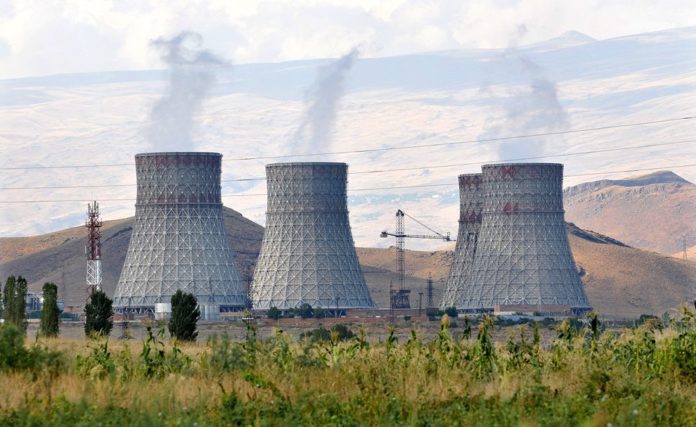
Metsamor Nuclear Plant and Energy Independence
Addressing statements about the future of the Metsamor Nuclear Power Plant, Pashinyan said there are no new agreements regarding its closure.
“The operating period of the Metsamor Nuclear Power Plant is established, including in Armenia’s international agreements concluded before our administration, and there is nothing new in this regard,” he said.
Aliyev had recently described the nuclear plant as outdated and said Azerbaijan and Turkey had repeatedly expressed concerns about its safety. He argued that its operating life could not be extended indefinitely and that it would eventually have to close.
Pashinyan also responded to Aliyev’s suggestion that Azerbaijan could provide Armenia with an alternative source of energy.
The Armenian prime minister said the country’s electricity needs could increase significantly in the coming years, particularly as new artificial intelligence facilities are developed.
“Until very recently, we were saying that Armenia had a surplus of electricity. Now we have to consider that Armenia may face increased electricity demand because AI facilities are developing rapidly, and such facilities consume electricity on a scale beyond what we previously imagined,” Pashinyan said.
According to the prime minister, investment plans for new AI-related facilities in Armenia may require the government to reassess its energy strategy and expand generation capacity.
“Our strategy, in general, is to achieve 100 percent energy independence,” he said, adding that Armenia has substantial potential for the development of solar energy and battery storage facilities.
Pashinyan emphasized, however, that energy independence does not mean Armenia intends to withdraw from international electricity trade.
“At times we may export electricity and at other times import it. We can also have partnership and cooperation with Azerbaijan in both electricity exports and imports, just as we can with Turkey, Iran, Georgia and other countries,” he said.
Pashinyan Rejects Unilateral Termination of Russian Railway Agreement
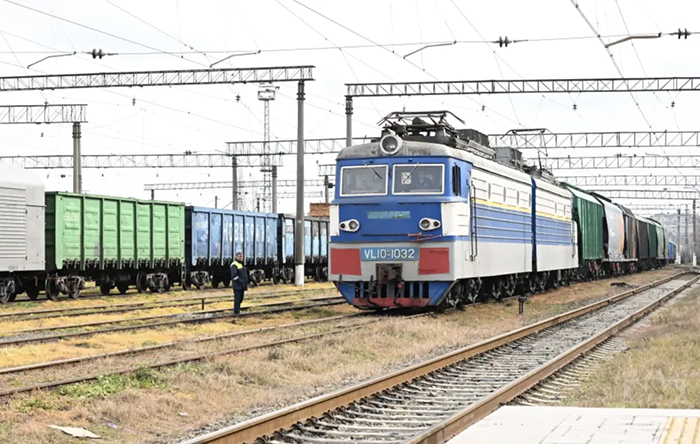
Pashinyan also addressed the future management of Armenia’s railway network, stressing that Yerevan is seeking a solution based on friendly relations and mutual understanding with Russia.
He ruled out the unilateral termination of the existing railway management agreement.
“At the conceptual level, we are considering what options are available. One option would simply be to terminate the agreement, but that is not acceptable to us because it would not be a friendly step. We want a friendly solution under which our Russian partners could sell the concession rights to a third party at market value,” Pashinyan said.
Under a 2008 agreement, the Armenian government transferred management of the country’s railway network to Russian Railways for 30 years, with an option to extend the arrangement for another 10 years.
Pashinyan stressed that Armenia’s concern is not with Russia itself, but with the fact that the railway is under a Russian concession. According to him, major international logistics operators and financial institutions may be reluctant to invest in infrastructure subject to that arrangement.
He warned that Armenia could consequently miss what he described as a historic opportunity to integrate more fully into international transportation networks.
“Our problem is not with Russia. Our problem is the situation in which we could once again miss a historic opportunity to become integrated into the international transportation network. That is the issue. We have no problem with the Russian concession as such,” Pashinyan said.
Among possible solutions being discussed with Russian partners, he cited the sale of concession rights to a third party at market value, a partial redistribution of shares, or separating infrastructure ownership from railway operations.
Armenia “Is Not a Periphery,” Pashinyan Says
Pashinyan also spoke more broadly about Armenia’s international position, rejecting the idea that the country has limited geopolitical options.
“There should never be a situation in which someone says Armenia has nowhere to go or that no one needs Armenia,” he said. “We have demonstrated in practice that Armenia is important to many as a responsible member of the international community and as a very important country. We have demonstrated that the Republic of Armenia is not a periphery.”
Asked about Russian calls for Armenia to hold a referendum regarding its possible future orientation toward the European Union, Pashinyan said such a referendum would take place if Armenia eventually applies for EU membership.
“We will certainly hold a referendum in the future when we have applied to the European Union for membership,” Pashinyan said.
He added that Armenians could potentially be presented with more than two choices.
“There could also be a third option — neither the EAEU nor the EU. We may decide that we want neither one nor the other. Who said that everyone necessarily has to go somewhere?” Pashinyan said.
BRUSSELS -- On October 16, Hamlet Batikyan, Secretary General of Armenia's Ministry of Defense and…
YEREVAN -- Armenia's Minister of Territorial Administration and Infrastructure, Davit Khudatyan, has announced that authorities…
Hollywood actor and environmental activist Leonardo DiCaprio has welcomed new initiatives aimed at recovering endangered…
ISTANBUL — A formal reception marking the 35th anniversary of the Republic of Armenia’s independence…
YEREVAN — A gala concert celebrating the 75th birth anniversary of internationally renowned Armenian opera…
Two-Day International Conference: “Resilience and Reconstruction: The Armistice Period in the Ottoman Empire (1918-1923)” Friday,…