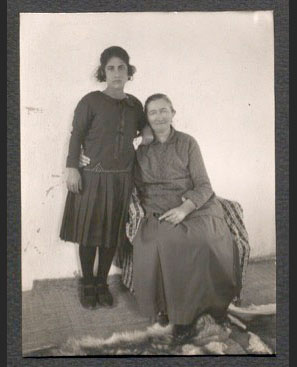
Karen Jeppe
FRESNO — Dr. Anna Aleksanyan, Henry S. Khanzadian Kazan Visiting Professor in Armenian Studies for the Spring 2026 semester, will present her final public lecture of the semester on “Karen Jeppe, the Danish Mother of the Armenians and Her Postwar Rescue Efforts” at 7:00PM on Tuesday, April 14, 2026, in the Grosse Industrial Technology Building, Room 101 (2255 E. Barstow Ave), on the Fresno State campus. The lecture free and open to the public.
After the end of World War I, numerous Armenian and international relief organizations, as well as individuals, sought to locate survivors of the Armenian Genocide, provide relief, and restore Armenian communities. While men were primarily targeted for physical destruction during the Genocide, women and children, along with starvation and physical violence, faced forced Islamization and assimilation. When they reached the Syrian deserts, the conversion became the only way of physical survival. Consequently, when the war was over, most survivors were women and children who had been converted during the war and lived among the Muslim population as wives, adopted children, servants, or slaves. Danish missionary Karen Jeppe, renowned among many Armenians, arrived in Aleppo in 1921 and initiated efforts to identify and rescue these women and children, placing them in special shelters in Aleppo. There, she assisted them in reconnecting with surviving relatives or securing support to rebuild their lives as Armenians. Operating from her office in Aleppo, Jeppe established stations across the Syrian desert, including in Der Zor, Jerablus, Hassaka, and Ras ul-Ayn, to locate Armenian women and children. Jeppe received support from the League of Nations and, as chair of the League’s Commission for the Protection of Women and Children in the Near East, reported on her activities in Geneva until 1927. When her funding was withdrawn and her position eliminated by the League, she continued her work independently. This lecture analyzes Jeppe’s rescue mission for Armenian survivors in Syria between 1921 and 1935.
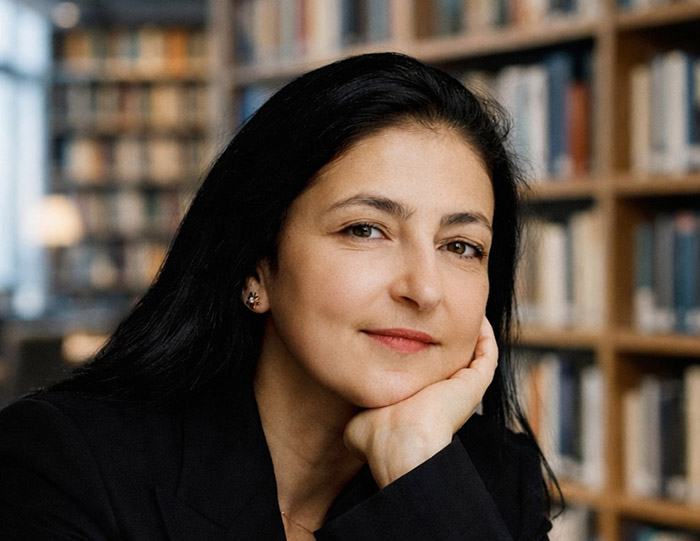
Dr. Anna Aleksanyan earned her Ph.D. from the Strassler Center for Holocaust and Genocide Studies at Clark University. Her research focuses on the gendered aspects of the Armenian Genocide, particularly the experiences of female victims from 1914 to 1918. Before her doctoral studies, she spent seven years as a senior research fellow and head of the Source Studies Department at the Armenian Genocide Museum-Institute. Aleksanyan holds a B.A. and M.A. in History from Yerevan State University. From July 2023 to January 2026, she served as a Postdoctoral Fellow with the Armenian Genocide Research Program at the Promise Armenian Institute at UCLA.
A parking permit is required for the presentation and can be obtained for free by visiting this link: https://bit.ly/aleksanyanlecture.
The presentation will also be recorded for streaming on YouTube at: https://bit.ly/armenianstudiesyoutube.
YEREVAN -- Armenian Prime Minister Nikol Pashinyan has responded to remarks by Russian Security Council…
GORIS -- Representatives of Armenia and Azerbaijan held a technical meeting on October 8 in…
TURKMENBASHI -- Armenian Prime Minister Nikol Pashinyan held a one-on-one meeting with Turkmenistan's President Serdar…
YEREVAN -- Seventy paintings seized from former Chairman of Armenia’s State Revenue Committee and former…
101 Members of Congress Urge Secretary Rubio to Press for Armenian Hostages’ Release, Azerbaijani Withdrawal…
ARMONK, NY - On Saturday, September 26, 70 guests – including sponsors, clergy, and seminary…