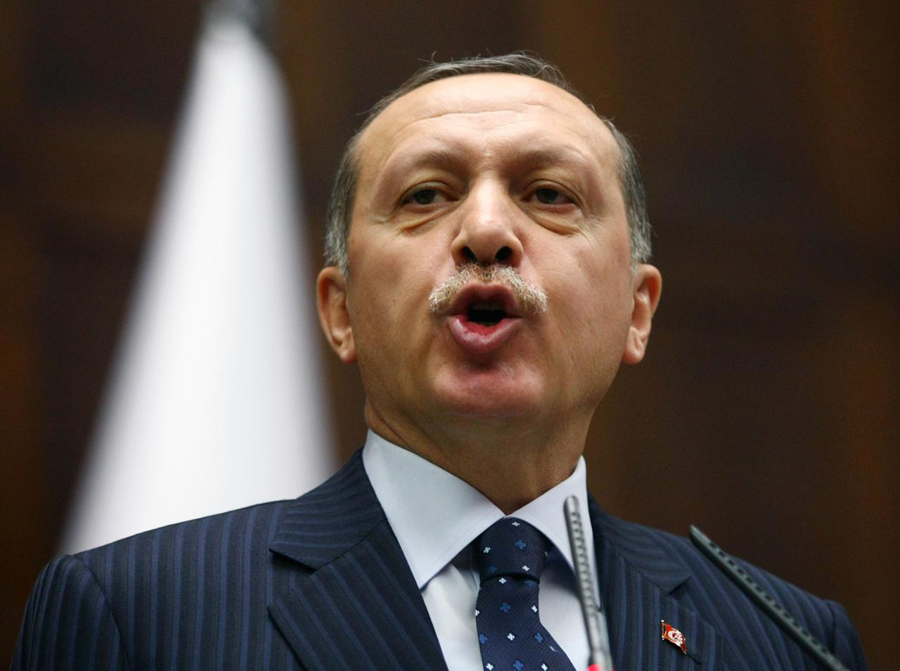
ANKARA — Turkey’s prime minister has for the first time officially apologized for the mass killing of Kurds in an uprising 80 years ago. The statement is seen by some as groundbreaking and the first step in the country facing up to its difficult past, but others see it as more to do with politics.
Prime Minister Recep Tayyip Erdogan addressed a meeting of supporters holding a copy of an historical paper, which he said documents the killing of nearly 14,000 Kurds in a rebellion in the 1930s. He then went on to do what no previous prime minister has done.
Erdogan said if there is need for an apology on behalf of the state, “I will apologize and I am apologizing.”
The killings occurred between 1936 and 1938 in Dersim province. It was renamed Tunceli as part of the suppression of the rebellion, which also saw tens of thousands Kurds forced from their homes.
The mass killings of the restive Kurdish minority in Dersim, most of whom were civilians, have until recently remained a largely taboo subject for mainstream politics.
Observers say Erdogan’s groundbreaking statement has as much to do with party politics, however, with the prime minister pointing out that the main opposition People’s Republican Party, or CHP, was in power when the killings occurred.
It was the leader of that party, Kemal Kilicdaroglu, who demanded that Turkey acknowledge its past actions. Kilicdaroglu, who is from Tunceli, accused Erdogan of seeking to undermine the legacy of the founder of the Turkish Republic, Kemal Ataturk, who was in power at the time of the mass killings.
Turkey’s main pro-Kurdish party, the BDP, has questioned the sincerity of the prime minister’s move, pointing out that mass arrests of its members and sympathizers continue.
More than 70 Kurds were detained this week, most of whom were lawyers. More than 1,000 Kurds have been arrested since Turkey’s general election in June.
Some ruling party lawmakers called for a probe into the Dersim slayings, where troops of Turkey’s newly founded republic brutally crushed Kurdish clans that rejected central authority.
”Instead of looking for a culprit, we must chose to face history,” government legislator Mustafa Elitas said.
Mustafa Armagan, a historian and researcher, told state-run TRT television on Wednesday that the military’s campaign in Dersim was followed by forced migrations and massacres as well as policies of assimilation.
Turkey is also under pressure to acknowledge other dark pages in its history, including the mass killings of Armenians in 1915, a special wealth tax imposed on Jews in the 1940s and attacks on its Greek minority in 1955.
Dogu Ergil, a political scientist, told the Hürriyet Daily News that the apology was remarkable and that the prime minister should not stop at one apology. “I wonder if Erdogan would have done the same thing if the perpetrators had been close to his political views,” he said. “And the debate should not be limited to Dersim killings. Turkey should apologize for the 1915 Armenian killings and the Sept. 6-7, 1955, events, which resulted in the mass exodus of minorities from the country.”
The Genocide of up to 1.5 million Armenians and their forced migration under the Ottoman Empire has been the main barrier to Turkey’s reconciliation with Armenia.
*****
Dersim Massacre is a name given to the violent suppression during the Dersim Rebellion in the summer of 1937 and the spring of 1938 of the local population of Dersim, now called Tunceli Province (in Turkey). Tens of thousands of Alevi Kurds, Armenians, Assyrians, Greeks and others were killed and thousands more forced into exile.
YEREVAN -- The provision establishing Armenian as the sole official language of the Republic of…
BRUSSELS -- Armenian Prime Minister Nikol Pashinyan met with European Parliament President Roberta Metsola in…
YEREVAN -- Russia has introduced restrictions on the export of cash rubles to Armenia and…
YEREVAN -- Former Armenian Military Prosecutor Gagik Jhangiryan was summoned for questioning in connection with…
YEREVAN — Armenian Prime Minister Nikol Pashinyan has stated that a secret plan promoted by…
YEREVAN — Armenia will retain full control over all customs functions under the Trump Route…