The Armenian flag flies above Government House as people gather in Yerevan’s Republic Square.
By BERGE JOLOLIAN
If Canada must rethink how it protects its future, Armenia cannot afford to stand still.
Speaking at the World Economic Forum in Davos on January 20, Canadian Prime Minister Mark Carney offered a warning that Armenians should consider carefully: “We know the old order is not coming back.” His conclusion was equally direct: “Nostalgia is not a strategy.” Canada’s response, he explained, is to strengthen its economy and defense while expanding its international partnerships. Armenia faces different circumstances, but the need to build national strength and widen its choices is just as compelling.
Even international justice is under pressure. The United States has imposed sanctions on International Criminal Court judges and prosecutors. International law remains essential to Armenia, but its protections need political backing. Armenia needs partners willing to act, alongside the capacity to defend itself.
Armenia cannot conduct today’s foreign policy as though it were still dealing with the Ottoman Empire of 1915, the Soviet Union of 1975, or the balance of power of 1994. History helps explain how we arrived here. Decisions about security must address the countries, interests and choices before us now.
What Real Armenia Means
The world has more than eight billion people, but the United Nations has just 193 member states. Armenia, with about three million people, is one of them.
That state must be protected.
For Armenians, the Republic of Armenia is far more than a government, a party or one political leader. It is the rare and irreplaceable institutional vessel of Armenian survival in a world where statehood is precious and never guaranteed.
The practical case for “Real Armenia” begins here: strengthening the existing Republic so that its people can live securely, govern their own country and build their future there. That means capable defense, functioning institutions, economic opportunity and partnerships that give Armenia greater freedom to make its own choices.
The government’s language has sometimes obscured this purpose. Placing “Real Armenia” beside “Historical Armenia” can sound as though people are being asked to choose between their country and their heritage. The government needs to explain more clearly how strengthening the Republic serves the Armenian people and preserves their future.
A family can preserve the memory of an ancestral village beyond today’s borders while supporting the Republic within them. Remembering where our people lived, what they created and what they endured is part of knowing who we are. Decisions about present-day borders and diplomacy carry responsibilities for the lives and security of people today.
The government’s formulation of “Real Armenia,” published in February 2025, included Armenian history, language, the diaspora and Armenian churches among its national values. That commitment should be clear in its policies and public language.
The rights and needs of displaced Artsakh Armenians also belong in this vision. Helping families secure housing, education and livelihoods, while preserving their history and heritage, is part of building a stronger Republic. Their place in Armenia’s future must be secure.
The related term “Fourth Republic” also needs explanation. Armenia’s First Republic existed from 1918 to 1920. The Second refers to Soviet Armenia, from 1920 to 1991, when it was a constituent republic of the Soviet Union rather than an independent state. The Third Republic began with independence in 1991.
Prime Minister Nikol Pashinyan uses “Fourth Republic” to describe a new political era centered on peace and citizens’ well-being. Numbered republics can mark changes in constitutional order: France, for example, has been under its Fifth Republic since 1958. In Armenia, however, the label alone does not establish a new constitutional order. The policies and proposals associated with it must be explained and judged on their merits.
For citizens, the meaningful test is what improves: security, opportunity, public services and the ability to plan a life with confidence.
How Armenia Becomes Stronger
Armenia gains freedom when it has more choices.
Useful relationships with several countries, access to different markets and dependable sources of essential supplies reduce vulnerability. When one partnership becomes difficult, others give Armenia room to respond.
On May 4, Yerevan hosted the European Political Community summit, bringing together more than 40 heads of state and government, including Canada’s Mark Carney. The first Armenia–EU summit and French President Emmanuel Macron’s state visit during the same period created further opportunities to strengthen Armenia’s political, economic and security partnerships.
During that visit, Macron supported Armenia’s turn toward Europe and its place at the heart of the European Political Community, a forum that includes countries outside the European Union. He also questioned reliance on Russian protection, citing the experience of the 2020 war.
Armenia’s international role also extends beyond Europe. On October 16, Yerevan hosted the COP17 Leaders’ Summit on Biodiversity, bringing countries together to advance the protection of nature. Ahead of the summit, UN Secretary-General António Guterres praised Armenia’s “extraordinary diplomatic capacity” in bringing different views together. That ability matters for a small state: building working relationships and helping countries reach agreement are practical tools of diplomacy. Cooperation on water, forests and ecosystems also serves the interests of Armenia’s farmers and communities. Protecting the Republic includes protecting the natural resources on which its people depend.
Partnerships must deliver practical benefits. Closer European ties can strengthen Armenia’s economy, institutions and defense. Cooperation with the United States, India and other partners can widen its options, while relations with Georgia and Iran remain essential.
The same reasoning supports efforts to improve relations with Turkey and Azerbaijan. Workable agreements could reduce the danger of conflict and open opportunities that prolonged confrontation has kept out of reach. Their value depends on reciprocity, respect for Armenia’s sovereignty and credible ways to address violations.
An open border can change the future of a small Armenian business. A shorter journey to a customer can lower costs, make a product more competitive and give an owner reason to hire another worker.
The transport initiative being developed with the United States, known as TRIPP, offers a concrete example. The proposed route would pass through Armenia to connect Azerbaijan’s main territory with Nakhchivan, a region separated from the rest of Azerbaijan. The initiative is also intended to provide Armenia with reciprocal transport benefits. The published Armenia–U.S. framework affirms Armenian sovereignty and jurisdiction, including authority over borders and customs.
Its value will depend on implementation. Reliable access for Armenian businesses could widen their markets and improve supply routes. Infrastructure investment could create work for local firms and leave useful skills behind.
These opportunities require security.
Peace becomes more durable when Armenia has the means to defend it. A potential aggressor must have reason to believe that an attack would be costly, uncertain and unlikely to achieve its objectives. Building that deterrent requires capable soldiers, effective leadership, reliable equipment and dependable supplies.
Armenia is working to strengthen these foundations. Armenian companies are producing reconnaissance and combat drones and developing military electronics. A stronger domestic defense industry can retain engineering skills, create skilled employment and reduce vulnerability to interrupted foreign supplies.
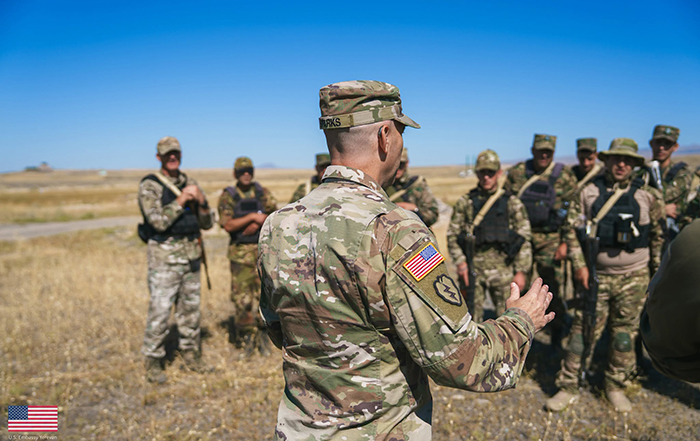
Cooperation with France, India, the United States, Poland and Britain is also widening access to military education, training and technical expertise. American programs support the development of noncommissioned officers, who play a vital role in leading and training soldiers. British instructors have helped prepare Armenian military trainers, while cooperation involving Poland supports improvements in military education. Knowledge brought home becomes especially valuable when Armenians can pass it on.
These efforts remain a work in progress. New equipment and international agreements must translate into units that can operate effectively, maintain their equipment and sustain their readiness.
Turkey and Azerbaijan will continue to pursue their own objectives. Armenia’s task is to find arrangements that advance its interests while retaining the ability to protect itself when interests diverge. A stronger defense gives diplomacy firmer ground and peace a better chance to endure.
Strength at Home
That strength also depends on everyday life inside Armenia. Citizens need institutions that protect them, treat them fairly and answer for their actions. How a police officer responds to a call for help or treats a citizen can strengthen or weaken confidence in the state.
In a video posted on October 14, the U.S. Embassy in Yerevan highlighted U.S.–Armenia cooperation in developing and professionalizing Armenia’s Patrol Police. Such cooperation becomes valuable when training and improved practices become lasting Armenian capabilities. Its success must be measured in the service citizens receive: reliable assistance, respect for their rights and accountability.
An international company considering a local operation needs reliable electricity and people with the right skills. An Armenian entrepreneur needs predictable rules and confidence that a dispute will be handled fairly. For a young graduate, those conditions can make an international career possible from home.
Krisp, an Armenian-founded company, develops artificial intelligence tools that make voice communication clearer. Based in California with a research laboratory in Yerevan, it ranked second among 500 AI companies in Cybernews’ 2026 AI Trustworthiness Ranking. Its work shows how Armenian technical talent can reach international markets and create products used around the world. More opportunities of this kind would help skilled people build careers in Armenia, retain valuable expertise and strengthen the Republic’s economic foundations.
Schools, public services and competent administration therefore have a direct place in this vision. They help turn a diplomatic opening into something people can use. A partnership becomes more valuable when Armenian engineers can apply its technology, local businesses can compete for its contracts and workers can acquire lasting skills.
A productive economy finances defense and public services. Accountable institutions help ensure that resources reach the people and programs that need them. Trade and diplomacy can give other countries a practical interest in Armenia’s stability and independence.
Together, these strengths make Armenia harder to intimidate and better able to protect its choices. That is the practical meaning of strategic autonomy: developing the capacity to decide and act in Armenia’s interests while sustaining useful partnerships.
What Support Means in Practice
This vision gives the government a clear standard by which to be judged. It must explain difficult decisions, publish results and answer criticism. Public confidence grows when people understand a policy and can see what it achieves.
The diaspora has a substantial role to play.
For Czech-Armenian businessman Aghasi Zavaryan, that connection has deep roots. He spent his early childhood with his grandparents in Aygehat, a village in Lori. In a 2018 interview, he recalled how visits back to the village had made him want to do something useful for its people.
An October report describes a $10 million investment in walnut orchards and infrastructure there, including reservoirs and drip irrigation. A walnut-processing facility remains part of his plans.
His story gives a practical meaning to the relationship between memory and development. Affection for the village of his childhood has become an investment in its future.
Contributions need not be on that scale. Sharing professional skills, helping a producer reach new customers, or supporting cultural and educational work can also strengthen communities.
Professional and business networks can connect Armenian institutions with expertise, customers and investment. A training partnership can help a hospital develop a service. A commercial introduction can help a producer secure an order. Cooperation between engineers can strengthen local industry. Cultural and educational work can give a new generation a closer relationship with Armenia.
People can support this progress while holding different views about the government. The benefits of a capable hospital, a successful business or a well-trained military unit endure across elections. The objective is not to keep any particular government in control of Armenia.
It is to keep Armenia in control of Armenia.
The effort to reduce Armenia’s isolation, develop workable relations with its neighbors and strengthen its capacity to defend itself deserves support. Its success must be measured in the security and opportunities it creates for people.
The business gaining a new customer is part of that success. So is the young person finding a career at home, the soldier receiving better training and the displaced family beginning to feel settled again. Through such changes, “Real Armenia” becomes something people can recognize in their own lives.
The Republic is ours to strengthen. Supporting its security, institutions and prosperity is how we help ensure that Armenians can choose their own future.
Berge Jololian is an Armenian-American IT and cybersecurity professional based in Yerevan, Armenia, and Watertown, Massachusetts. His writing examines Armenian statehood and sovereignty, relations between the Republic and the Diaspora, regional security, and the strategic choices facing small states.
YEREVAN -- Armenian Foreign Minister Ararat Mirzoyan has stated that unrestricted transit through the Trump…
YEREVAN -- Armenia cannot be expelled from the Eurasian Economic Union (EAEU) without its consent,…
YEREVAN -- The Armenian National Assembly’s Standing Committee on Foreign Relations issued a favorable opinion…
YEREVAN -- A potential increase in natural gas prices could affect Armenia's economy by 5–7…
COSTA MESA, CA — The AGBU LA Choir, joined by the AGBU Orange County Saturday…
YEREVAN -- Armenian Defense Minister Suren Papikyan has indicated that Czech-made military aircraft may soon…