Commemorating 110th Anniversary of the Armenian Genocide – XV
Harvard University
By ENG. HAMBERSOM AGHBASHIAN
The Importance of Studying and Recognizing the Armenian Genocide
Armenian Studies Worldwide
The Armenian Genocide of 1915 represents a foundational and deeply traumatic chapter in world history. It involved the systematic deportation and mass killing of the Ottoman Armenian population, resulting in the deaths of approximately 1.5 million Armenians and the near-total eradication of a centuries-old civilization from its ancestral homeland. Studying this event is crucial not only for understanding the history of the region, but also for advancing the broader fields of genocide studies, human rights, and international law.
A significant advancement in the academic recognition of this history has been the establishment of dedicated academic chairs, professorships, and programs at universities worldwide. These institutions ensure that the scholarship, teaching, and remembrance of the Armenian Genocide are preserved and promoted within the global academic community.
The following is a list of prominent endowed chairs, professorships, and academic centers dedicated to Armenian Studies, with a particular focus on genocide studies where applicable.
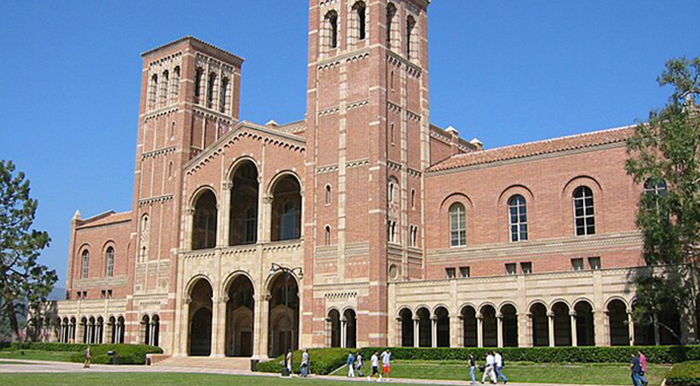
University of California, Los Angeles (UCLA)
Armenian Studies in the United States of America
Harvard Armenian Studies – Armenian Studies at Harvard was inaugurated in 1959, when the National Association of Armenian Studies and Research established the first Chair of Armenian Studies.
Armenian Studies Institute, University of Southern California (USC) – A hub of research and learning that studies the contemporary Armenian diaspora and the Republic of Armenia.
University of Michigan, Ann Arbor – Center for Armenian Studies; promotes the study of Armenian history, language, and culture.
University of Michigan, Dearborn – Armenian Research Center.
Arizona State University – Armenian Studies at the Melikian Center.
University of California, Berkeley – Offers undergraduate degrees in Armenian Studies, with courses in history, language, and culture taught through the Departments of History and Slavic Languages and Literatures.
Boston University – Charles K. and Elizabeth M. Kenosian Chair in Modern Armenian History and Literature. Established in 2007 to promote the study of modern Armenian history and literature from the early nineteenth century to the present.
University of California, Los Angeles (UCLA) – Established in 2015, the program offers a comprehensive curriculum in Armenian Language and Culture within the Near Eastern Languages and Cultures Department, including undergraduate and graduate degrees.
UCLA Research Program in Armenian Archaeology and Ethnography – Created through a long-term partnership between Zaruhy Sara Chitjian and the Cotsen Institute.
California State University, Fresno – Armenian Studies Program, College of Arts and Humanities.
Columbia University – Armenian Language Program, Department of Middle Eastern, South Asian, and African Studies.
University of Chicago – Dumanian Armenian Studies Fund and Armenian Language Circle at the Center for Middle Eastern Studies.
Clark University – Armenian Studies at the Robert Aram, Marianne Kaloosdian, and Stephan and Marian Mugar Chair in Armenian Genocide Studies, Department of History.
Rutgers University (New Jersey) – Founded in 1980; offers Western Armenian language courses through the School of Arts and Sciences.
Tufts University –
The Darakjian and Jafarian Chair in Armenian History (est. 1997)
The Arthur H. Dadian and Ara Oztemel Professorship of Armenian Art and Architecture
University of Connecticut – Norian Armenian Programs, dedicated to educating both the university community and the public about Armenian history and culture.
Society for Armenian Studies, Fresno, California
National Association for Armenian Studies and Research (NAASR) – Connects scholars with the public through programs, conferences, and publications.
University of Minnesota – Armenian Genocide Resource Guide
University of Geneva, Switzerland
Armenian Studies in Europe
Leiden University, Netherlands (est. 2018)
University of Amsterdam, Netherlands (est. 2022) – Erasmus Chair of Armenian Studies
University of Geneva, Switzerland – Chair for the History of Armenia
The International Association of Armenian Studies (AIEA) is a global scholarly organization headquartered in Geneva, Switzerland.
University of Salzburg, Austria – Center for the Study of Eastern Christianity
Université catholique de Louvain (Louvain-la-Neuve), Belgium – Armenian Studies program with online courses in collaboration with AGBU Armenian Virtual College
Sofia University, Bulgaria – Armenian Studies, Faculty of Classical and Modern Philology
Armenian Studies in Poland
Research Center for Armenian Culture, Polish Academy of Sciences, Kraków
Jagiellonian University, Kraków – Department of Eurasian Area Studies
Adam Mickiewicz Institute – Promotes Polish culture globally, including the Polish-Armenian heritage
United Kingdom
Oxford University – Calouste Gulbenkian Professorship of Armenian Studies
Armenian Institute, London (est. 2001)
Gomidas Institute, London – Founded in 1992; focuses on research, publications, and education
Aix-Marseille University
Armenian Studies in France
Society of Armenian Studies
Mediterranean Institute of Armenian Studies
National Center of Armenian Memory (CNMA)
Association for Research and Archiving of Armenian Memory (ARAM)
Armenian Studies Department, INALCO (Paris)
Tchobanian Institute
Maison des Étudiants Arméniens, Paris
Iméra, Aix-Marseille Université
SoMuM – Institute of Mediterranean Societies in Transition
University of Cairo
Armenian Studies in Other Regions
Germany – Mesrop Center, Martin Luther University Halle-Wittenberg
Brazil – Armenian Chair, University of São Paulo
Argentina –
National University of San Martín (Armenian Chair, est. 2015)
University of Buenos Aires – Independent Chair of Armenian Studies
National University of Rosario – Armenian Studies Chair
John F. Kennedy Armenian Chair
Iran –
Islamic Azad University of Tehran
University of Isfahan
Egypt – University of Cairo Armenian Studies Center (est. 2014)
Israel – Hebrew University of Jerusalem
Italy – Ca’ Foscari University of Venice; Padus-Araxes Cultural Association
Haigazian University – Beirut
Lebanon –
Haigazian University Armenian Studies Department
Armenian Diaspora Research Center
Cilicia Catholicosate Seminary
Russia –
Lobachevsky State University, Nizhny Novgorod
Southern Federal University, Rostov-on-Don
The Importance of Recognizing the Armenian Genocide
Recognizing the Armenian Genocide is essential for honoring the victims, promoting justice, and preventing future atrocities. It provides a framework for understanding the causes and consequences of genocide, helps address generational trauma, and affirms the historical truth necessary for reconciliation and accountability.
Recognition is crucial for several reasons:
It provides lessons that help prevent future crimes against humanity.
It counters organized denial campaigns and affirms the dignity of victims.
Official acknowledgment removes legal and moral barriers to justice.
Open discussion fosters generations committed to justice and human rights.
It integrates historical memory into individual and collective identity.
It challenges the belief that genocide can occur without consequences.
It honors the memory of the 1.5 million Armenians who perished in 1915.
Despite genocides in Cambodia, Bosnia, Rwanda, Darfur, and elsewhere, the international community continues to struggle with prevention. Studying and recognizing the Armenian Genocide remains essential to ensuring that such crimes are never repeated.