The Armenian church of Trabzon, used as an auction site of confiscated Armenian goods during the war and after the Armenian Genocide.
By H AGHBASHIAN
Western Armenia under the rule of the Ottoman Empire
The provinces where Armenians originally settled were the lands of Western Armenia, which were under Ottoman control. These six provinces were: Van, Erzurum, Mamuret el-Aziz, Bitlis, Diyarbakir, and Sivas.
On the eve of the 1915 massacres, the number of Armenians in the Ottoman Empire was more than 2 million, mostly in occupied Western Armenia, a region with a total population of 15–17.5 million. Armenians were a minority in most places where they lived, alongside Turkish and Kurdish Muslim and Greek Orthodox Christian neighbors. Although most Armenians were peasant farmers, they were overrepresented in commerce. As middleman minorities, despite the wealth of some Armenians, their overall political power was low. Armenians in the Western Armenia provinces of the Ottoman Empire commonly encountered forced labor, illegal taxation, and unpunished crimes against them, including robberies, murders, and sexual assaults. Taxes were paid to the government, and the Kurds were taxing them illegally.
Sultan Mehmed the Conqueror encouraged Armenians to settle in his new capital, relocating tens of thousands of them there. They later formed an educated, wealthy, and influential community in Istanbul.
The wealthy Armenian elite lived in the Ottoman capital, Istanbul, particularly prominent families such as the Duzian, Dadian, Balian, and Bezjian families, who wielded significant economic influence in the state. Nevertheless, Armenians in the empire were considered second-class citizens, despite certain freedoms granted to them, such as the right to worship. However, in Turkish, they were referred to as “Gavour,” meaning “infidel” and ” faithless.” Their testimony in court was rejected, and they were prohibited from bearing arms or riding horses.
Armenians in the Capital, Istanbul
The rise of Armenians in the Ottoman Empire began in 1700, while the status of Jews declined. The Armenian elite in Istanbul before 1915 was a highly influential group within the Ottoman Empire. The Amira Class were the wealthy Armenian magnates of Istanbul. They were bankers (Saraf), financers of the Ottoman State, and managers of imperial monopolies.
They often funded Armenian churches, schools, and printing presses, becoming patrons of Armenian culture. The Amira class functioned almost like an aristocracy with the Armenian millet.
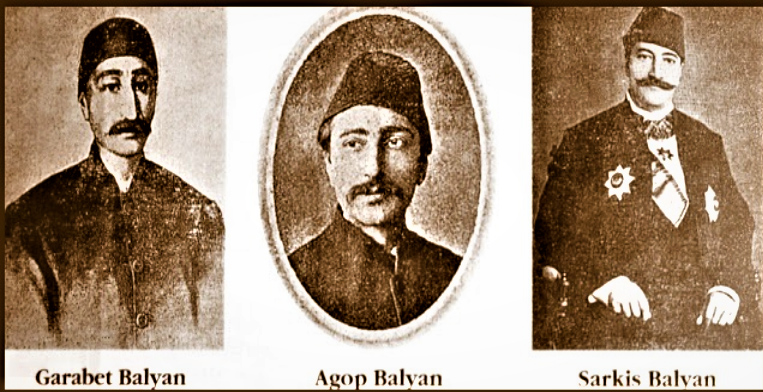
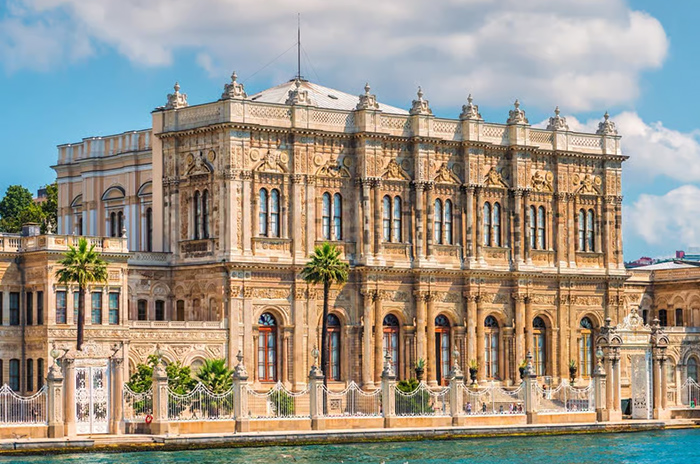
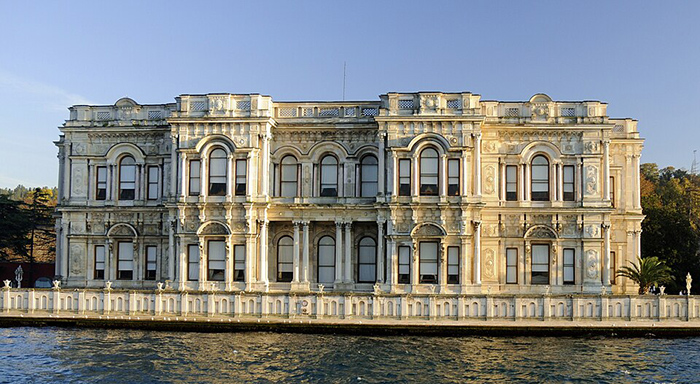
The Balian family name was prominent in architecture and construction, and the architect Sarkis Balian became famous, followed by other family members.
The Duzian family members (Artin, his son Sarkis, and his grandson Hovhannes) were the Goldsmiths of the Sultans. Artin Duzian was appointed director of the Mint in 1727, replacing the previous director, the Jewish Yako Bonfil. Directors from the Duzian family held this position until 1890.
The Duzian family members were entrusted with the sultans’ jewels, and Artin Duzian’s Palace was one of the most luxurious palaces in the city, overlooking the Bosphorus.
The Dadian family was renowned in the field of gunpowder and explosives manufacturing, earning a reputation that lasted nearly a century, starting in 1795 with its leader, Arakel Dadian, who was awarded the title “Baroud Bashi.” His son, Ohannes, took over his father’s business and expanded it to include a paper factory, a textile factory, and a rifle factory. Ohannes Dadian was fluent in several European languages and traveled to France and Britain twice, staying for two years to study the development of arms manufacturing and related supplies, until the Ottoman Empire no longer needed to import them.
The head of the Kazazian family, Hagop Pasha Kazazian, was an official in the Ottoman Bank and an advisor to Sultan Abdul Hamid.
The Azarian family members were merchants and financiers with influence at the Ottoman court.
The palace’s money changers were Armenians from 1770 to 1840, and they were a major factor in financing the provinces and collecting taxes.
The Armenian prince Artin Kazazian was a close friend of Sultan Mahmud II (1808-1838).
Abraham Pasha and Gabriel Nouradunkian Pasha became foreign ministers.
* * *
Below is an article from the Turk Press News Agency that highlights the role of the Balyan family in building palaces and mosques and developing architecture in Istanbul.
Turk Press-The Balyan Family
https://www.turkpress.co/node/33738
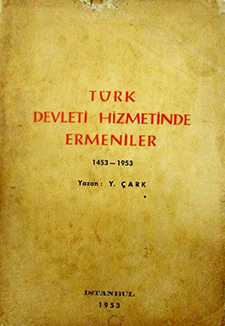
Armenians in the Service of the Turkish State, 1453-1953
This book was published in Istanbul in 1953 by a Turkish author. It is a testament to the role of Armenians in the Turkish state service from 1453 to 1953.
Here are some quotes from the book: Sultan Mehmed the Conqueror initially brought Armenian builders to Istanbul to build walls and castles. Within a short period, Armenians excelled in all fields, particularly in goldsmithing and trade, earning the Sultan’s trust and the government’s respect. The Duzyan family members (Artin, his son Sarkis, and his grandson Hovhannes) were involved in goldsmithing. Hagop Efendi Kerjikan (1802–1857), a graduate of the Sorbonne in political science, was an assistant and advisor to Foreign Minister Rashid Pasha. Hagop Martyan Delajar played a significant role in converting Turkish to the Latin alphabet (he also mentions the names of several other Armenian linguists).
* * *
The following is a testimony from a high-ranking Turkish official about the Armenians’ loyalty to the Ottoman Empire, the high positions they held, and the privileges granted to them by the sultans. From this, we conclude that there was no reason for the racial genocide other than the envy and Turanist nationalist extremism of Sultan Abdul Hamid and the pashas Talat, Enver, and Cemal, the leaders of the Union and Progress Party.
Another article from the Turk Press about the Armenians, the “loyal subjects” in the Ottoman Empire.
https://www.turkpress.co/node/7673
Ismet Pinark, former Director General of the Turkish State Archives
Armenians, “Loyal Subjects” in the Ottoman Empire
Excerpt
For centuries, Armenians trusted the Ottoman Empire. Undoubtedly, during this period, the Armenians, known as “loyal subjects” in the Ottoman Empire, experienced the most stable and peaceful years in their history.
Armenians generally worked in their villages and towns in eastern Anatolia, cultivating their land, engaging in local industries, and engaging in small-scale trade. In the cities, they engaged in many activities, including domestic and foreign trade, money exchange, finance, contracting, supplies, and other businesses. Their standard of living was higher than that of the Turks.
Because of their affinity for Turkish culture, they were appointed to various government positions after the Rum Revolt of 1821. During the reign of Sultan Mahmud II, they were allowed to wear the “tughra” on their hats as a sign of their loyalty. After the proclamation of the “Khatt-e Humayun” in 1839, they were appointed to positions in the palace and the Ministry of Foreign Affairs. After the reform decree of 1856, they were promoted to high-ranking positions such as governor, first governor, inspector, ambassador, and even minister.
——————————————–
The Reform Decree is a decree issued by Sultan Abdulmejid on February 18, 1856 AD, which stipulated equality between Muslims and Christians. (H.A.)
The “Khatt-e Humayun” is a diplomatic term for an official handwritten document or memorandum issued by the Ottoman sultan. This refers to the decree of Sultan Abdulmejid I, issued on 26 Sha’ban 1255 AH (November 3, 1839 AD), which initiated the widespread reform movement known as the “Tanzimat.” (H.A.)
Next: The beginning of the disaster. Sultan Abdul Hamid II (1842-1918) assumed power.
YEREVAN -- American technology giant NVIDIA has announced plans to expand its operations in Armenia,…
YEREVAN -- Armenia's State Revenue Committee (SRC) has published data on taxes and other payments…
YEREVAN -- Armenian Prime Minister Nikol Pashinyan met in Yerevan with Gert Jan Koopman, Director-General…
YEREVAN -- Armenia's ruling Civil Contract Party secured victories in most of the country's local…
PARAMUS, NJ – The Armenian Missionary Association of America (AMAA) held its 107th Annual Meeting…
YEREVAN -- On September 29, 2026, Katia Kermoyan-Khodanian, who had arrived in Armenia from the…