By H AGHBASHIAN
Introduction
The Armenian Genocide is closely linked to the events of World War I, although the systematic destruction of Armenians had already begun earlier, under the rule of Sultan Abdul Hamid II.
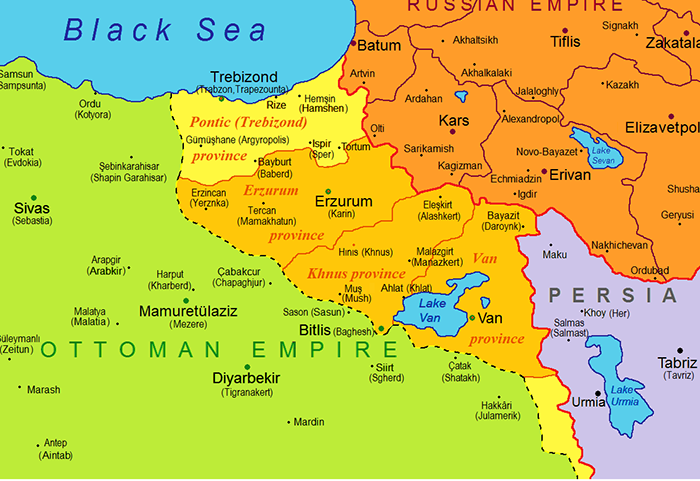
In the spring of 1915, the Ottoman government initiated the mass deportation of Armenians from its northeastern border regions, where the empire was engaged in war with Russia. In the months that followed, deportations expanded across all provinces, regardless of their distance from the war zone. Later documents revealed that the Committee of Union and Progress had long planned the deportation and widespread extermination of Armenians in the Ottoman Empire.
The victims of the genocide included those killed in massacres that began in the spring of 1915, those who perished during deportations from starvation and disease, and those who died en route to or within the Syrian desert and Iraq. Tens of thousands of Armenian children were also forcibly taken from their families by the Turks and converted to Islam.
This year marks the 110th anniversary of the Armenian Genocide, carried out by the Ottoman Turks in 1915, during which 1.5 million Armenians were killed in one of the largest genocides of the early 20th century. Planned massacres, individual killings, forced deportations, and mass starvation were the principal methods of extermination.
We will commemorate this tragedy through a series of articles exploring its history and legacy.
**************
I – Historical background
Armenia
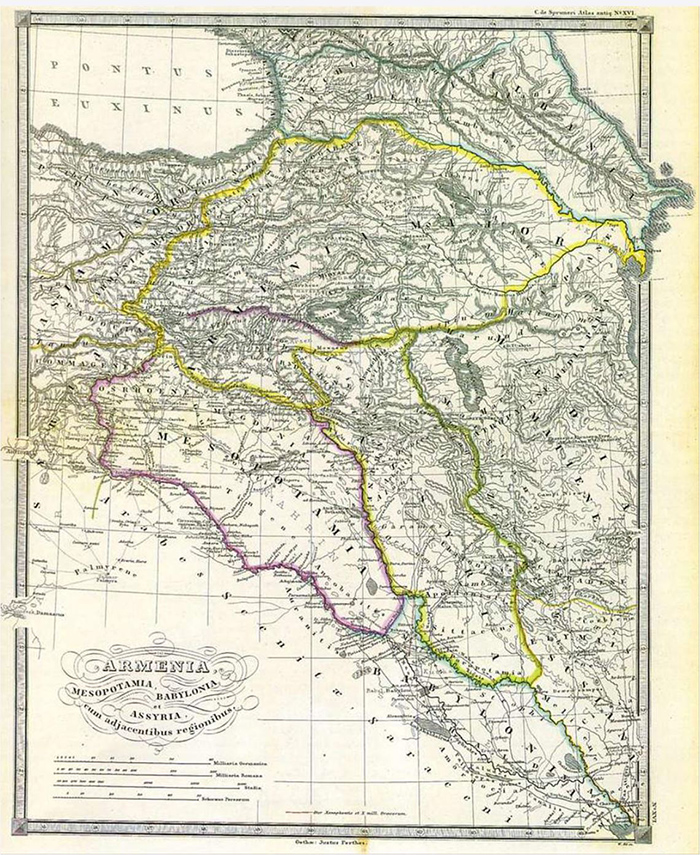
Armenia is one of the oldest countries in the region. Its history goes back to more than four thousand years. Clay tablets found in the library of King Ashurbanipal in Nineveh dating back to the 19th century BC support the presence of Armenians. There were trade relations between the Armenian Kingdom of Urartu and the Assyrian Kingdom (934-609 BC).
The Greek historian Herodotus (5th century BC) mentioned the presence of Armenians in Anatolia, as well as trade relations between Armenia, Nineveh, and Babylon.
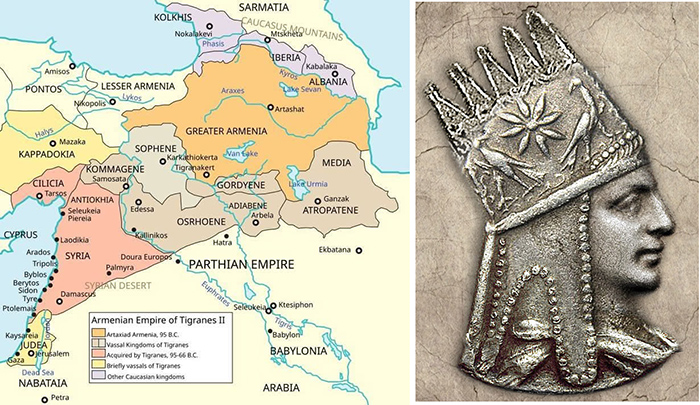
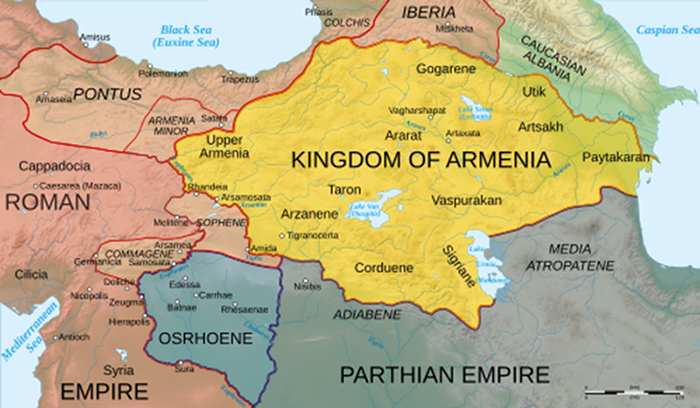
The Armenian emperor (Dikran II) founded the Armenian Empire from sea to sea (Caspian to the Mediterranean seas), in (95-55 BC).
There was an Armenian presence in the Sassanid capital of Ctesiphon (present-day Salman Pak, near Baghdad), and during the Abbasid Caliphate, Armenians played a major role in financial and commercial activities.
Throughout its long history, Armenia has faced foreign invasions after periods of independence and freedom.
Turkey
The Turks, settled in Anatolia in 1123 AD, after the Seljuk Turks defeated the Byzantine Empire at the Battle of Manzikert led by the sultan Alp-Arslan in 1071.
The Turks trace their origins to the (Kayi) tribe, a Turkmen (Oghuz) tribe that inhabited Central Asia. They were invaded by the Mongols and forced to migrate westward toward Anatolia, where they settled under the rule of the (Seljuk) Empire of Rum in 1123 AD.
This migration transformed Anatolia from a predominantly Greek-speaking, Christian region into a Turkish, Muslim one through gradual demographic shifts, settlement, and cultural fusion.
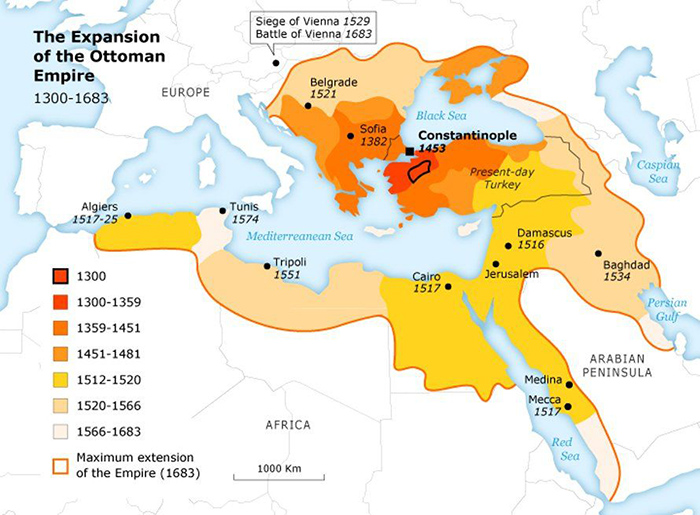
The Ottoman Empire was founded by Osman I, son of Ertuğrul, in 1299 AD and lasted for more than 600 years. Its territory extended over vast areas across three continents: Europe, Asia, and Africa. It eventually collapsed in 1924, becoming the Republic of Turkey.
Thus, the Armenians settled in the region for more than three thousand years before the Turks.
By the rise of the Ottoman empire (late 15th-18th centuries) and coincidence with the decline of Byzantine empire, Ottomans conquered and occupied west Armenia and since then it is under their occupation.
YEREVAN -- American technology giant NVIDIA has announced plans to expand its operations in Armenia,…
YEREVAN -- Armenia's State Revenue Committee (SRC) has published data on taxes and other payments…
YEREVAN -- Armenian Prime Minister Nikol Pashinyan met in Yerevan with Gert Jan Koopman, Director-General…
YEREVAN -- Armenia's ruling Civil Contract Party secured victories in most of the country's local…
PARAMUS, NJ – The Armenian Missionary Association of America (AMAA) held its 107th Annual Meeting…
YEREVAN -- On September 29, 2026, Katia Kermoyan-Khodanian, who had arrived in Armenia from the…