YEREVAN — With financial support from the Ministry of Foreign Affairs of the Kingdom of Norway, the diary entries of Norwegian missionary Bodil Biørn have been translated from old Norwegian and published as a book, 110 years after the Armenian Genocide. These documents are of primary value for the study of the Armenian Genocide.
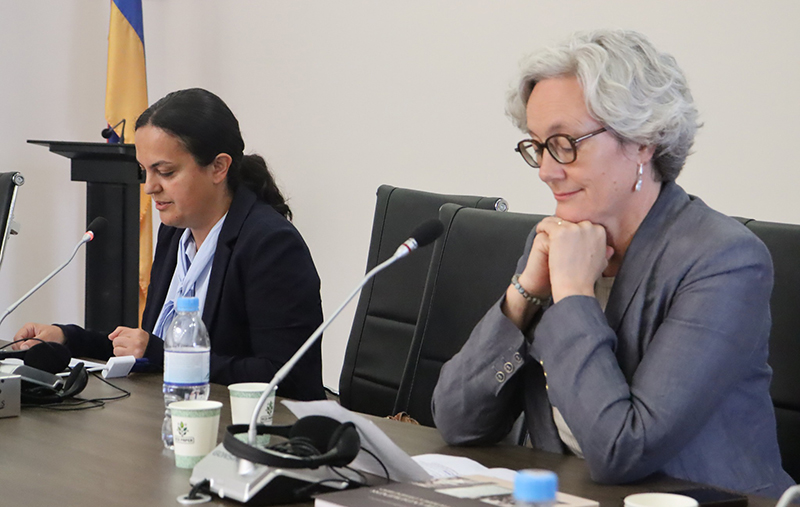
The book, titled “Memoirs of an Eyewitness: The Legacy of Bodil Katharine Biørn”, was presented at the Armenian Genocide Museum-Institute (AGMI). Attendees included Norway’s Ambassador to Armenia, Bergljot Hovland; Norway’s Honorary Consul in Armenia; historians from Armenia and abroad; and other guests.
The event opened with the presentation of the temporary exhibition “Documenting the Crime: Eyewitness Testimonies of the Armenian Genocide”, highlighting a special section dedicated to Norwegian humanitarians and showcasing thematic items, including personal belongings of Bodil Biørn.
AGMI Director Edita Gzoyan welcomed the attendees, stating:
“Bodil Biørn’s life, work, and humanitarian mission today stand as a symbol of witness, courage, and moral resilience. In defiance of tyrannical silence, Biørn chose to resist, to help Armenians, and to document the crime.”
Gzoyan also thanked Biørn’s grandson, who donated her diaries, letters, and personal items to the museum years ago. These materials have become an important part of the museum’s collection and, as she noted, allow the genocide’s profound depth to be conveyed through Biørn’s sincere and deeply humanitarian perspective.
Next, the book’s editor—AGMI senior researcher and Ph.D. Regina Galustyan—spoke about the significance of Biørn’s work and legacy. She explained that the book contains the missionary’s complete handwritten diaries and memoirs. The eight-volume collection spans the years 1905–1934. During her humanitarian mission in the Ottoman Empire, Biørn documented the lives of Armenians and the unfolding genocide with exceptional clarity and compassion, leaving behind rich ethnographic, geographical, and historical accounts.
The final two volumes (1927–1934) provide detailed descriptions of her post-genocide relief work in Aleppo, including numerous photographs, meticulous records of Armenian children who survived the genocide, and other statistical data.
ANTALYA — Armenian Prime Minister Nikol Pashinyan attended the opening ceremony of the COP31 Leaders’…
YEREVAN — Armenian National Assembly Vice Speaker Vahagn Aleksanyan has suggested that the opposition's preparations…
ANTALYA — Armenian Prime Minister Nikol Pashinyan met with Iranian President Masoud Pezeshkian on the…
YEREVAN — Armenian Finance Minister Vahe Hovhannisyan has dismissed the legal arguments presented in a…
PARIS — Armenia has launched active and close cooperation with the European Union to address…
MOSCOW — Armenia has been deprived of the right to nominate representatives for senior positions…