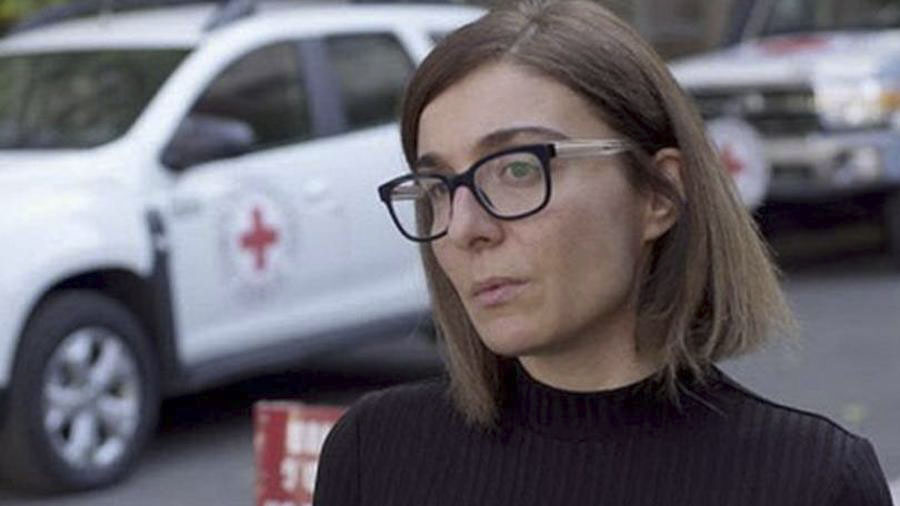
YEREVAN – The issue of missing persons from the Nagorno-Karabakh conflict remains a priority for the International Committee of the Red Cross (ICRC), according to Zara Amatuni, Communications and Prevention Manager for ICRC Armenia, who spoke with Armenpress.
Amatuni highlighted the ICRC’s longstanding efforts in addressing the fate of those missing due to the conflict.
“We have been dealing with this issue in the context of the Karabakh conflict for over 30 years. Our work spans multiple areas. Primarily, this involves the responsibility—mandated by international humanitarian law—of authorities on all sides to provide answers to the families of those missing in connection with hostilities. While these obligations are not specific to the ICRC, our role is to remind authorities of their duties and to support them with our technical expertise and skills, developed over decades of work in similar situations,” Amatuni said.
Another key focus of the ICRC’s work is collecting and providing detailed information about each missing person.
“Based on applications from families, we have compiled data on approximately 5,000 missing individuals since the 1990s, including cases from the escalations of the conflict between 2020 and 2023. Among them are around 1,000 Armenians, whose cases were documented through our offices in Yerevan and Karabakh. This number also includes individuals whose families consider them missing despite positive DNA identifications. In such cases, families may reject the results for various reasons, which signals a need to work with authorities to better understand these situations,” Amatuni explained, emphasizing that the ICRC does not conduct identifications itself but supports the process, which is managed by the relevant authorities.
The ICRC contributes by sharing expertise.
“For instance, we work closely with the forensic expertise center’s laboratory in Armenia, providing equipment, training, and knowledge exchange to enhance its capacity. This helps ensure professionalism in this sector, which in turn could significantly reduce disappearances during emergencies,” she noted.
Regarding the search for missing individuals, Amatuni underscored that decisions and actions are the responsibility of the authorities, while the ICRC acts as a neutral mediator ready to assist.
“In our view, creating a humanitarian atmosphere is essential to enable cooperative efforts, such as mapping possible burial sites when information is available. We keep this issue active by engaging with authorities and families, but the steps and decisions lie outside our purview. As a neutral party, we stand ready to support both sides,” Amatuni concluded.
NEW YORK — The New York Times has featured Armenia’s traditional dish, ghapama, as an…
BEIRUT -- Haigazian University’s Department of Philosophy and Religion hosted a panel discussion entitled “Human…
YEREVAN -- November kicked off with two weeks of FEMINNO on the move, bringing innovation,…
YEREVAN — Armenian Prime Minister Nikol Pashinyan has proposed a political scenario under which he…
YEREVAN — American engineering and consulting firm AECOM has presented the preliminary findings of its…
YEREVAN — Armenia has been invited to participate as a guest country in the upcoming…